



The Sobering Link to Health Risks
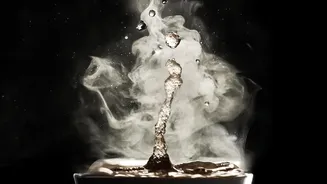
The primary concern highlighted by health authorities is the link between consuming “very hot” beverages and an increased risk of esophageal cancer. The International Agency for Research on Cancer (IARC), a part of the World Health Organization (WHO),
has classified drinking beverages hotter than 65°C (149°F) as “probably carcinogenic to humans”. This conclusion is based on studies showing that repeated thermal injury—essentially, burning the cells lining your esophagus—can lead to inflammation and increase the chances of cancerous cell development over time. It's important to note that this is about one specific type of esophageal cancer, squamous cell carcinoma, which is more common in parts of Asia and South America where drinking very hot tea is traditional.
How Hot Is Too Hot?
The critical threshold identified by the IARC is 65° Celsius (149° Fahrenheit). For context, coffee and tea are often served in cafes at temperatures between 71°C and 85°C (160-185°F). At these temperatures, a serious burn can occur in just a few seconds. Studies from regions like Iran, China, and South America, where tea or maté is traditionally drunk at around 70°C (158°F), found that the risk of esophageal cancer increased with the temperature of the drink. While there's no single perfect temperature, research suggests an optimal and safer drinking temperature is around 58°C (136°F), balancing flavour and safety. This is a temperature that feels pleasantly warm, not scalding.
It's About Temperature, Not the Drink Itself
A crucial clarification from experts is that the risk is not associated with coffee or tea themselves. In fact, the same IARC review found no conclusive evidence that drinking coffee has a carcinogenic effect and even suggested it may help reduce the risk of other cancers. The culprit is the temperature. Any liquid, whether it's tea, coffee, soup, or even just hot water, can cause thermal injury if consumed at scalding temperatures. The consistent damage and repair cycle the esophagus is forced to undergo is what creates the risk, not the chemical compounds in your favourite brew. This means you don't have to give up your morning beverage, just the habit of drinking it while it's still piping hot.
Simple Steps for Safer Sipping
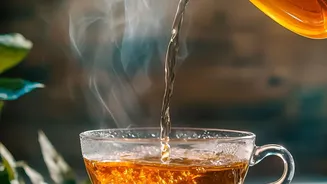
Making your daily ritual safer doesn't require a drastic change. The easiest and most effective method is simply to wait. Allowing your drink to sit for a few minutes after it's been poured will naturally bring it down to a safer temperature. How long? A freshly boiled drink can take five to seven minutes or more to cool to below 60°C. You can also actively cool your beverage. Adding a splash of cold milk or water is a highly effective way to lower the temperature quickly. Using a wider-mouthed mug increases the surface area, allowing heat to dissipate faster. Even stirring with a metal spoon can help, as the spoon acts as a heat conductor, though this method is less effective than simply waiting or adding something cool.