

The Heart of a Cuisine
To understand Kerala cooking is to understand the role of the coconut. The state's name itself is believed to be derived from 'Kera,' the Malayalam word for coconut. Here, coconut isn't just a single-note ingredient; it is a versatile foundation used
in various forms. Coconut oil is the traditional medium for cooking, imparting a distinct aroma. Freshly grated coconut is used to provide texture and a subtle sweetness, while ground coconut paste forms the creamy base for countless curries. Then there is coconut milk, which adds a silky richness and tempers spice, creating a balanced and layered flavour profile in dishes. This reliance on the coconut palm, often called the “tree of life,” has shaped the region's culinary identity for centuries.
The Classic Stir-Fry: Vendakka Thoran
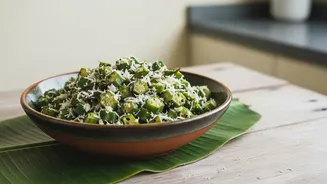
Perhaps the most common and beloved preparation is Vendakka Thoran, a simple yet flavourful stir-fry. In this dish, finely sliced okra is cooked with minimal spices, often just turmeric, mustard seeds, and curry leaves. The magic happens at the end, when a generous amount of freshly grated coconut is tossed into the pan. The coconut isn't cooked down but gently heated, preserving its fresh, sweet flavour and providing a delightful textural contrast to the tender okra. This method highlights coconut in its purest form, demonstrating how a simple addition can elevate a vegetable into a staple side dish served in homes and at festive feasts, or sadhyas.
Creamy & Cool: Vendakka Kichadi
Showcasing a completely different application of coconut, Vendakka Kichadi is a cooling, yogurt-based dish that offers a perfect counterpoint to spicier fare. For this preparation, fried okra pieces are suspended in a creamy base made from yogurt and a finely ground paste of fresh coconut, green chillies, and mustard or cumin seeds. The ground coconut paste is what gives the kichadi its body and richness, while the yogurt provides a pleasant tang. The final dish is often finished with a tempering of mustard seeds and curry leaves sizzled in coconut oil. This dish reveals how coconut can be used to create cool, creamy textures, a far cry from the dry stir-fry of a thoran.
Rich and Roasted: Vendakka Mezhukkupuratti
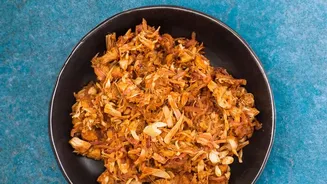
Mezhukkupuratti translates to 'coated in oil,' and that's a good description for this rich, glossy stir-fry. Unlike a thoran, a mezhukkupuratti involves slow-roasting the vendakka in coconut oil with spices like turmeric and chilli powder until it becomes tender and slightly caramelized. While grated coconut is not always the star here, the dish often relies heavily on the flavour of coconut oil and can include thin slivers of toasted coconut for an added layer of crunch and nutty flavour. This preparation demonstrates a more intense, concentrated vegetable flavour, where the coconut element serves to enrich and deepen the dish rather than simply adding texture or creaminess.
Simmered in Silk: Coconut Milk Curry
For a dish with a luscious gravy, Kerala cuisine turns to coconut milk. A vendakka curry, sometimes known as Vendakka Mappas, uses coconut milk as its base to create a rich, silky sauce. The okra is typically fried first to prevent it from becoming slimy before being simmered in a spiced coconut milk broth. Often made with thinner, second-press coconut milk for the simmering process, a richer, first-press coconut cream is added at the end for flavour and thickness. This approach shows the final, and perhaps most luxurious, role of coconut: as the creator of decadent gravies that are perfect for pairing with rice or breads.