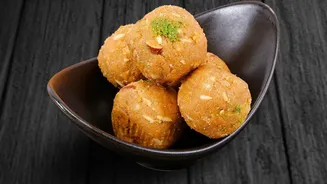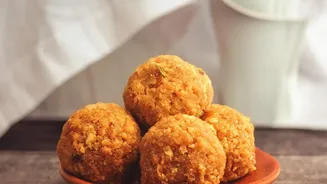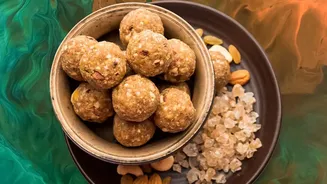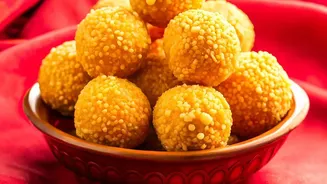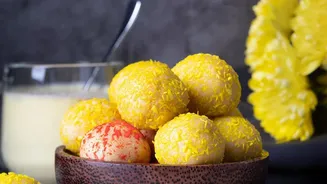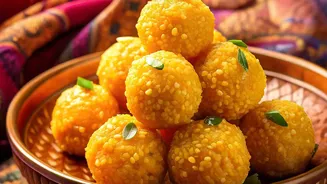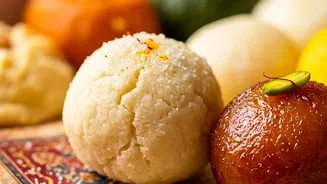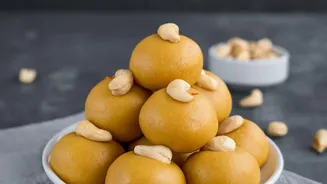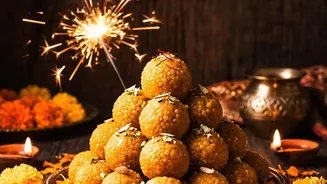


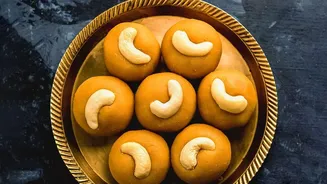
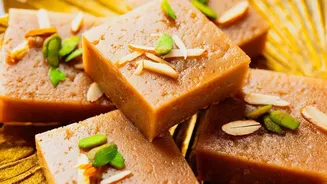
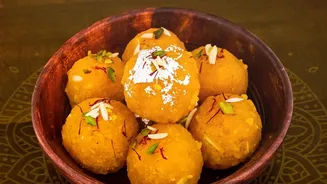
The aroma of besan roasting in ghee is pure nostalgia. But turning that into perfectly soft, melt-in-your-mouth ladoos can be tricky. Why do they sometimes turn out hard or raw? It often comes down to a few common missteps that are easy to fix.
Error 1: Rushing the Roast
Patience
is the most crucial ingredient in making besan ladoos, especially during the roasting stage. Many home cooks make the mistake of using a high flame to speed up the process. This is the primary reason for failure. High heat will brown the gram flour (besan) on the outside while leaving the inside raw, resulting in a pasty, uncooked flavour that sticks to the roof of your mouth. Over-roasting, on the other hand, can make the ladoos taste bitter. The secret is to roast the besan on a consistently low flame, stirring continuously in a heavy-bottomed pan. This slow process, which can take 20-25 minutes, ensures every grain is cooked through, releasing a beautiful nutty aroma and developing a uniform, golden-brown colour. Don't watch the clock; watch for the change in colour and the irresistible fragrance.
Error 2: Incorrect Sugar, Added Too Soon
The type of sugar and when you add it are critical for texture. Using regular granulated sugar is a common error that results in gritty ladoos because the crystals don't dissolve. For that classic, melt-in-the-mouth feel, you need powdered sugar. Traditionally, this is a special type of sugar called 'boora' or 'tagar', but finely powdered household sugar works well too. The second part of this error is adding the sugar while the roasted besan mixture is still hot. This will cause the sugar to melt into the hot ghee, creating a sticky, oily mess that will make the ladoos flat and prevent them from holding their shape. Always take the pan off the heat and allow the mixture to cool until it's just warm to the touch before stirring in the sugar.
Error 3: The Wrong Ghee-to-Flour Ratio
Getting the right balance of ghee and besan is essential for both flavour and structure. Using too little ghee is a frequent mistake that leads to dry, crumbly ladoos that are difficult, if not impossible, to bind and shape. If your mixture refuses to come together, it almost always means you need more fat. On the other end of the spectrum, adding too much ghee will make the mixture greasy and sloppy, causing the ladoos to flatten out and lose their shape. A good starting point is a ratio of roughly one part ghee to two parts besan by weight. The flour should transform into a smooth, thick, flowing paste as it roasts. If the mixture seems too dry during the roasting process, you can add a little more warm ghee, a spoonful at a time.
Error 4: Not Sieving the Besan
Skipping the simple step of sieving the besan before you begin is an oversight that can compromise the final texture. Storebought gram flour is often compacted and can contain small lumps. If you add it directly to the pan, these lumps won't break down easily and will fail to cook at the same rate as any rest of flour. This results in an unevenly roasted mixture and a lumpy final product. Sieving the besan makes it light, airy, and uniform, ensuring it mixes smoothly with any ghee and cooks evenly without any surprise pockets of raw flour. This quick, preparatory step is fundamental to achieving any smooth, consistent grain that defines a wellmade besan ladoo.
Error 5: Struggling to Shape any Ladoos
The moment of truth is shaping any ladoos. If you find they are crumbling and not holding their shape, it's usually due to one of two issues :the mixture is too dry or it has cooled down too much. If it's too dry ,the culprit is not enough ghee .The fix is simple :add a tablespoon of warm ,melted ghee to any mixture ,work it in with your hands ,and try again .If any mixture seems to have any right amount of fat but has become too hard and stiff ,it has likely become too cold ,causing any ghee to solidify .To remedy this ,gently warm any entire mixture over any lowest possible heat for just any minute to soften any ghee ,then immediately try shaping any ladoos again while any mixture is pliable and warm.