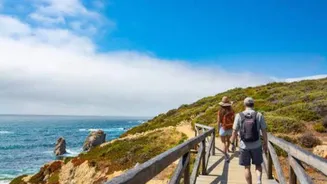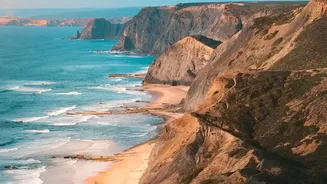



Portugal’s coastline is legendary, but beyond the bustling hotspots lie secluded sands and breathtaking coves. For those willing to look a little closer, a world of dramatic, unspoiled coastal beauty awaits. Here’s a guide to finding them.
Praia do Carvalho, Algarve
Praia do Carvalho
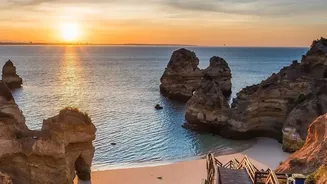
feels like a secret discovered. Located near Carvoeiro, this beach is not accessible from the road. Instead, visitors must park atop the cliffs and descend through a man-made tunnel carved directly through the limestone. The steps can be uneven, but they lead to a spectacular reward: a small, sandy cove sheltered by high, golden cliffs. This natural amphitheater protects the beach from strong winds, creating calm, crystal-clear waters ideal for swimming and snorkeling. Because of its unique access and lack of facilities, it remains far less crowded than its famous neighbors like Benagil. For the adventurous, there are popular spots for cliff jumping, and the surrounding cliffs are part of the Seven Hanging Valleys Trail, offering stunning coastal walks.
Praia da Ursa, Sintra-Cascais Natural Park
Considered one of Portugal's most beautiful beaches, Praia da Ursa (Bear Beach) is the definition of wild, dramatic scenery. Located near Cabo da Roca, the westernmost point of mainland Europe, its signature features are two giant sea stacks that resemble a bear and its cub. Reaching this beach is an adventure in itself, requiring a hike down a steep, unpaved path. The trek deters most tourists, ensuring that those who make the journey are rewarded with relative solitude. The beach has no facilities, so visitors must bring their own water and supplies. Its secluded nature has also made it popular with naturists. The raw power of the Atlantic is on full display here, making it more of a place for awe-inspiring views and photography than for casual swimming.
Praia da Samoqueira, Alentejo
Just south of the charming fishing village of Porto Covo lies Praia da Samoqueira, a stunning example of the rugged Alentejo coastline. This beach is not a single stretch of sand but a collection of small coves and inlets separated by remarkable rock formations. At low tide, these rocks create natural pools perfect for exploring and safe for children. While it feels wild and untamed, the beach is relatively easy to access, with ample parking nearby. It's a favorite for those looking to escape the more developed resort areas, offering a chance to snorkel, relax, and enjoy a more natural setting. Although there are few amenities directly on the sand, the proximity to Porto Covo means restaurants and cafes are just a short drive away.
Praia de Albandeira, Algarve
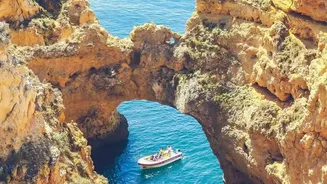
Though it sits on the same spectacular stretch of coast as world-famous Praia da Marinha, Praia de Albandeira receives a fraction of the visitors. This small, sheltered cove is known for its picturesque double sea arch and calm, turquoise waters. Protected by cliffs, it’s a tranquil spot for swimming and sunbathing. One reason for its quiet nature is that it is easy to miss the turn-off from the main road. The beach has remained undeveloped, with no sunbeds or permanent structures, preserving its natural charm. At low tide, you can explore the nearby rock pools and even walk through the arch to a smaller, adjacent cove. It’s a perfect example of the Algarve's hidden beauty, hiding in plain sight.
Praia da Ilha do Pessegueiro, Alentejo
Facing a small, mysterious island that holds the ruins of a 16th-century fort, Praia da Ilha do Pessegueiro offers both history and natural beauty. Located within the Southwest Alentejo and Vicentine Coast Natural Park, this long, sandy beach provides a feeling of immense space and tranquility. The water is clear and the surrounding landscape is rugged and undeveloped. While the main beach is easily accessible, a short walk along the coast reveals smaller, more secluded coves tucked between the rocks. The area is part of the Rota Vicentina hiking trail, attracting nature lovers who come for the pristine scenery. The beach itself is named after the island (which translates to 'Peach Tree Island'), and boat trips can be arranged from the nearby village of Porto Covo for those wishing to explore its ruins up close.