

Why Static Isn't Always a Strength
The traditional side plank is an excellent isometric exercise. It challenges you to resist gravity, building endurance in the muscles that run along the side of your core, particularly the obliques and the deeper quadratus lumborum, which helps stabilize
your spine. Holding this position forces your core, hip, and shoulder muscles to work together to keep your body in a straight, rigid line. However, our bodies don't just resist force statically; they move, bend, and twist. Functional strength, the kind you use in sports and daily life, requires your core to provide stability while your limbs and torso are in motion. This is where the rotational side plank comes in, transforming a great exercise into a superior one by introducing controlled movement.
The Power of the Twist
Adding a rotation—often called a 'thread the needle' motion—to the side plank dynamically challenges your core stability. As your arm reaches under your torso and then back up, your abdominal muscles must work harder to prevent your hips from dropping or rotating. This movement specifically targets your internal and external obliques, the muscles responsible for twisting your trunk. Strengthening these muscles not only helps to create a more defined waistline but also dramatically improves your rotational power. This is crucial for any activity involving throwing, swinging a bat or racket, or simply turning to grab something from the back seat of your car. By teaching your core to brace during a rotational movement, you're building a stronger, more resilient midsection that better protects your spine from injury.
How to Perform It Perfectly
Proper form is everything. Rushing the movement or letting your hips sag will negate the benefits and could put stress on your shoulder and lower back. Here’s how to do it right: 1. Get into Position: Lie on your side with your legs extended and stacked. Place your forearm on the floor with your elbow directly underneath your shoulder. Your body should form a straight line from your head to your feet. 2. Lift and Stabilize: Engage your core and lift your hips off the floor. Extend your top arm toward the ceiling. Your weight should be supported by your forearm and the bottom edge of your foot. 3. Initiate the Rotation: Exhaling slowly, twist your torso forward and reach your top arm through the space underneath your body. The movement should be controlled, coming from your midsection, not just your arm. 4. Return to the Start: Inhale as you reverse the motion, untwisting your torso and raising your arm back toward the ceiling. Keep your hips lifted and stable throughout the entire repetition. Aim for 8-12 controlled reps on one side before switching.
Common Mistakes to Avoid
To get the most out of the exercise and stay safe, watch out for these common errors: Sagging Hips: This is the most frequent mistake. If your hips drop, the load shifts from your obliques to your shoulder joint. If you feel yourself sagging, lower down, reset, and focus on keeping your hips high. Misaligned Elbow: Your supporting elbow must be directly under your shoulder. Placing it too far out puts unnecessary strain on the joint. Rushing the Movement: This is a control exercise, not a speed drill. Moving too fast uses momentum instead of muscle, reducing the effectiveness and increasing injury risk. Focus on a slow, deliberate twist. Dropping Your Head: Keep your neck in a neutral position, aligned with your spine, to avoid strain. Don't look up at the ceiling or let your head hang down.
Modifications for Every Fitness Level
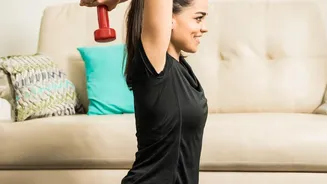
The beauty of the rotational side plank is its adaptability. If you're a beginner or find the full version too challenging, start with a modified version by bending your knees and supporting your weight on your bottom knee and forearm. This reduces the lever length, making it easier to maintain hip height and focus on the rotational movement. For an advanced challenge, perform the exercise on your hand instead of your forearm for a greater range of motion. You can also hold a light dumbbell in your top hand to add resistance, which will further test your core control and shoulder stability.