




The Gateway to the Roof of the World
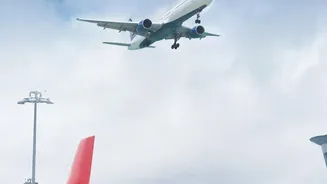
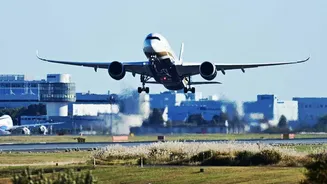
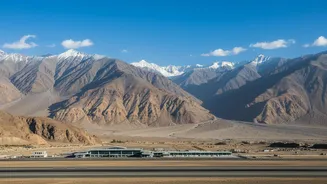
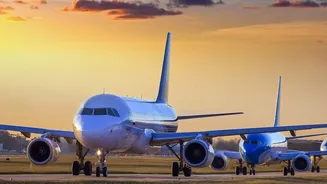
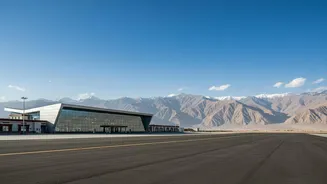
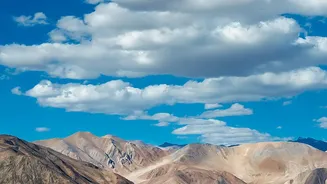
Kushok Bakula Rinpoche Airport in Leh is a place of superlatives. Situated at an altitude of 3,256 metres (10,682 feet), it is the highest commercial airport in India and one of the highest in the world. For travellers, it offers a dramatic and scenic
entry point to the breathtaking landscapes of Ladakh. For the region, it is a vital lifeline, ensuring year-round connectivity, especially when heavy snowfall renders high-altitude passes inaccessible. The airport, however, is also one of the most challenging to operate. The thin mountain air affects aircraft performance, and strong afternoon winds mean that all flights must take off and land in the morning. Pilots require special training to navigate the unidirectional approach through the valley. This combination of strategic importance and operational difficulty makes it a critical piece of national infrastructure, jointly managed by the Airports Authority of India and the Indian Air Force.
A Monk, Statesman, and Visionary
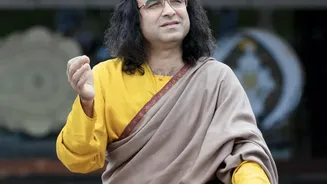
So, who was the man worthy of this significant honour? The 19th Kushok Bakula Rinpoche (1918-2003) was a figure of immense influence, often called the "Architect of Modern Ladakh". Born into the royal family of Matho, he was recognized in his childhood by the 13th Dalai Lama as the reincarnation of Bakula Arhat, one of the direct disciples of Gautama Buddha. After years of rigorous spiritual training in Tibet, where he attained the highest degree in Buddhist philosophy, he returned to a Ladakh facing immense social and political change. At the behest of Prime Minister Jawaharlal Nehru, he entered public life in 1949, embarking on a remarkable journey that seamlessly blended the roles of a monk, scholar, and statesman.
A Champion for Ladakh's Progress
For decades, Kushok Bakula Rinpoche was the foremost voice for Ladakh on the state and national stage. Serving as a minister in the Jammu and Kashmir government and later as a Member of Parliament, he was a tireless advocate for the region's development and the rights of its people. He championed the cause for Union Territory status for Ladakh and fought for Scheduled Tribe recognition for its populace. His vision went beyond politics; he was deeply committed to social reform, focusing on eradicating poverty and illiteracy. He understood that preserving Ladakh's unique cultural heritage required embracing modern education and development. This balanced approach was instrumental in establishing key institutions and laying the groundwork for significant progress in healthcare and infrastructure across the remote region.
An Ambassador of Peace and Faith
Rinpoche's influence extended far beyond Indian borders. In 1990, he was appointed India's ambassador to Mongolia, a post he held for a remarkable ten years. During this period, he played a pivotal role in the revival of Buddhism in the post-Soviet era, guiding the country through its peaceful transition to democracy. His efforts were so profound that he is still deeply revered in Mongolia, where a prophecy had spoken of Arhat Bakula's return to revive the faith. This diplomatic service, which also included efforts in Russia, showcased his unique ability to build bridges between nations through shared culture and spirituality. His work earned him the Padma Bhushan in 1988 and Mongolia's highest civilian award.
A Legacy Etched in the Himalayas
Naming India's highest commercial airport after Kushok Bakula Rinpoche is more than a posthumous honour; it is a reflection of his life's work. His entire public life was dedicated to connecting Ladakh with the rest of India and the world, not just physically but also culturally and intellectually. He was a patriot who, during the 1962 conflict, allowed his monastery to be used as a military hospital and steadfastly affirmed that Ladakh would always remain part of India. The airport, a symbol of modern connectivity and strategic importance, perfectly embodies his vision for a progressive and integrated Ladakh. It stands as a permanent tribute to the monk who helped his remote homeland reach for the skies.