







Defining Strategic Autonomy
At its core, strategic autonomy is India's foreign policy framework for the 21st century. It refers to the ability to pursue national interests and make independent decisions in foreign policy and economic matters, without being bound to any single power
bloc. This is a significant evolution from the Cold War-era policy of 'non-alignment'. While non-alignment often implied equidistance from superpowers, strategic autonomy is about active, interest-driven engagement with a range of global players. It means India can participate in the Quad with the US, Japan, and Australia for security cooperation, while also being a key member of BRICS and the Shanghai Cooperation Organisation (SCO) with Russia and China. This approach allows New Delhi to form modular partnerships—specific coalitions for specific sectors like trade, security, or climate—rather than getting locked into rigid, comprehensive alliances.
The Pivot to Bilateral Trade Deals
This flexible foreign policy is mirrored in India's approach to trade. For years, India was a staunch supporter of multilateral trade systems like the World Trade Organization (WTO). However, as global trade dynamics have become more fragmented and contentious, New Delhi has increasingly pivoted towards bilateral Free Trade Agreements (FTAs). This shift allows India to negotiate tailored agreements that serve its specific economic needs, rather than getting bogged down in slow-moving multilateral negotiations. The decision to opt out of the Regional Comprehensive Economic Partnership (RCEP) was a key example, driven by concerns about potential negative impacts on domestic industries from competition. Instead, India has embarked on an ambitious spree of negotiating and signing FTAs with key economic partners.
A Flurry of New Agreements
The past few years have seen a significant acceleration in India's FTA strategy. Landmark deals have been signed with the UAE (2022), Australia (2022), the European Free Trade Association (EFTA) bloc (2024), the UK (2025), and most recently, a massive agreement with the European Union in January 2026. These agreements are designed to be mutually beneficial, going beyond simple tariff reduction. For instance, the EFTA deal includes a commitment for US$100 billion in investment and the creation of one million jobs in India. Similarly, the deal with the UK aims to double bilateral trade by 2030, while the comprehensive EU agreement has been dubbed the "mother of all trade deals" for its sheer scale and scope, covering nearly 99.5% of bilateral trade value.
The 'Multi-Alignment' Advantage
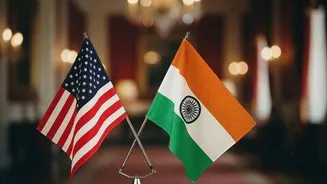
This network of trade deals is a practical application of 'multi-alignment'—the ability to maintain positive relationships with diverse, and sometimes rival, global powers. Strategic autonomy allows India to purchase defense equipment from France and Russia, while also engaging in high-tech partnerships with the United States through initiatives like iCET (Initiative on Critical and Emerging Technology). Economically, it means India can diversify its supply chains and export markets, reducing dependence on any single country, particularly China. This balancing act is crucial in a world where tensions between major powers, like the US and China, create uncertainty. By not picking a side definitively, India maintains its flexibility and leverages its growing market to secure its own interests.
The Economic Payoff and Future Path
The ultimate goal of this flexible and autonomous strategy is to fuel India's economic growth and achieve its ambition of becoming a developed nation by 2047. By securing preferential access to new markets, these trade deals are intended to boost key sectors like manufacturing, pharmaceuticals, and IT services. This creates jobs, attracts foreign investment for initiatives like 'Make in India', and enhances the global competitiveness of Indian products. While challenges remain, including ensuring that Indian exporters can fully utilize the benefits of these FTAs, the policy direction is clear. The focus is on quality agreements that deliver tangible results and integrate India more deeply into global value chains on its own terms.