



Seeing the Whole Forest, Not Just the Trees
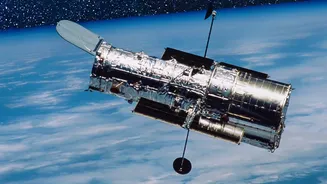
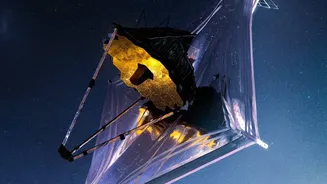
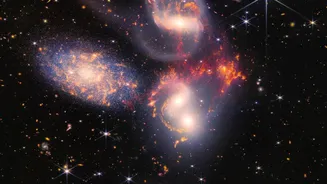
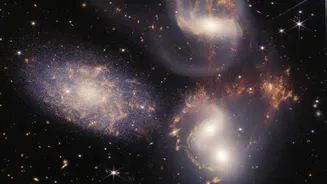
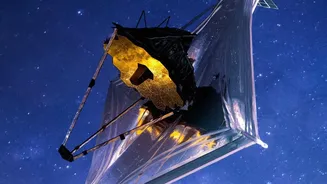
The single biggest difference between Roman and its famous siblings is its incredible field of view. Think of Hubble and Webb as powerful zoom lenses, designed to stare deeply at small, specific patches of the sky to capture immense detail. Roman, on
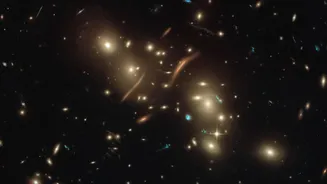
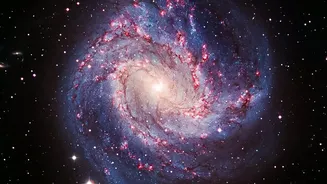
the other hand, is a wide-angle lens. Its Wide Field Instrument can capture an area of the sky at least 100 times larger than Hubble can in a single image, all while maintaining similar sharpness. This means that where Hubble might capture a stunning portrait of a single galaxy, Roman can capture that same galaxy and thousands of its neighbors all at once. This panoramic capability is what makes Roman a survey telescope—a machine built to map vast sections of the universe with unprecedented speed.
A Mission to Illuminate the Darkness
This wide-angle power isn't just for taking pretty pictures; it’s designed to tackle some of the biggest questions in cosmology. Two of Roman's primary goals are to investigate dark energy and dark matter. These mysterious components are believed to make up about 95% of the universe, yet we know very little about them. Dark energy is the force thought to be accelerating the expansion of the universe. To study it, Roman will conduct massive surveys, measuring the precise distances and positions of millions of galaxies and supernovae. By creating the largest-ever 3D map of the cosmos, scientists can trace how the universe's expansion has changed over billions of years, giving them crucial clues about the nature of dark energy.
An Unprecedented Hunt for New Worlds
Roman is also set to revolutionize the search for exoplanets, worlds orbiting other stars. While telescopes like Kepler and TESS have found thousands of planets using the 'transit' method (watching for a star's light to dim as a planet passes in front), Roman will primarily use a different technique called gravitational microlensing. This method detects planets by observing how their gravity bends and magnifies the light from a distant, background star, creating a temporary spike in brightness. Microlensing is especially good at finding planets that are farther from their star—in orbits similar to those of the planets in our own solar system—and even rogue planets that wander the galaxy alone. By staring at the star-rich center of our Milky Way, Roman is expected to find thousands of new worlds, conducting a galactic census that will give us a much clearer picture of how common planets are in our galaxy.
A Complement, Not a Competitor
It’s crucial to understand that Roman, Hubble, and Webb are a team, not rivals. They are designed to work together, each leveraging its unique strengths. Roman is the great surveyor; it will find tens of thousands of interesting objects and phenomena across the sky. Once Roman identifies a particularly intriguing galaxy, supernova, or planetary system, the powerful zoom of Webb or the unique ultraviolet capabilities of Hubble can be used to perform detailed follow-up observations. For instance, Roman might discover thousands of exoplanets, and Webb could then analyze the atmospheres of the most promising ones. Roman provides the map, and the other telescopes explore the destinations.