




Why Indirect Light is a Plant's Best Friend
Many people assume all plants crave hours of direct, streaming sunlight. The reality is that for many tropical species, which make up the bulk of our houseplants, direct sun is actually too harsh. In their native habitats, they grow under the canopy of larger
trees, receiving dappled, filtered light. Replicating this indirect light in our homes is the key to their happiness. Harsh, direct sun can scorch their leaves, causing stress and damage. A spot a few feet away from an east-facing window or in a room with bright, ambient light is often the sweet spot. Many of these plants also offer health benefits, such as purifying the air and boosting humidity, which can lead to a better night's sleep.
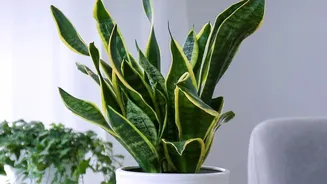
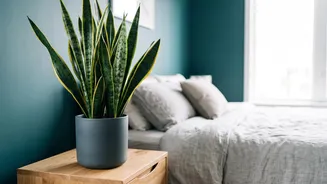
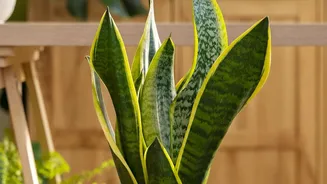
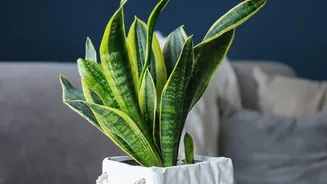
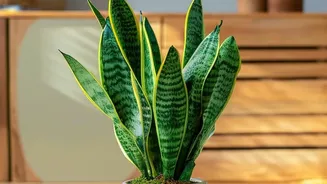
Snake Plant (Dracaena trifasciata)
The Snake Plant is the undisputed champion of low-maintenance indoor gardening. Its stiff, upright leaves add a modern architectural element to any room. It is famously hardy and can tolerate a wide spectrum of light conditions, but it truly thrives in bright, indirect sunlight. In fact, too much direct sun can burn its leaves. Beyond its good looks, the Snake Plant is a powerhouse of air purification, known for filtering common household toxins. It also uniquely converts carbon dioxide into oxygen at night, making it an ideal companion for the bedroom. Water it sparingly, only when the soil is completely dry, as it is prone to root rot if overwatered.
ZZ Plant (Zamioculcas zamiifolia)
With its wide, dark green, glossy leaves, the ZZ Plant is a stylish addition that is almost impossible to kill. It is renowned for its tolerance of low light, making it suitable for even the dimmest corners of your home, though it grows best in bright, indirect light. Like the Snake Plant, its leaves can be scorched by direct sunlight. The ZZ Plant requires very infrequent watering thanks to its large, potato-like rhizomes that store water, making it perfect for frequent travellers or forgetful plant parents. This resilience and its elegant appearance make it a favourite for both homes and offices across India.
Pothos (Epipremnum aureum)
Often called Money Plant in India, Pothos is a versatile and forgiving trailing vine that looks fantastic cascading from a hanging basket or shelf. It's highly adaptable and can tolerate low light, but its leaves will be larger and more vibrant in bright, indirect light. Variegated varieties, in particular, may lose their beautiful markings in light that is too low. Pothos is another excellent air purifier, noted by NASA for its ability to remove toxins like formaldehyde from the air. It's a fast grower and is incredibly easy to propagate in water, allowing you to easily share your plant success with friends.
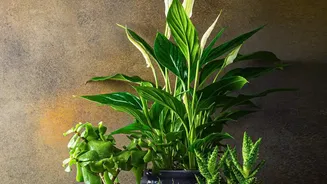
Peace Lily (Spathiphyllum)
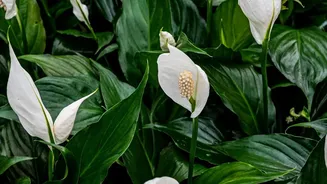
The Peace Lily is beloved for its elegant dark green leaves and its unique white flowers, which are actually a modified leaf called a spathe. It is one of the few low-light plants that flowers indoors. It prefers a spot with consistent, bright indirect light to encourage blooming but can tolerate lower light levels. Avoid direct sun, which will scorch its leaves. The Peace Lily is also quite communicative; it will visibly droop when it needs water, taking the guesswork out of its care routine. It is an exceptional air purifier and also helps to increase indoor humidity, which can be beneficial for breathing.
Spider Plant (Chlorophytum comosum)
The Spider Plant is a classic and cheerful houseplant with arching leaves and a fountain-like growth habit. It's incredibly easy to care for and adaptable to various conditions, preferring bright, indirect light but tolerating lower light levels. It's well-known for being a powerful air purifier, effective at removing common toxins like formaldehyde and carbon monoxide. One of its most charming features is the production of 'spiderettes'—small baby plants that dangle from the mother plant. These can be easily repotted to create new plants. It is also non-toxic, making it a safe choice for homes with pets and children.