



New Contracts for a New Era
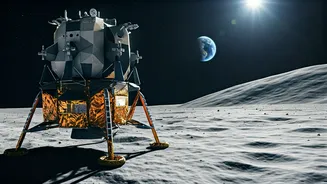
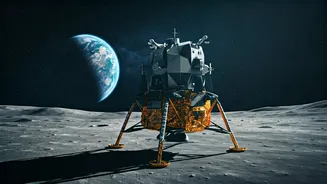
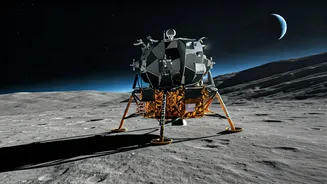
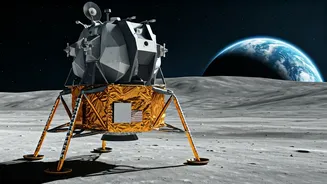
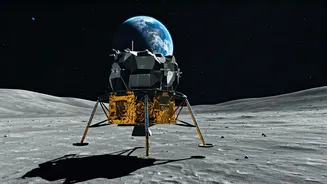
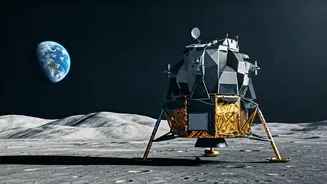
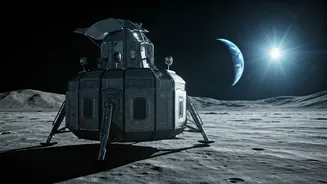
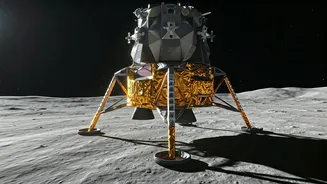
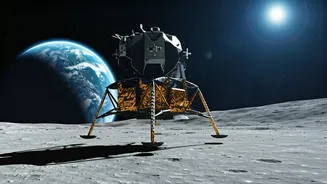
In a significant move on June 30, 2026, NASA announced it would be paying three commercial companies—Astrobotic, Firefly Aerospace, and Intuitive Machines—nearly $600 million for four missions to deliver science and cargo to the Moon. This isn't just
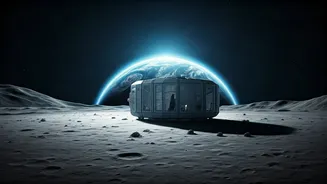
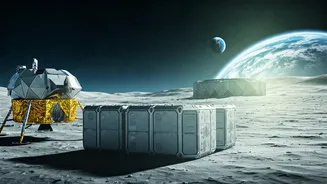
business as usual; it's a foundational part of "Phase 1" of the agency's plan to build a permanent lunar settlement. These contracts, awarded under the Commercial Lunar Payload Services (CLPS) initiative, represent a crucial step in creating the infrastructure needed for the Artemis Base Camp. By relying on commercial partners, NASA is accelerating its timeline, enabling a more rapid cadence of missions to learn from and improve upon the technology needed to live and work on the lunar surface. This flurry of activity shows the plan is shifting from blueprints to real hardware.
The Promise of a Spare Rover
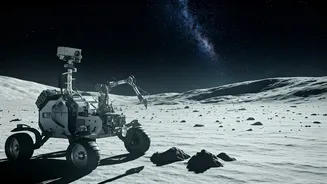
In a surprise announcement, NASA also revealed it is considering repurposing a high-fidelity test rover, an engineering twin to the Perseverance and Curiosity rovers on Mars, for a mission to the Moon. This rover, nicknamed PROMISE (Polar Rover for Observation, Mapping, and In-Situ Exploration), is nuclear-powered, unlike the other solar-powered vehicles planned for the Moon. This gives it a major advantage: the ability to operate during the extreme cold and dark of the long lunar night at the south pole, where the Artemis base is planned. While many details are still being defined, the potential to send a proven, powerful rover to scout the region is a game-changing possibility for understanding the resources, like water ice, that are critical for a long-term human presence.
Mobility is the Mission
The success of a lunar base depends heavily on mobility—the ability for astronauts to travel far from their landing site to conduct science and explore. To that end, NASA is actively developing the next generation of lunar vehicles. The Lunar Terrain Vehicle (LTV) will be a modern, unpressurized moon buggy, akin to a high-tech pickup truck for the lunar surface. It will allow astronauts wearing spacesuits to transport tools, collect samples, and venture for miles. NASA is procuring this as a service, meaning companies like Lunar Outpost and Astrolab will own and operate the vehicles. This approach allows NASA to leverage commercial innovation while focusing on its core mission of exploration. These rovers are expected to be on the Moon ahead of the arrival of the Artemis V crew later this decade, ready to drive from day one.
Challenges on the Lunar Horizon
Despite this exciting progress, building a settlement on the Moon remains one of the most ambitious engineering challenges in human history. The lunar environment is unforgiving, with extreme temperature swings, abrasive dust that can cripple machinery, and the persistent threat of radiation. NASA and its partners must overcome these hurdles to create reliable landers, habitats, power systems, and rovers. Program managers are adopting an iterative approach, starting with robotic missions to test systems and learn from failures. As NASA Administrator Jared Isaacman noted, the agency is drawing from the playbook of the 1960s—not jumping straight to a landing, but building capability step-by-step to ensure a sustainable and safe return to the lunar surface.