








A New Jewel in Ladakh's Crown
In a region renowned for its breathtaking landscapes, serene monasteries, and adventure trails, Ladakh has added another must-see destination. The administration has inaugurated twin flower fields at Choglamsar and Stakna in the Leh district, transforming
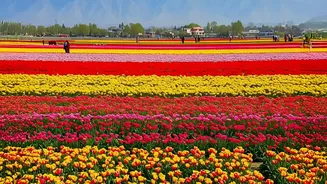
40 acres of high-altitude desert into a riot of colour. Situated at an elevation of 10,600 feet, these are described as the world's highest-altitude flower fields. The project features over 2.5 million flowering plants, dominated by approximately 2.4 million Lilium and 100,000 Gladiolus stems, creating a spectacular visual contrast with the arid environment. The fields, which opened to the public in mid-September 2026, represent a first-of-its-kind experiment in large-scale floriculture at such a high altitude. The Choglamsar site bloomed in September after a remarkably quick two-month development period, while the flowers at Stakna are expected to bloom towards the end of October.
More Than Just a Tourist Attraction
While the flower fields are a clear draw for tourism, their purpose runs much deeper. The initiative is a strategic effort to diversify Ladakh's agricultural economy and provide a sustainable new source of income for the local community. For years, the region's farmers have contended with a challenging climate and limited cropping options. This project introduces commercial floriculture as a viable and high-value alternative. The Choglamsar park is designed to be a model floriculture centre, cultivating not only Lilium and Gladiolus but also Tulips and other ornamental species that have strong demand in both national and international markets. By creating a new attraction, the project also aligns with broader goals to promote sustainable and year-round tourism, offering visitors a reason to explore Ladakh beyond the peak summer months.
Cultivating Local Empowerment
At its heart, this is a project for the people of Ladakh. The administration's model is designed to directly empower local farmers, self-help groups (SHGs), and cooperatives. In the initial phase, the Department of Agriculture is managing the cultivation and providing comprehensive training to locals in scientific farming techniques, modern cultivation, and post-harvest management. The plan is to hand over the fields to selected SHGs and cooperatives, who will then manage the commercial aspects of cultivation, harvesting, marketing, and value addition. This approach ensures that the economic benefits are rooted in the community. The potential returns are significant, with wholesale prices for a single Lilium stem fetching between ₹60-₹70. The first commercial consignment of 15,000 Lilium stems was airlifted to major cities like Delhi and Mumbai in late September 2026, marking a major milestone.
A Vision for a Greener Future
This floriculture initiative is a key part of a larger vision for a sustainable and prosperous Ladakh. The project is being implemented with technical and scientific support from the CSIR-Institute of Himalayan Bioresource Technology, ensuring that the cultivation methods are suited to the fragile Himalayan ecosystem. The unique climatic conditions of Ladakh, often seen as a challenge, are proving to be a strength for growing high-quality flowers like Lilium, which thrive in colder temperatures. The success of the Choglamsar and Stakna fields is expected to pave the way for similar projects, with officials aiming to expand flower cultivation across another 200 acres by the following year. This initiative not only adds to the region's green cover but also positions Ladakh as an emerging hub for premium floriculture, blending ecological beautification with economic self-reliance.