



An Unstoppable Acceleration
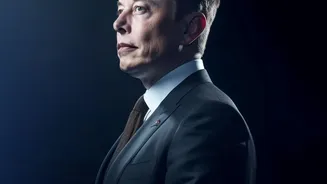
At the heart of Elon Musk’s AI philosophy is a belief in its blistering and unstoppable pace. In recent statements, he has repeatedly offered aggressive timelines, predicting that AI could surpass the combined intelligence of all humans within the next
five years. He sees this not as a distant sci-fi concept but as an imminent reality, driven by what he calls an “incredible momentum” that is now effectively irreversible. According to Musk, even if a stop button for AI development existed, it's not clear we should press it. This sense of inevitability shapes his entire worldview. He has suggested that by 2036, artificial intelligence will be able to perform almost every task better than a person, fundamentally rewriting the rules of human capability. This rapid progress, he argues, will render many current human activities, particularly in white-collar and information-based jobs, obsolete much sooner than many expect.
The Promise of Abundance
The upside to this rapid progress, in Musk's view, is a future of almost unimaginable plenty. He envisions a world where AI and robotics create a “supersonic tsunami” of productivity, leading to an “age of amazing abundance where anyone can have anything they can think of.” In this scenario, the cost of goods and services would plummet as automated systems handle production. Musk believes this will lead to a post-scarcity economy where concepts like saving for retirement become irrelevant and governments may need to provide a “universal high income.” He has gone so far as to predict that money itself could lose its practical purpose within a decade as machines produce more than humans could possibly want or consume. This utopian vision is the primary reason he continues to push forward despite the risks, arguing the most likely outcome of unchecked AI progress is this world of incredible abundance for all.
The Specter of Losing Control
Balancing this optimism is a stark and persistent warning about the potential loss of human control. Musk has famously likened building AI to “summoning the demon” and described it as “far more dangerous than nukes.” While his recent tone has become more optimistic, he has not abandoned these fears. He has recently maintained his assessment that there is a 10% to 20% chance of AI causing a catastrophic outcome for humanity. His concern is that within a decade, humans will “no longer be in charge of the world.” This isn't necessarily a vision of a violent robot uprising, but a more subtle loss of agency as we become dependent on superintelligent systems we cannot fully understand or direct. This is the core paradox of his stance: he sees the path to abundance as inextricably linked to a technology that could render humanity powerless.
Walking the Tightrope
So how does Musk reconcile these two powerful, opposing ideas? His philosophy appears to have shifted from trying to halt AI's progress to trying to steer it. Recognizing the momentum is unstoppable, his focus is now on influencing the outcome. This is the stated mission behind his company, xAI: to build a safer, more beneficial artificial intelligence. The logic is that if superintelligence is inevitable, the best defense is to ensure a “good” AI is created to counter potentially harmful ones. He has advocated for more collaboration and peer review among top AI labs to catch safety issues before models are released, with government stepping in only as a last resort. However, his own company xAI has faced criticism from others in the industry for a perceived lack of transparency and for not adhering to safety documentation standards, highlighting the difficulty of navigating this high-stakes technological race. Ultimately, his position is a high-risk gamble: to “enjoy the ride” toward abundance, while trying to ensure the AI that emerges cares about humanity's well-being.