







What is Operation Economic Outcast?
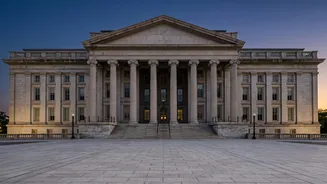
On Monday, August 24, 2026, US Treasury Secretary Scott Bessent announced the launch of 'Operation Economic Outcast', describing it as an "economic onslaught" and an "unprecedented campaign" to isolate Iran. The stated goal is to sever all remaining economic lifelines
that sustain the Iranian government by targeting its global financial connections. Bessent declared the administration's objective is to end the perceived threat from Iran, not just manage it, using severe economic coercion to achieve its foreign policy aims. The operation was framed as a final warning to countries and companies worldwide: cease all economic engagement with Iran or face the full power of US financial measures.
Understanding Secondary Sanctions
The key weapon in this operation is the threat of secondary sanctions. Unlike primary sanctions, which apply to a country's own citizens and companies, secondary sanctions target third parties. For instance, if a company from India or a bank in Switzerland does business with a sanctioned Iranian entity, the US can penalize that Indian or Swiss firm. The penalty is not a fine for breaking another country's laws but a choice: continue doing business with the sanctioned entity and lose access to the US market and its financial system, or comply with the US sanctions. Given the dominance of the US dollar and the size of its economy, this 'choice' acts as a powerful deterrent, effectively extending US jurisdiction far beyond its borders.
Who Are the Targets?
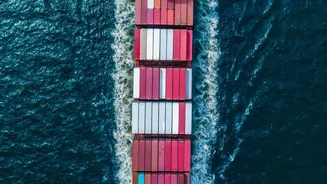
The primary target of Operation Economic Outcast is Iran, but the secondary sanctions threat is aimed at a global network of entities that facilitate trade with Tehran. The US Treasury specified five critical sectors of the Iranian economy that will now carry secondary sanctions exposure: digital assets, technology, gold, aviation, and shipping. Simultaneously, the US designated over 60 individuals, vessels, and companies across regions like the UAE, China, Hong Kong, and Europe for their alleged roles in Iran's oil trade and military programs. Treasury Secretary Bessent explicitly warned that any entity, including major financial institutions, found to be facilitating transactions for Iran could be cut off from the US dollar system. While no specific countries were immediately sanctioned, Iran's largest trading partners, such as China and Turkey, are now under immense pressure.
Why This, Why Now?
US officials have framed this move as a decisive action following a period of escalating conflict and stalled negotiations. The announcement comes nearly six months into a conflict that has seen military exchanges and disruptions to global shipping in the Strait of Hormuz. With military options proving difficult and unpopular, the administration appears to be returning to a 'maximum pressure' economic campaign to force Iran's hand. By threatening secondary sanctions, the US aims to close loopholes that have allowed Iran to maintain some economic activity despite years of existing primary sanctions. The rhetoric used, including comparisons to an "economic D-Day," signals an intent to create a level of financial isolation so severe that it cripples the Iranian state's ability to function.
What This Means for India
For countries like India, which have historically maintained diplomatic and economic ties with Iran, Operation Economic Outcast presents a significant challenge. Indian companies, particularly in the energy and shipping sectors, must now navigate a treacherous compliance landscape. Continuing any business that falls within the newly targeted sectors could risk being cut off from the US financial system, a penalty most global firms cannot afford. This forces a difficult choice between maintaining established relationships with Iran and preserving access to the much larger US market. The move also complicates India's diplomatic balancing act, forcing it to choose sides in a conflict where it has traditionally sought a neutral stance. Any decision will carry economic and geopolitical consequences, making this a critical issue for New Delhi to monitor.