




By 2030, Artificial Intelligence will be an undisputed force in hiring, automating tasks from resume screening to initial interviews. This shift is causing anxiety, but for experienced professionals, it’s not a threat—it's an opportunity.
The New Gatekeeper: AI in Recruitment
By 2030, the
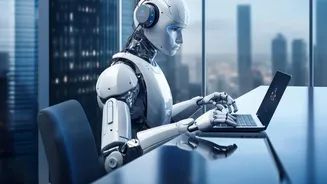
role of AI in recruitment will have evolved from a novelty to a fundamental part of the hiring infrastructure in India and globally. Already, companies are using AI to parse CVs, match candidates to roles, and even conduct initial video assessments. This automates the high-volume, repetitive tasks that once consumed recruiter time. The goal is to make hiring faster, more data-driven, and more efficient. For job seekers, this means the first 'eyes' on an application will likely be an algorithm. This system will screen for specific skills and keywords before a human recruiter ever gets involved. While this brings efficiency, it also means that how you present your experience on paper and in digital profiles is more critical than ever.
The 'Experience Premium' in an AI-Driven World
Contrary to fears of being replaced, recent data shows a fascinating trend: companies adopting AI are hiring more senior professionals, not fewer. One study spanning 41 countries found that AI-adopting firms increased their senior workforce by nearly 7% while junior employment fell. This suggests AI is 'labor expanding' for senior staff, augmenting their abilities and increasing their productivity. The reason is simple: AI can handle routine tasks, but it cannot replicate wisdom. Experience provides context that an algorithm lacks. Employers seem willing to pay a premium for senior talent who can oversee AI outputs, apply expert judgment, correct errors, and make strategic decisions. This creates an 'experience premium', where deep industry knowledge and nuanced understanding become more valuable, not less.
From Execution to Judgment
The very definition of seniority is shifting. In the past, a senior professional was valued for their ability to execute complex tasks independently. But as generative AI tools become adept at writing code, drafting documents, and analyzing data, the value is moving from 'doing' to 'deciding'. An experienced professional's worth will be measured by their ability to ask the right questions, evaluate the trade-offs in AI-generated solutions, and provide the critical thinking that machines cannot. They will transition from being task-doers to system-orchestrators who can direct AI agents effectively. This is where decades of experience become a competitive advantage—knowing which problems to solve and why is a uniquely human skill.
Essential Skills for the Experienced Professional in 2030
To thrive, experienced professionals must cultivate skills that complement AI. The World Economic Forum and other research bodies consistently highlight a blend of technical and humancentric abilities. First is AI literacy—not the ability to code AI, but to collaborate with it effectively. Second are cognitive skills like analytical and creative thinking, which are crucial for problem solving in complex situations. Finally, and perhaps most importantly, are human centric skills. Emotional intelligence, leadership, social influence, and empathy are abilities where humans retain a profound advantage. As AI handles the 'what', experienced leaders will be needed to manage the 'who' and 'why'—building teams, mentoring junior talent, and navigating complex human dynamics.
How to Future Proof Your Career Today
The time to prepare for 2030 is now. The first step is to embrace lifelong learning and continuous upskilling. This doesn't necessarily mean a formal degree; it can involve certifications, online courses, or project based learning to stay current. Developing digital fluency with modern collaboration and project management tools is essential. Beyond technical skills, focus on building your personal brand around your unique expertise and judgment. Frame your experience not by the tasks you've done, but by the decisions you've led and the complex problems you've solved. As AI creates a potential 'career pipeline problem' by reducing some entry level roles, the need for experienced mentors will grow. Leaning into your role as a teacher and guide for the next generation will become a powerful differentiator.