








What is a Launch Rehearsal?
In the world of spaceflight, practice doesn't just make perfect—it ensures survival. A 'dry run' or 'dress rehearsal' is a full-scale simulation of launch day, from start to finish. It allows astronauts, flight controllers, and ground support teams to walk
through the complex, time-sensitive procedures of a real countdown. The term 'dry' signifies that the rocket is not loaded with propellant, meaning there is no actual risk of liftoff. This safety measure allows teams to identify and resolve any procedural glitches, communication issues, or timing discrepancies without the pressure and danger of a live rocket. It is a critical opportunity for everyone involved to synchronize their actions, ensuring a seamless and safe launch.
Simulating the Day for Crew-13
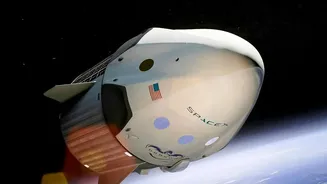
On Tuesday, September 29, the international crew of Crew-13 participated in their launch day simulation at NASA's Kennedy Space Center in Florida. The four-person crew includes NASA astronauts Jessica Watkins (Commander) and Luke Delaney (Pilot), along with Canadian Space Agency astronaut Joshua Kutryk and Roscosmos cosmonaut Sergey Teteryatnikov. The day began just as the real one will: the astronauts put on their custom-fit SpaceX spacesuits and performed leak checks. They then traveled to Space Launch Complex 40, ascended the launch tower, and boarded the Dragon spacecraft, which sits atop the Falcon 9 rocket. Inside the capsule, they ran through communication checks with mission control and simulated the entire pre-launch sequence, ending just before the point of engine ignition.
A Partnership in Precision
The Crew-13 mission is the thirteenth operational flight under NASA's Commercial Crew Program, a partnership that leverages the innovation of private companies like SpaceX to transport astronauts to and from the International Space Station. This model relies on deep collaboration, and rehearsals like this are where the combined NASA and SpaceX teams function as a single, integrated unit. Every step, from suiting up the crew to managing the countdown, involves personnel from both organizations. These joint exercises are essential for validating the procedures that keep astronauts safe and ensure mission success. The successful completion of the dry run is a major milestone, confirming that both the hardware and the human teams are ready for launch day.
What's Next for the Mission?
With the dress rehearsal successfully completed, all eyes are on the clock. The Crew-13 mission is scheduled to launch no earlier than 11:10 a.m. EDT on Thursday, October 1. Weather is the final variable, with officials forecasting a 60% chance of favourable conditions. If the launch is scrubbed, a backup opportunity is available on Friday, October 2. Once in orbit, the Dragon spacecraft is expected to dock with the International Space Station in just under eight hours, potentially setting a new record for the fastest trip to the ISS by a U.S. spacecraft. The crew will then begin a long-duration science mission, expected to last about six months, conducting research that benefits life on Earth and prepares humanity for future exploration.