
Kutná Hora, Czech Republic: The City of Silver
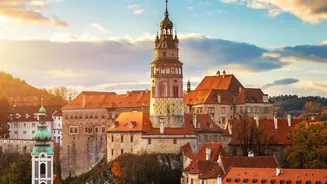
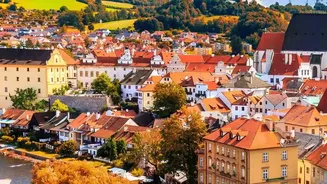
Just an hour from Prague, Kutná Hora feels a world away from the capital's bustling crowds. This town's story is built on silver. During the Middle Ages, its mines were so productive they made the Kingdom of Bohemia a powerhouse in Europe. This wealth
funded the construction of architectural marvels that earned the town its UNESCO status in 1995. The undisputed crown jewel is the staggering St. Barbara's Church, a Gothic cathedral built to rival Prague's St. Vitus, its construction financed by the miners' guilds. But the most famous, and certainly most surreal, attraction is the Sedlec Ossuary. This small chapel is artistically decorated with the bones of an estimated 40,000 to 70,000 people, a sobering yet fascinating testament to life, death, and art. A visit here is not just about seeing beautiful buildings; it's about understanding the immense wealth and religious devotion that shaped Central Europe.
Churches of Moldavia, Romania: Painted Outdoor Bibles
In the rolling hills of Romania’s Bucovina region lies a collection of monasteries unlike any other in the world. Known as the Painted Monasteries, eight of these are listed as a UNESCO World Heritage site. Built in the 15th and 16th centuries, their exterior walls are covered in elaborate and brilliantly colored frescoes. These murals were not mere decoration; they were a visual Bible for the illiterate masses, depicting vivid scenes from the life of Jesus, portraits of saints, and dramatic portrayals of heaven and hell. Voroneț Monastery, nicknamed the “Sistine Chapel of the East,” is famous for its intense shade of blue and a breathtaking Last Judgment scene covering an entire wall. The Sucevița Monastery is celebrated for having the best-preserved and most extensive collection of paintings. Exploring these sites offers a profound insight into the region's Byzantine art traditions and its history of defending Orthodox Christianity.
Berat and Gjirokastër, Albania: Ottoman-Era Hilltop Towns
Albania is a country still emerging on the mainstream tourist trail, and the historic centres of Berat and Gjirokastër are its UNESCO-listed jewels. Both are rare and remarkably well-preserved examples of towns that flourished during the Ottoman period. Gjirokastër, the “City of Stone,” is a fairytale landscape of steep cobbled streets and distinctive stone-roofed houses that climb up to a mighty citadel. Berat, the “City of a Thousand Windows,” is famous for its white Ottoman houses stacked on a hillside, creating a stunning vertical neighbourhood that appears to watch over the Osumi River below. Both towns feature castles, mosques, and Byzantine churches, bearing witness to centuries of coexistence between different cultures and religions. Wandering their ancient lanes feels like stepping back in time, offering a glimpse into a Balkan heritage that has been immaculately preserved.
Wooden Tserkvas of the Carpathian Region, Poland and Ukraine
Spread across the Carpathian mountains in southeastern Poland and western Ukraine is a collection of 16 wooden churches, or tserkvas, that represent a unique architectural tradition. Inscribed by UNESCO in 2013, these structures were built by Orthodox and Greek Catholic communities between the 16th and 19th centuries. Constructed from horizontal wooden logs, they showcase exceptional carpentry and a design that blends Orthodox ecclesiastical tradition with local folklore. Each church is distinctive, often featuring a three-part plan with soaring domes and bell towers. The interiors are frequently adorned with intricate polychrome decorations and iconostasis screens. Visiting these tserkvas is an opportunity to explore the culture of ethnographic groups like the Lemko and Boyko people and appreciate a form of sacred timber architecture that is both beautiful and deeply rooted in the history of this borderland region.
Curonian Spit, Lithuania: A Kingdom of Sand and Wind
For a different kind of historical depth, one written by nature and human resilience, there is the Curonian Spit. This narrow, 98-kilometre sand-dune peninsula separates the Curonian Lagoon from the Baltic Sea and is shared by Lithuania and Russia. It’s a UNESCO World Heritage site celebrated for its raw, dramatic beauty and the story of its survival. The landscape is a fragile ecosystem of massive shifting sand dunes, pine forests, and quiet fishing villages with traditional wooden houses. The site bears witness to the tireless human effort to combat the natural forces of wind and water through centuries of stabilization and reforestation projects that saved the spit from being completely eroded. Biking or hiking along its paths reveals breathtaking panoramas and a powerful sense of tranquillity, offering a unique perspective on the intersection of nature and culture in the Baltic region.