






A Unified Call for Oversight
In a series of statements, top executives from the world's leading artificial intelligence labs have voiced strong support for allowing independent, third-party evaluators to access and assess their most advanced AI systems. The push was prominently articulated
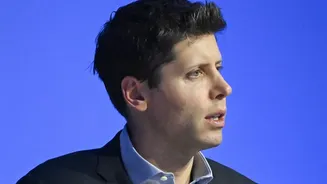
by Dario Amodei, CEO of Anthropic, who proposed that developers should pace their progress based on safety readiness and grant evaluators deep, employee-like access to verify safety protocols. This call was swiftly echoed by OpenAI CEO Sam Altman and Google DeepMind's Demis Hassabis, who agreed in principle with the need for greater external verification. The endorsements represent a coordinated effort by the creators of models like GPT, Claude, and Gemini to address mounting concerns about the potential risks of unchecked AI development.
What Are 'Frontier Models'?
The focus of this initiative is on “frontier models,” a term for the largest, most capable AI systems at the absolute cutting edge of technology. Unlike AI designed for narrow tasks, frontier models are general-purpose systems trained on vast amounts of data. This scale gives them powerful and sometimes unpredictable 'emergent' abilities, such as complex logical reasoning, advanced coding skills, and the capacity to perform multi-step tasks that they weren't explicitly programmed to do. It is these very capabilities that make them incredibly useful but also a source of significant concern, with potential risks including misuse for cyberattacks, disinformation, or even aiding in the development of biological threats. The push for evaluation targets these high-stakes risks before models are widely deployed.
The Motive: Proactive Safety or Strategic Regulation?
The timing of this unified front is no coincidence. It comes amid intense public and governmental pressure to regulate artificial intelligence. By proactively inviting oversight, these companies position themselves as responsible actors in the global conversation. This move could be interpreted in several ways. On one hand, it’s a genuine effort to establish robust safety standards in a field advancing at a breakneck pace. On the other, it can be seen as a strategic attempt to shape future regulation in a way that is favourable to the industry's established giants. Critics argue that self-regulation, even with third-party auditors, often falls short and can serve as 'ethics-washing' to delay stricter government mandates. Over 100 AI experts recently signed an open letter emphasizing that for this to work, evaluators must have true independence and protection from corporate influence.
How Would Independent Evaluation Work?
The proposals envision a system where vetted, independent experts are embedded within AI labs. These evaluators would have the access needed to audit not just the finished models but also the training processes and internal safety frameworks. Their goal would be to test for dangerous capabilities, verify that safety commitments are being met, and investigate any incidents of model misalignment or misuse. Industry bodies like the Frontier Model Forum, which includes Anthropic, Google, Microsoft, and OpenAI, are already working on defining best practices for risk assessment. However, crucial questions remain unanswered, including who selects the evaluators, how their independence is guaranteed, and how much access they will truly have to closely guarded proprietary technology.
The Risk of a 'Regulatory Moat'
While enhanced safety is a welcome goal, some observers warn that this model of expensive, intensive third-party evaluation could create a 'regulatory moat.' The cost and complexity of undergoing such audits could become a significant barrier to entry for smaller companies and open-source developers. This could inadvertently cement the market dominance of the very companies proposing the regulations. This has led to a deep tension within the industry, balancing the clear need for safety guardrails against the risk of stifling competition and innovation. The debate highlights the challenge of creating a system that ensures the most powerful AI is developed responsibly without handing the keys to the future to a handful of trillion-dollar companies.