






A Monumental, Messy Milestone
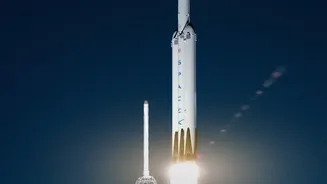
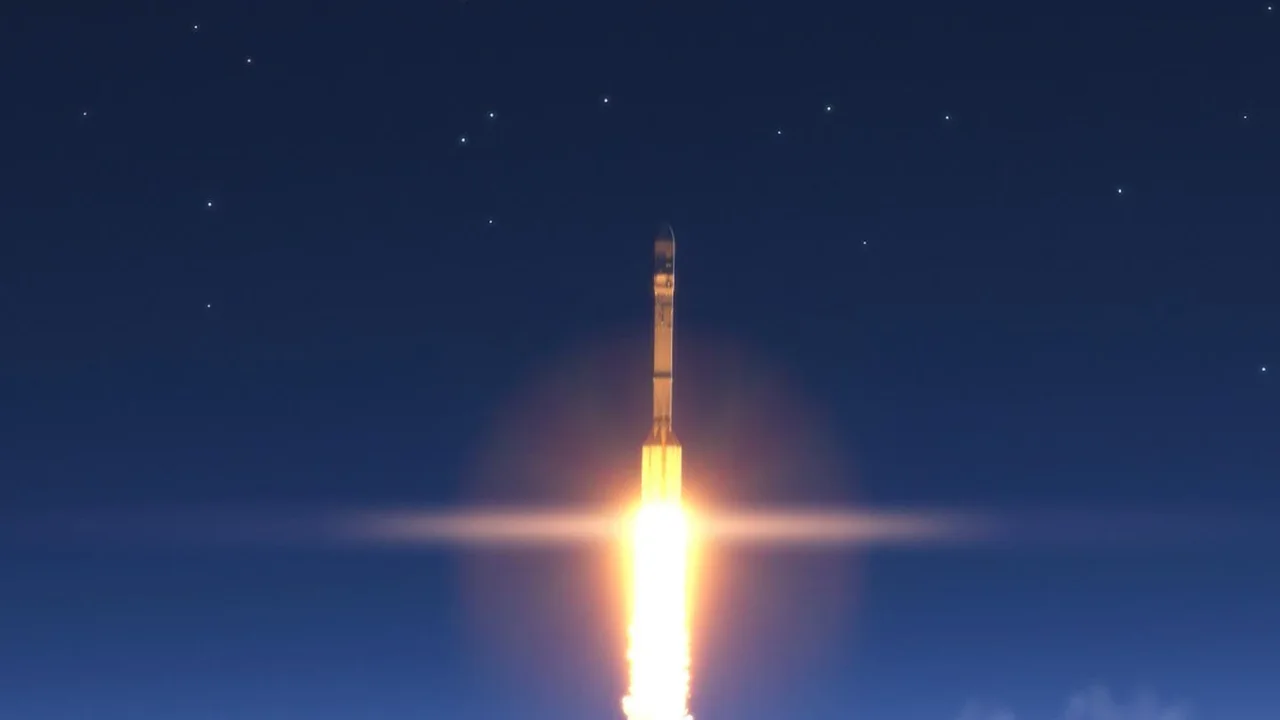
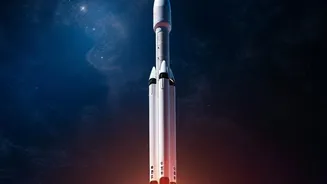
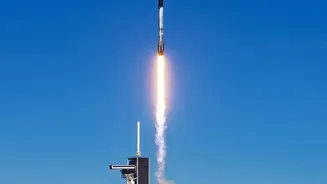
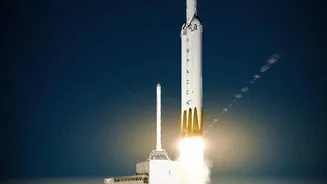
On September 28, the world's largest and most powerful rocket blasted off from Starbase, Texas, on its 14th test flight. Unlike its 13 predecessors, which were all designed for suborbital trajectories, this mission's goal was orbit. Despite one of the upper
stage's six Raptor engines failing during ascent, mission control made the bold call to push forward. Roughly 25 minutes after launch, Starship achieved orbit, prompting cheers at SpaceX. However, the success was not without caveats. The planned 10-hour mission was cut short to just three hours out of an "abundance of caution" following the engine issue. The flight concluded with an explosive splashdown in the Pacific Ocean rather than a soft landing. Still, by reaching orbit, the mission accomplished its primary goal and marked a new era.
The Real Reason for Success: Iteration
The secret to Starship's orbital success isn't a single new gadget, but the culmination of SpaceX's relentless, high-profile development philosophy: fly, analyze, and fly again. The previous 13 flights, many of which ended in spectacular fireballs, were never failures in SpaceX's eyes. Each was a data-gathering exercise. Earlier flights systematically tackled key challenges, from validating the performance of the 33-engine Super Heavy booster to testing the complex 'hot-staging' separation maneuver. More recent flights, like Flight 13 in July 2026, focused on stress-testing the heat shield's 18,000 ceramic tiles to ensure they could withstand the immense forces of launch, a prerequisite for any orbital attempt. Flight 14's success was built directly on the lessons learned from every preceding flight.
Perfecting the Hot-Stage Separation
One of the most critical technologies enabling this leap was 'hot-staging'. This is a technique where the Starship upper stage ignites its engines before it has fully separated from the Super Heavy booster below. While this puts immense stress on both vehicles, it provides a significant performance boost by ensuring there is no gap in thrust during thrust during separation, preventing the loss of precious velocity to gravity. SpaceX estimates this maneuver increases the rocket's payload-to-orbit capacity by about 10%. First introduced on Starship's second flight and refined over subsequent missions, the successful execution of hot-staging on Flight 14 was a key factor in giving the vehicle the final push it needed to achieve orbital speeds of over 28,000 km/h.
More Than a Test: A Working Rocket
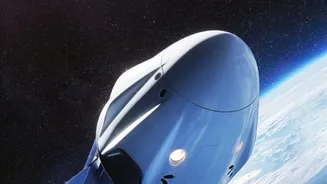
This mission was also different for another crucial reason: it was the first Starship flight to conduct an operational task. Shortly after reaching orbit, the spacecraft opened its payload bay and deployed 26 next-generation Starlink V3 satellites into the company's growing internet constellation. This marked a turning point, transforming Starship from a pure test vehicle into a revenue-generating asset. The ability to launch these larger, more powerful V3 satellites is essential for expanding the capacity of the Starlink network. A single Starship launch can add more than 20 times the capacity to the constellation compared to a launch on the company's workhorse Falcon 9 rocket, making this achievement a major business milestone for SpaceX.
What This Means for the Moon and Mars
Reaching orbit unlocks the next phase of SpaceX's ambitious plans. Starship is a cornerstone of NASA's Artemis program, which aims to return humans to the Moon. NASA has contracted SpaceX to provide a modified Starship as the Human Landing System (HLS) that will ferry astronauts from lunar orbit down to the surface, a mission currently slated for 2028. Before it can carry astronauts, Starship must prove its reliability through many more flights. Successes like this are also vital for Elon Musk's long-stated goal of making humanity a multi-planetary species by establishing a settlement on Mars. Without a fully reusable, super-heavy-lift rocket capable of frequent and low-cost launches, that vision would remain science fiction. This flight, however messy, brought it one giant leap closer to reality.