

The New Orbital Gold Rush
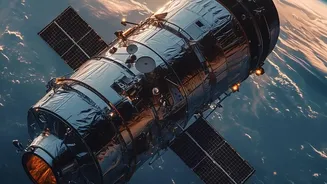
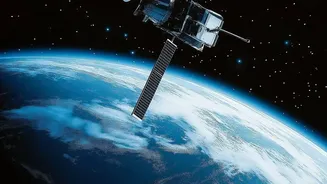
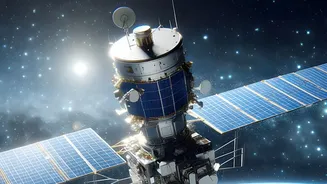
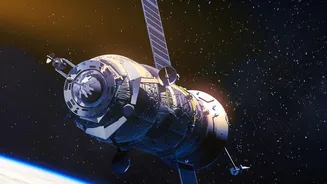
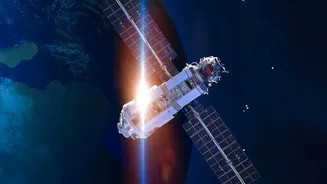
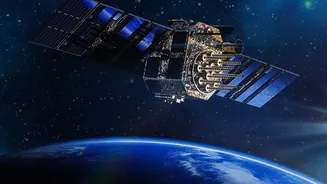
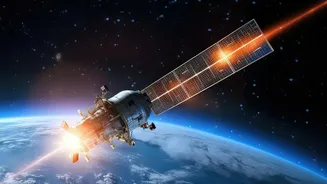
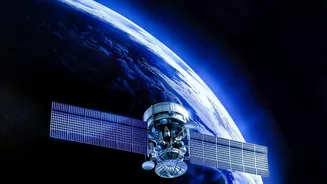
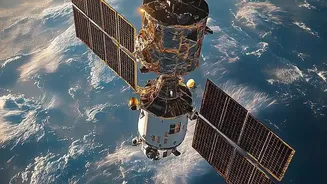
Low-Earth orbit (LEO), the band of space up to about 2,000 kilometres high, is experiencing unprecedented growth. This is the domain of a new gold rush, where companies like SpaceX with its Starlink network, Amazon with Project Kuiper, and OneWeb are
deploying thousands of satellites to provide global internet coverage and other services. Recent reports from the European Space Agency (ESA) highlight this explosive expansion, noting that around ten new payloads are launched daily, while only a fraction of older, defunct hardware is removed from these congested orbital highways. This rapid build-up, with plans for tens of thousands more satellites in the coming years, is transforming LEO from a final frontier into a finite resource under immense pressure.
A High-Speed Game of Chicken
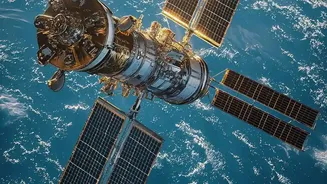
The primary danger in a crowded orbit isn't just the number of active satellites, but the ever-growing cloud of space debris. This includes dead satellites, spent rocket stages, and fragments from past breakups. These objects travel at mind-boggling speeds—up to 27,000 kilometres per hour. At that velocity, a collision with even a marble-sized piece of junk can be catastrophic, creating thousands of new debris fragments. The risk is no longer theoretical. Major operators are now performing hundreds of thousands of collision avoidance manoeuvres each year. The International Space Station has had to dodge debris with increasing frequency, and the margin for error is shrinking rapidly. A recent ESA report confirmed a "skyrocketing" projection for future collisions in LEO if current trends continue.
The Kessler Syndrome Nightmare
The ultimate fear is a scenario known as the Kessler Syndrome, first proposed by NASA scientist Donald Kessler in 1978. It describes a tipping point where the density of objects in orbit becomes so great that a single collision triggers an unstoppable, cascading chain reaction. Each crash generates more debris, which in turn causes more crashes, eventually creating a permanent, impenetrable shroud of shrapnel that could render certain orbits unusable for generations. This would not only destroy functioning satellites but could effectively trap humanity on Earth, making future space launches and exploration impossible through the affected orbital bands. While some experts believe a full-blown cascade is not imminent, they warn that some orbital regions are already past a critical tipping point.
Who is the Air Traffic Controller?
A major part of the problem is the lack of a unified, international system for space traffic management (STM). Currently, there are no binding global "rules of the road" for outer space. While bodies like the United Nations Office for Outer Space Affairs (UNOOSA) and the International Telecommunication Union (ITU) provide guidelines, enforcement is left to individual nations. This creates a fragmented and often voluntary system where private companies and national agencies track debris and coordinate manoeuvres on an ad-hoc basis. Experts argue that the frameworks developed during the Cold War, when space was far less crowded, are inadequate for today's commercialised environment and that a robust international STM system is urgently needed to prevent chaos.
Cleaning Up Our Cosmic Backyard
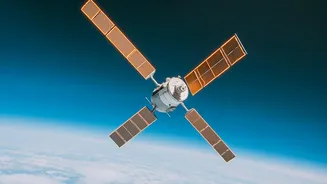
Preventing the Kessler Syndrome requires a two-pronged approach: mitigation and active removal. Mitigation focuses on better satellite design, including ensuring new satellites can de-orbit themselves within five years of their mission's end. However, the ESA and other experts state that mitigation alone is not enough; the debris population would continue to increase even if all launches stopped today. This has spurred the development of active debris removal (ADR) technologies. Startups and space agencies are designing missions to capture and de-orbit large, high-risk pieces of junk using nets, harpoons, and robotic arms. While the first successful inspection mission occurred in 2024, no piece of debris has been actively removed yet. Experts believe that removing just a handful of the largest objects each year could stabilize the LEO environment, buying critical time to build a more sustainable future in space.