


Why Your Core Matters
A strong core is much more than just visible abs. It's the central pillar that supports your entire body. These muscles, which include your abdominals, lower back, and hips, work together to stabilize your spine, improve your posture, and reduce the risk
of back pain. A stable core makes everyday activities like bending, lifting, and twisting feel easier and safer. By focusing on these foundational muscles, you build a stronger, more resilient body from the inside out, without needing any special equipment or a gym membership.
The Classic Forearm Plank
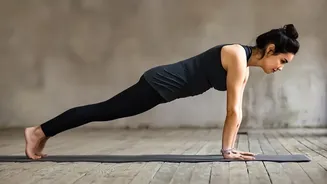
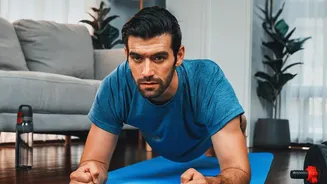
The plank is a fundamental core exercise that builds endurance and stability throughout your midsection, shoulders, and back. It teaches your muscles to brace and hold your body in a straight, stable line.How to do it: Lie face down and place your forearms on the floor, with your elbows directly under your shoulders. Extend your legs back, balancing on your toes, so your body forms a straight line from your head to your heels. Engage your core by pulling your belly button towards your spine, and squeeze your glutes. Be careful not to let your hips sag or rise too high. Keep your neck in a neutral position by looking at the floor. Hold for 20–30 seconds, focusing on steady breathing. As you get stronger, aim to increase the duration.
The Stabilizing Bird-Dog
The bird-dog is an excellent exercise for improving balance, coordination, and spinal stability. It targets the deep core muscles that support your lower back, making it particularly beneficial for anyone who spends a lot of time sitting.How to do it: Start on all fours, with your hands directly under your shoulders and your knees under your hips. Keeping your back flat and your core engaged, simultaneously extend your right arm straight forward and your left leg straight back. Move slowly and with control, creating a straight line from your fingertips to your heel. Hold for a few seconds, making sure your hips and shoulders stay parallel to the floor. Return to the starting position and repeat on the other side, extending your left arm and right leg. Aim for 10-12 repetitions per side.
The Powerful Glute Bridge
While it might seem like a lower-body move, the glute bridge is a fantastic core exercise that strengthens your glutes, hamstrings, and lower back. Strong glutes are essential for a stable pelvis and a healthy spine, helping to counteract the effects of prolonged sitting.How to do it: Lie on your back with your knees bent and your feet flat on the floor, about hip-width apart. Your arms should be resting at your sides. Engage your core and squeeze your glutes as you lift your hips off the floor, until your shoulders, hips, and knees form a straight line. Be careful not to over-arch your lower back. Hold the position for a moment at the top before slowly lowering your hips back down. Perform 12–15 repetitions.
The Controlled Dead Bug
The dead bug might have a funny name, but it's one of the most effective exercises for developing core control and stability without putting strain on your back. It teaches you to keep your core braced while your limbs are in motion, a crucial skill for all functional movements.How to do it: Lie on your back with your arms extended toward the ceiling and your knees bent at a 90-degree angle directly over your hips. Press your lower back gently into the floor. This is your starting position. Slowly lower your right arm and your left leg toward the floor at the same time, exhaling as you move. Go as low as you can without letting your lower back arch off the floor. Return to the start and repeat with the opposite arm and leg. Focus on quality over speed, aiming for 10-12 reps per side.