





The Glitch in the System
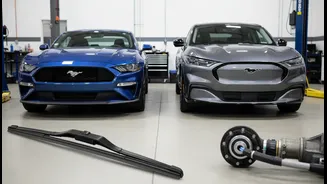
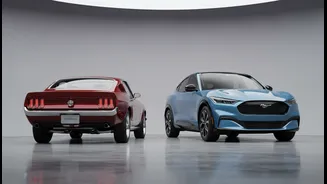
Ford recently announced a recall for 67,842 of its 2024-2026 Mustang and high-performance Mustang GTD models. The issue, identified by the National Highway Traffic Safety Administration (NHTSA), is that the windshield wipers and washer system can malfunction
in cold temperatures. Specifically, a communication error between the wiper motor and the steering column control module can cause the wipers to get stuck on the highest speed setting, while the washer system may fail completely. The root cause is not a mechanical failure, but a software problem. According to recall documents, a supplier used an incorrect setting when programming a semiconductor chip for the wiper motor, leading to the defect. This seemingly tiny error in code has prompted a major safety recall because impaired visibility, especially during bad weather, significantly increases the risk of a crash.
Your Car Is a Computer on Wheels
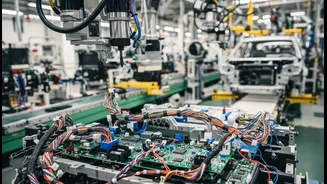
This Mustang recall is a perfect example of a much broader trend: modern cars are increasingly controlled by software. A single vehicle can have tens of millions of lines of code governing everything from the engine and brakes to the infotainment screen and, yes, the wipers. These systems are managed by a network of electronic control units (ECUs), with the Body Control Module (BCM) often overseeing functions like lights, locks, and wipers. When the BCM or its software fails, it can cause a cascade of strange electrical problems that seem unrelated. While this technology enables advanced safety features and conveniences, it also introduces a new, invisible point of failure. A mechanical part might show wear and tear, but a software bug can lie dormant until a specific condition—like cold weather—triggers it.
A Growing Wave of Software Recalls
Automotive experts have noted a steady increase in software-related vehicle recalls over the past decade. One analysis found that while software was mentioned in just 5% of all recalls since the mid-1990s, that number jumped to nearly 15% in 2023. Ford, in particular, has faced numerous software-related issues, issuing more recalls than any other automaker in the U.S. this year for problems ranging from blank instrument clusters to faulty rearview cameras. These are not minor annoyances; a malfunctioning rearview camera or a blank speedometer are considered serious safety hazards. This trend highlights a fundamental challenge for the industry: as vehicle complexity grows, ensuring that every line of code is perfect becomes exponentially more difficult.
The Double-Edged Sword of Updates
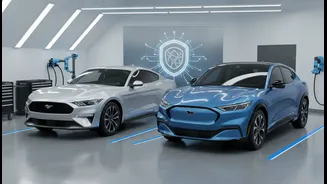
The rise of software issues has been met with a new solution: over-the-air (OTA) updates. For many software glitches, manufacturers like Tesla and, increasingly, traditional automakers like Ford can push a fix to vehicles remotely, much like updating a smartphone. This is far more convenient for consumers and vastly cheaper for companies than a traditional recall that requires a visit to the dealership. However, OTA updates also present their own risks. A poorly tested update could introduce new bugs or, in a worst-case scenario, create security vulnerabilities. Furthermore, not all problems can be fixed with a software patch. In the case of the Mustang wiper recall, the solution requires dealers to inspect and, if necessary, physically replace the entire wiper motor because the flawed chip is embedded within it.