





A Tale of Two Summits
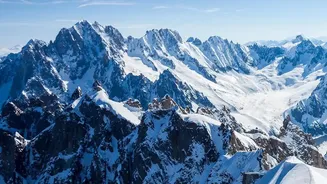
The first thing to understand is that Mont Blanc has two different summits: a rocky peak and an icy one. The rock summit is stable, sitting at an altitude of about 4,792 metres. However, the official height that gets reported includes the thick cap of snow
and ice that sits on top of the rock. This layer of 'eternal snow' can be anywhere from 15 to 20 metres thick, and it is this snowy crown that is constantly in flux. So, when you hear that Mont Blanc’s height has changed, it’s not the rock that's moving, but the snowpack on top that has grown or shrunk.
The Dance of Wind and Snow
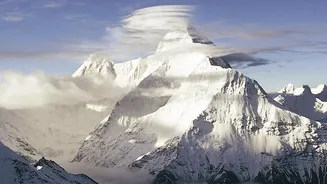
The primary drivers for the change in height are weather conditions, particularly wind and precipitation. The summit is battered by strong winds, which can either pile snow up or scour it away. Similarly, the amount of snowfall during the year plays a huge role. A year with heavy precipitation can add significant height to the ice cap, while a drier year can lead to a reduction. For example, the latest measurement in September 2026 recorded a height of 4,807.47 metres, which was nearly two metres higher than the measurement from 2023, a year noted for low precipitation. This shows just how sensitive the summit's snowpack is to short-term weather patterns.
How Is the Height Measured?
Since 2001, a team of French surveyors has made a biennial pilgrimage to the top of the mountain to get a precise measurement. This is a serious expedition, involving about twenty people, including expert surveyors and high-mountain guides. They use a combination of high-tech tools. GPS receivers are planted in the snow to get centimetre-level accuracy, corrected by a network of ground stations. In recent years, they have also used drones and ground-penetrating radar to build a 3D model of the summit and understand the structure of the ice and snow. This data collection provides a valuable snapshot for scientists.
A Barometer for Climate Change?
While a single year's measurement can fluctuate wildly, the long-term trend is what interests glaciologists and climate scientists. The height has been oscillating for decades. The highest recent measurement was in 2007 at 4,810.90 metres, while one of the lowest was in 2023 at 4,805.59 metres. Experts are cautious about linking any one measurement directly to climate change, as year-to-year variability is so high. However, the ongoing data collection is creating an invaluable record for future generations to study the long-term impacts of warming temperatures on the Alps. As glaciers across the Alps retreat at a startling rate, monitoring the 'roof of Europe' provides another key data point in understanding the health of our planet's mountain ecosystems.