



Start With Your Story, Not Your Stuff
Before a single object is placed on a shelf, the most important step is curation. A display that feels personal and looks cohesive begins with choosing items that hold genuine significance. Instead of showcasing every ticket stub and trinket, select pieces
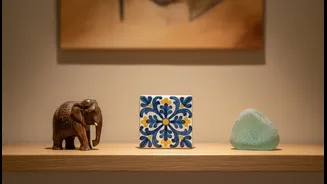
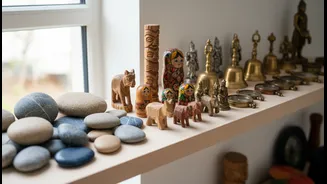
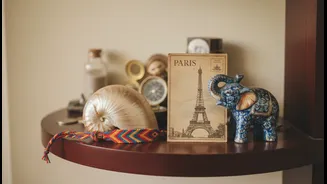
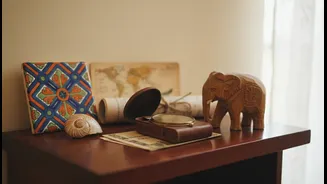
that tell a story. Perhaps it’s a collection of ceramic bowls from a single trip, a series of photos that capture a specific feeling, or textiles that remind you of a bustling market. The goal is to infuse the display with your personality and memories. This isn't about proving you went somewhere; it's about surrounding yourself with things that bring you joy and recall happy moments. Think like a museum curator: don’t just amass objects, edit them down to the most impactful pieces that contribute to a larger narrative. This initial edit is the foundation of a meaningful display, ensuring it reflects you, not just a gift shop.
Embrace the Power of Restraint
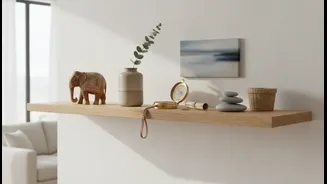
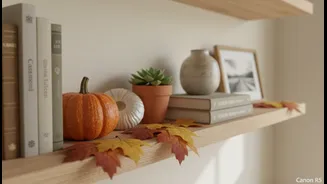
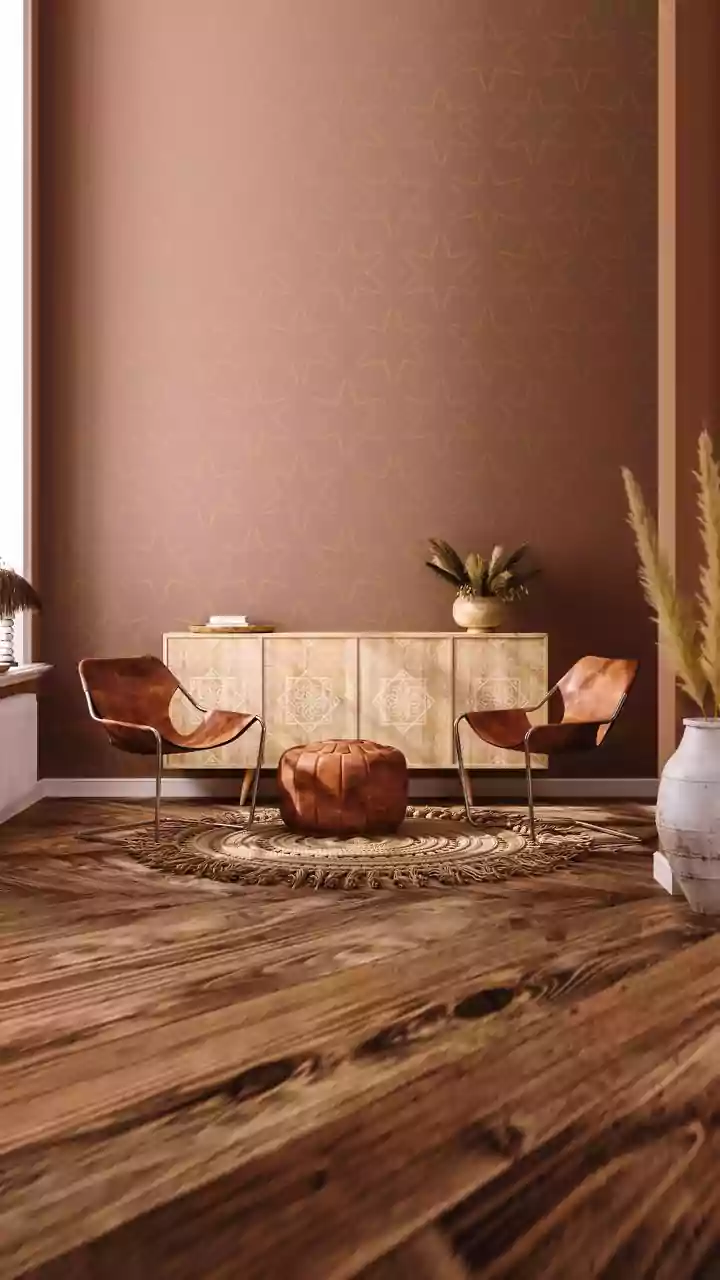
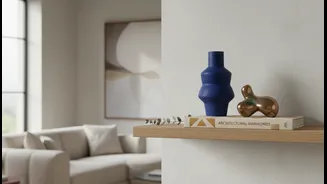
Once you have your meaningful items, the next principle is restraint. This is often the hardest part—the discipline of not displaying everything at once. Interior designers refer to the empty areas around objects as “negative space,” and it is one of the most powerful tools in creating a display that feels calm and luxurious rather than chaotic. When every surface is covered, the eye doesn't know where to focus, and even beautiful pieces can get lost in the visual noise. Giving your chosen souvenirs breathing room allows each one to be seen and appreciated. A home designed with restraint feels more intentional and confident. You don't need to fill every corner or cover every wall. Try clearing a surface completely and adding back only what truly matters. If you have a large collection, consider rotating pieces seasonally to keep the display fresh and prevent overcrowding.
Find Your Visual Rhythm
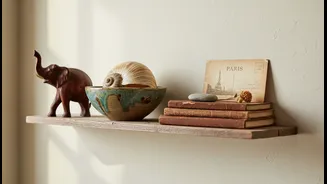
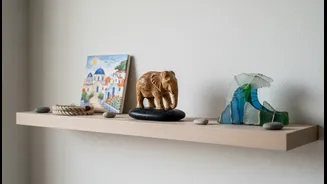
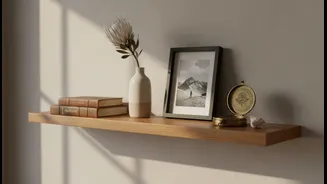
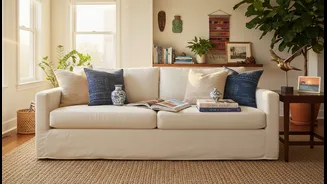
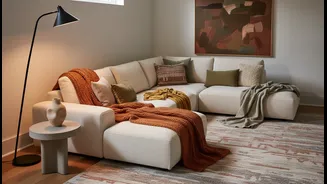
Visual rhythm is what guides the eye through your display, creating a sense of flow and cohesion. It’s the design principle that ties individual elements together into a harmonious whole. You can achieve this in several ways. One of the simplest is through repetition—grouping items by a similar colour, shape, or material. A collection of blue and white pottery, for example, feels intentional. Another technique is to play with scale and height. Instead of lining items up in a straight row, create visual interest by varying their heights. Place a tall vase next to a short stack of books, or use small risers to elevate key pieces. Contrast also creates rhythm; pair smooth textures with rough ones, or curved shapes with straight lines to make the arrangement more dynamic. Trays are an excellent tool for creating a defined zone for smaller items, making them feel like a cohesive unit rather than scattered clutter.
Putting It All Together
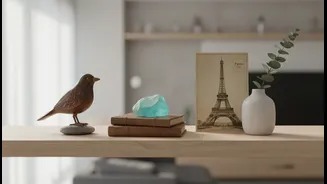
With these principles in mind, you can start arranging. Grouping items in odd numbers, like threes or fives, is often more visually appealing than even numbers. Create small vignettes on a bookshelf or coffee table—a framed postcard, a small sculpture, and a plant can tell a story together. For flat items like maps, tickets, and photos, consider a gallery wall with frames of a consistent colour to create a unified look. Shadow boxes are perfect for creating 3D collages of smaller, more fragile mementos like shells, coins, and ticket stubs. You can also think practically by repurposing your finds. A beautiful textile can become a cushion cover or a wall hanging, while a sturdy bowl could be used to hold keys in an entryway. The key is to integrate your travel memories into your home in a way that is both beautiful and functional.