






The Problem with Ordinary Vacuums
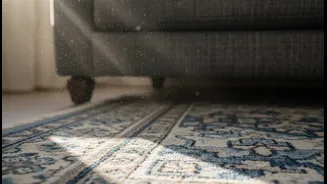
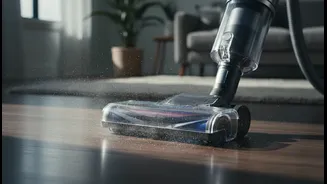
A standard vacuum cleaner is great at picking up visible debris like crumbs, dirt, and pet hair. The problem lies in what it does with the invisible particles. Many conventional vacuums, especially older or cheaper models, act more like dust agitators
than dust removers. They suck particles off the floor, but their basic filters and unsealed bodies can't contain the finest dust. As air passes through the machine and out the exhaust, it carries microscopic irritants like pollen, pet dander, mould spores, and dust mite droppings with it, redistributing them throughout your home's air. This can be particularly problematic for individuals with allergies or asthma, as the very act of cleaning can trigger symptoms.
Understanding Fine Dust and Its Dangers
The dust that escapes is no ordinary household fluff. It includes fine particulate matter, often referred to as PM2.5, which are particles smaller than 2.5 microns. For perspective, a human hair is about 70 microns thick. These particles are invisible to the naked eye and are so small they can bypass the body's natural defences, penetrating deep into the lungs and even entering the bloodstream. Chronic exposure to PM2.5 is linked to a range of health issues, including respiratory irritation, worsening asthma, and even cardiovascular problems. The indoor sources of these particles include everything from cooking and burning candles to the very dust your vacuum is supposed to be eliminating.
How HEPA Filters Change the Game
This is where high-efficiency particulate air (HEPA) filters make a crucial difference. A true HEPA filter is a medical-grade filtration standard, designed to trap 99.97% of airborne particles as small as 0.3 microns. Unlike standard filters made of simple porous paper, HEPA filters use a dense mat of fine fibres, usually fibreglass, that creates a complex maze. As air is forced through this mesh, even the tiniest particles like bacteria, pollen, and pet dander get trapped. A vacuum equipped with a HEPA filter isn't just cleaning your floors; it's actively purifying the air that passes through it, making it an essential tool for allergy sufferers and anyone concerned with indoor air quality.
Why a Sealed System Is Just as Important
Simply having a HEPA filter isn't enough. For a vacuum to be truly effective, it must have a sealed system. This means the vacuum's entire body—from the intake hose to the final exhaust port—is designed to be airtight. In a non-sealed vacuum, dusty air can leak out through cracks in the casing, gaps around the filter, or poorly designed bin seals before it ever reaches the filter. A sealed system ensures that 100% of the air the vacuum sucks in is forced through the HEPA filter before being exhausted. When shopping, look for terms like "sealed system" or "airtight construction" in addition to "HEPA filtration." This combination guarantees that the allergens and fine dust you pick up stay trapped inside the machine.
What to Consider for a Healthier Home
When choosing a new vacuum, prioritize filtration. Look for models that explicitly state they have "True HEPA" filtration and a sealed system. Be wary of vague terms like "HEPA-style" or "HEPA-type," as these may not meet the strict 0.3-micron standard. Both bagged and bagless models can offer excellent filtration. Bagged vacuums often provide a cleaner disposal experience, as the dust is contained within the bag. With bagless models, it's important to empty the bin carefully to avoid releasing a cloud of dust. Ultimately, the right vacuum does more than just make your carpets look clean—it contributes to a healthier living environment by effectively removing the invisible irritants from your home's air.