




The Challenge of Finding Your Way on the Moon
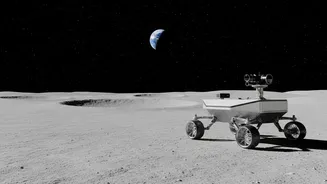
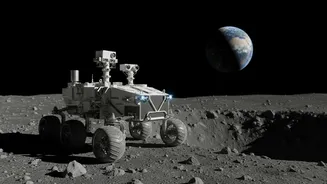
For astronauts and robotic rovers, navigating the Moon is a monumental challenge. Earth's Global Positioning System (GPS) is a network of satellites in medium Earth orbit, and their signals are far too weak and poorly oriented to be useful on the lunar
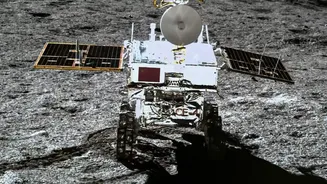
surface. This leaves explorers reliant on more complex and sometimes less precise methods. Historically, navigation has relied on tracking from Earth's Deep Space Network, a process that is resource-intensive and not ideal for real-time, on-the-ground decision-making. As NASA's Artemis program aims to establish a sustained human presence, including a future base camp, the need for a reliable, independent lunar navigation system has become critical. Without it, everything from rover traverses to precision landings and astronaut safety is significantly more complicated.
Introducing a 'Lighthouse' for the Moon
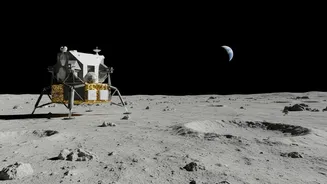
Enter the Lunar Node-1, or LN-1, a key part of NASA's plan to create a 'lunar GPS'. Developed at NASA's Marshall Space Flight Center, LN-1 is not a satellite but a radio beacon designed to be placed on the Moon's surface. It's a relatively small, autonomous piece of hardware, leveraging components originally designed for CubeSats to keep it compact and efficient. The first LN-1 payload was delivered to the Moon as part of NASA's Commercial Lunar Payload Services (CLPS) initiative, hitching a ride on an Intuitive Machines lander. The goal isn't just to provide a single point of reference but to test the technology that could form a network of beacons, effectively creating a local navigation grid for explorers.
How a Lunar GPS Network Would Work
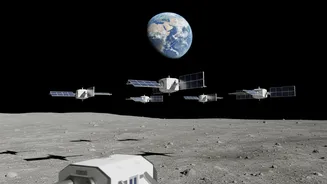
The concept behind LN-1 is elegantly simple: it acts like a lighthouse. The beacon transmits a radio signal, and a receiver—whether on a rover, a lander, or carried by an astronaut—can determine its distance from the beacon. While a single beacon provides limited information, a network of several LN-1 type nodes would allow for triangulation. By receiving signals from multiple beacons in known locations, a user could calculate their precise position on the lunar surface, much like how your phone uses multiple GPS satellites to pinpoint your location on Earth. This system is designed to enable autonomy, allowing lunar assets to navigate without constant communication with mission control back home. This decreases the reliance on the heavily used Deep Space Network and enables faster, safer operations.
Paving the Way for a Lunar Economy
This technology is about more than just drawing maps; it is fundamental infrastructure for a future lunar economy. Companies like Lockheed Martin are already developing concepts for lunar mobility services and infrastructure that would depend on reliable communication and navigation. Precise navigation is essential for everything from robotic mining operations and construction to deploying scientific instruments. The LN-1 project and other related technologies, such as laser-based navigation systems, are part of a broader strategy to build a robust and interoperable lunar network, often referred to as LunaNet. This framework would support not just NASA's missions but also a growing number of commercial and international partners aiming to operate on and around the Moon.