





The Handshake: What the Partnership Is
The collaboration between NASA and the DOE is, at its core, a strategic alliance. Think of it as the organizational brain behind the brawn. In early October 2026, the two agencies signed a formal Memorandum of Understanding to accelerate the development
of space nuclear technology. This agreement isn't a physical object, but a framework that defines roles, responsibilities, and goals. The DOE brings decades of expertise in nuclear science, reactor development, and fuel production from its national labs. NASA, on the other hand, brings its unmatched experience in mission design, spaceflight systems, and a clear set of exploration goals, like establishing a sustained presence on the Moon and eventually sending humans to Mars. This partnership is the essential bureaucratic and scientific foundation; it manages funding, coordinates research, and ensures safety protocols are followed from the drawing board to the launchpad.
The Hardware: What the Reactor Is
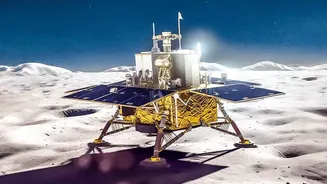
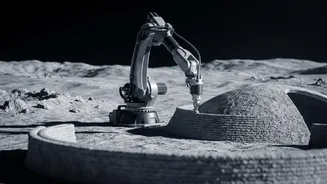
An operational reactor, in contrast, is the tangible product the partnership aims to create. It is the physical hardware, the engine or power source that will actually go into space. These reactors come in two main flavours the partnership is developing. The first is for propulsion, specifically Nuclear Thermal Propulsion (NTP) and Nuclear Electric Propulsion (NEP). NTP uses a reactor to heat a propellant like hydrogen to generate powerful thrust, promising to drastically cut travel times to Mars. NEP uses the reactor to generate electricity, which then powers highly efficient thrusters for long-duration missions. The second type of reactor is for surface power, like the Fission Surface Power project. This involves building a small nuclear reactor that can provide continuous, reliable electricity for a future lunar base, even during the two-week-long lunar night when solar panels are useless. So, while the partnership is the 'who' and 'how', the reactor is the 'what'.
Process vs. Product: The Core Difference
The easiest way to understand the distinction is to think of it as 'process versus product'. The NASA-DOE partnership is the entire process of creation. It is the years-long journey involving thousands of scientists, engineers, and policymakers. It encompasses everything from initial concept studies and materials science to regulatory approvals and safety tests. The success of the partnership is measured by its ability to manage these complex, multi-year projects and foster innovation along the way. The operational reactor is the final product of that process. It's a specific, highly-engineered machine designed to perform a single, critical function: either propel a spacecraft or power a habitat. Its success is measured by technical performance metrics: thrust, efficiency, power output, and, above all, safety. One is an enduring strategic relationship, the other is a revolutionary piece of technology that relationship hopes to build.
From Theory to Reality: Key Projects
This distinction becomes clearer when looking at specific projects. For years, the flagship nuclear propulsion project was DRACO (Demonstration Rocket for Agile Cislunar Operations), a partnership with DARPA to test an NTP engine in orbit. However, reports from 2025 and 2026 indicated that the DRACO project was terminated due to shifting priorities and cost considerations. While that specific demonstrator was cancelled, the underlying partnership between NASA and the DOE has been renewed and refocused. Now, a key goal is the development of a lunar surface reactor, with a stated objective to have it ready for launch by 2030. NASA is also pursuing a nuclear electric propulsion mission called Space Reactor-1 Freedom (SR-1), with a planned launch in 2028, which will pave the way for the Lunar Reactor-1 (LR-1) to power a future Moon base.
Why This Distinction Matters
Separating the concepts of 'partnership' and 'reactor' is crucial for understanding the timeline and progress of space exploration. The partnership is a long-term commitment, designed to weather the cancellation of individual projects like DRACO and pivot to new objectives. Announcing a partnership is a statement of strategic intent, while launching a reactor is a massive technological and logistical achievement. Understanding this difference helps set realistic expectations. The road to an operational space reactor is long and filled with technical hurdles and budgetary reviews. The strength of the underlying partnership is what ensures the work continues, adapting to new challenges and opportunities as humanity prepares to take its next giant leap into the solar system, powered by the atom.