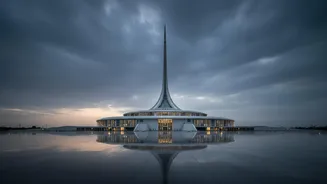









A New Push for an Old Dream
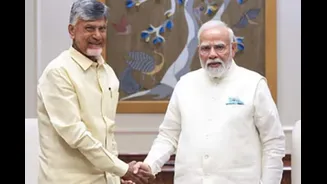
The latest momentum for Amaravati comes from the Andhra Pradesh Capital Region Development Authority (APCRDA), which, under the guidance of Chief Minister N. Chandrababu Naidu, has approved several key projects to accelerate development. In a meeting
on August 4, 2026, the authority cleared proposals for critical digital and physical infrastructure. This includes awarding a Rs 1,280-crore Quantum Facility Project to Larsen & Toubro, approving land acquisition for an Inner Ring Road, and initiating plans for a new railway line to improve connectivity. Additionally, the state is engaging directly with citizens, holding Gram Sabhas to gather public feedback on the master plan, indicating a renewed effort to build consensus and move forward.
The Troubled History of a Greenfield Capital
Amaravati's journey began after Andhra Pradesh's bifurcation in 2014, which left the new state without a capital city. The then-TDP government, led by Chandrababu Naidu, envisioned a world-class city on the banks of the Krishna River. An innovative and massive land pooling scheme was launched, through which over 33,000 acres were voluntarily contributed by thousands of farmers in exchange for developed plots and annual payments. Prime Minister Narendra Modi laid the foundation stone in 2015, and initial construction of administrative buildings, including a secretariat and a high court, began. However, the project's trajectory took a sharp turn following the 2019 state elections.
The Three-Capitals Detour
The YSR Congress Party (YSRCP) government, which came to power in 2019, halted work on Amaravati, citing financial and conceptual concerns. It proposed a decentralized three-capital model: Visakhapatnam as the executive capital, Amaravati as the legislative capital, and Kurnool as the judicial capital. This decision plunged the Amaravati project into a five-year period of stagnation and legal battles. It triggered massive protests from farmers who had given their land for a single, unified capital and left a cloud of uncertainty over the region's future. Though the High Court ruled in favour of Amaravati's continuation, the legal challenges and political stalemate effectively paused all major development.
Revival and Renewed Commitments
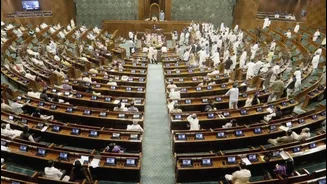
The 2024 state elections, which saw the return of the TDP-led coalition, marked a decisive pivot back to the original vision. The new government immediately prioritized the revival of Amaravati. This political shift was solidified when the Union government passed the Andhra Pradesh Reorganisation (Amendment) Act, 2026, which granted Amaravati permanent statutory status as the sole capital. This legal and political clarity has been crucial in rebuilding confidence. Furthermore, financial support from the central government and international bodies like the World Bank and Asian Development Bank (ADB) is being streamlined. A joint delegation from the WB and ADB reviewed the project's progress in early August 2026, focusing on safeguards and infrastructure development.
What Lies Ahead for Amaravati
Despite the renewed optimism, the road ahead is challenging. Chief Minister Naidu has set an ambitious target to complete the first phase of construction by August 2028. This involves completing iconic government buildings, housing for officials, and critical trunk infrastructure like roads and utilities. The government is also pushing to finalize land pooling for remaining projects and is engaging with villagers to integrate local road networks. The vision is for a futuristic city with underground utility corridors to create a clean, modern urban environment. However, overcoming the legacy of delays, securing continuous funding, and maintaining political will are significant hurdles that must be managed to finally bring the dream of Amaravati to fruition.