





The Trillion-Dollar Opportunity
The projections for AI's impact on the Indian economy are staggering. Various analyses suggest that artificial intelligence could add between $500 billion and $1.7 trillion to India's GDP by 2035. This isn't just about boosting the technology sector;
it's about a fundamental transformation that enhances productivity across the entire economy. NASSCOM, India's tech industry body, views AI as a 'General Purpose Technology,' meaning its innovations create spillover benefits everywhere, much like electricity or the internet did in the past. The government has taken notice, with NITI Aayog's National Strategy for AI outlining a vision for #AIforAll, aiming to use this technology for inclusive social and economic growth. The IndiaAI Mission, with a committed investment of over ₹10,300 crore, aims to build the necessary computing infrastructure and foster a vibrant ecosystem of startups and researchers to capture this value.
Beyond the Tech Hubs
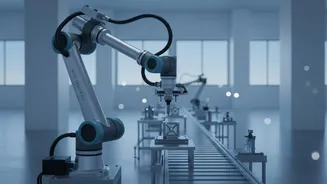
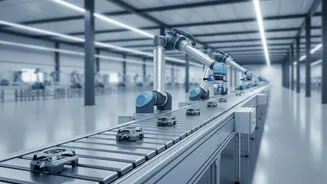
While the IT sector is a natural home for AI, its true potential lies in its application across India's foundational industries. In agriculture, AI can power precision farming through crop monitoring and advanced weather forecasting, improving yields and reducing waste. In healthcare, it offers the promise of more accurate diagnostics, personalized treatments, and even the early identification of potential pandemics, which is crucial for a country with vast rural areas. The manufacturing sector stands to gain immensely from intelligent automation, predictive maintenance of machinery, and highly optimized supply chains. The government's strategy specifically identifies these sectors—healthcare, agriculture, education, smart cities, and infrastructure—as key areas where AI can solve uniquely Indian challenges at scale.
The Human Factor: A Workforce in Transition
The promise of AI is tempered by the challenge of workforce adaptation. The fear of mass unemployment often dominates the conversation, but the reality is more nuanced. History shows that technology automates tasks, not entire jobs. The critical challenge is reskilling and upskilling the workforce for a new reality. Repetitive, manual, and basic cognitive tasks are most susceptible to automation. Conversely, demand is surging for skills that AI cannot replicate: analytical and creative thinking, leadership, emotional intelligence, and complex problem-solving. Reports indicate a significant demand-supply gap in India for roles in AI/ML, data science, and cybersecurity. The future of work won't be humans versus AI, but humans collaborating with AI. This requires a fundamental shift in education and corporate training, moving from rote learning to fostering adaptability, curiosity, and a commitment to lifelong learning.
From Startups to Staples: How Firms Must Change
For Indian companies, adopting AI is becoming a necessity for survival and growth. However, the path is not always smooth. While India leads in workplace AI adoption, it also reports a high rate of failed pilot projects. This suggests a disconnect between acquiring the technology and integrating it effectively. Key challenges for businesses include a lack of clear governance frameworks, poor data quality, and the difficulty of integrating AI into legacy systems. A significant hurdle is the shortage of internal AI skills, cited by a majority of Indian organizations. Successful adaptation requires more than just a technology budget; it demands a cultural shift. It means breaking down data silos, investing in employee training, and treating AI not as an isolated IT project but as a core business transformation that involves people, processes, and leadership.