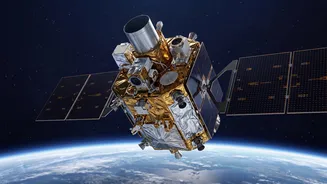



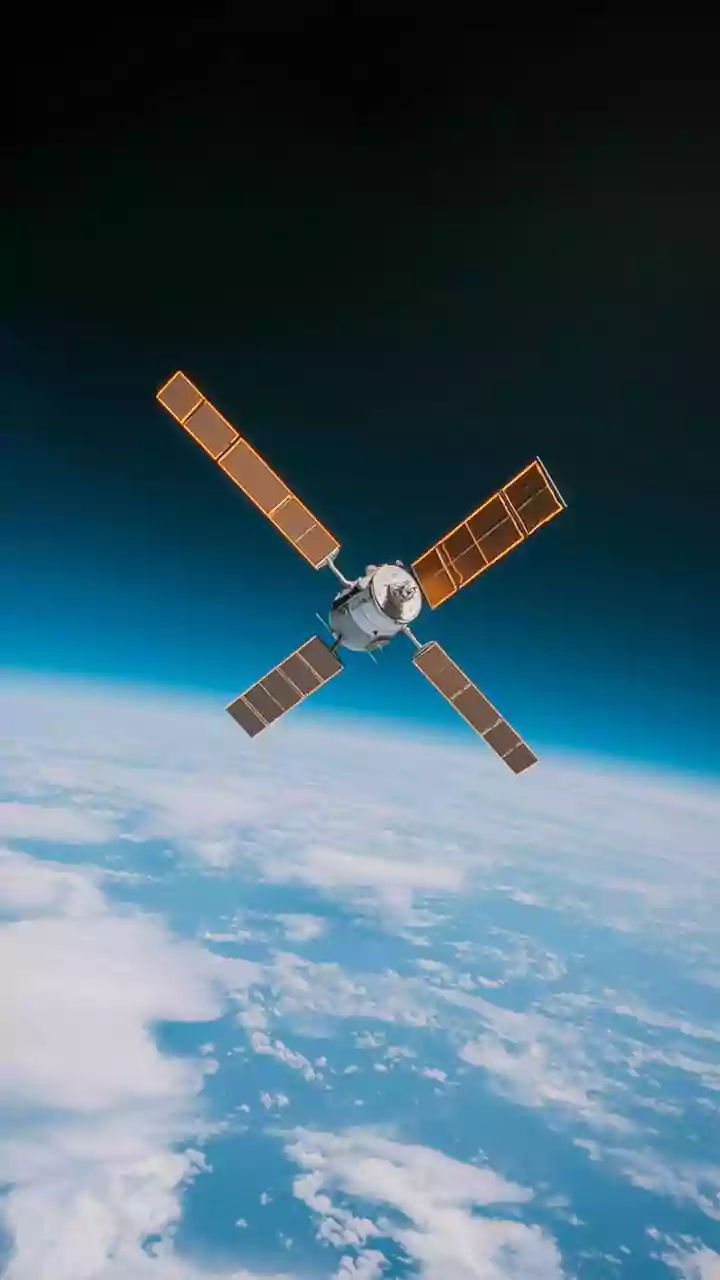
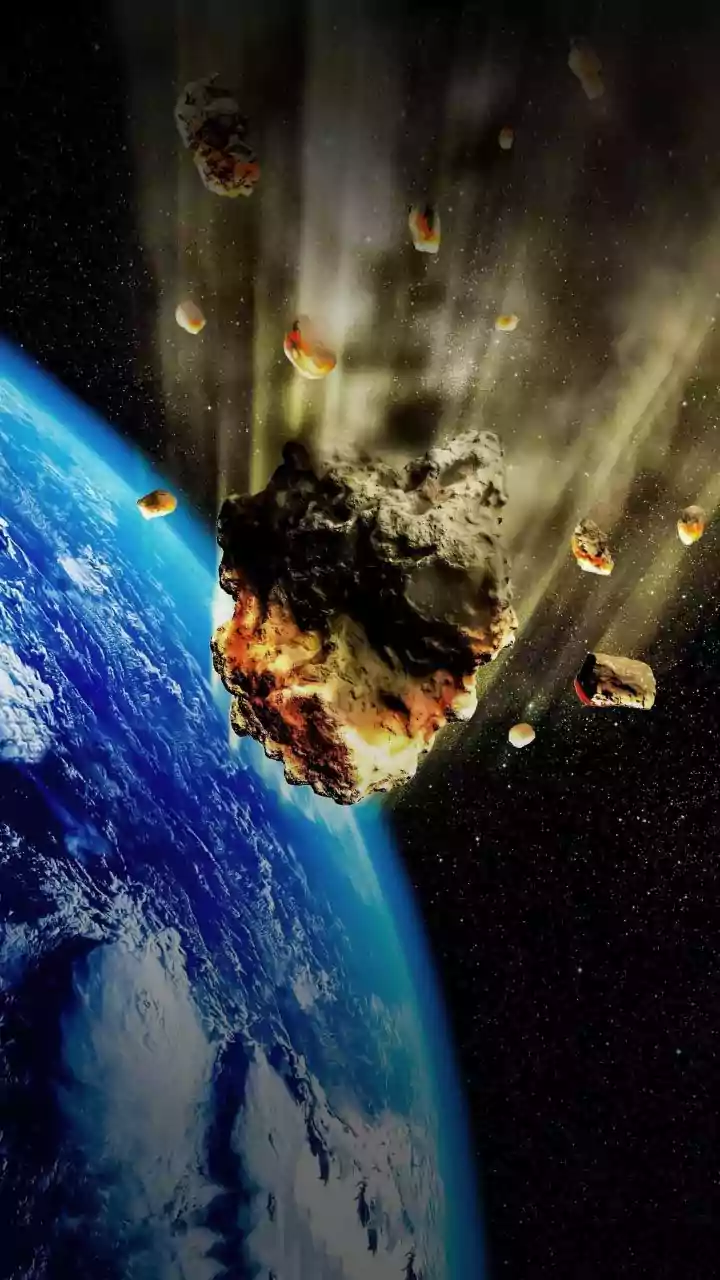



After nearly 22 years of revolutionizing our view of the cosmos, NASA’s Neil Gehrels Swift Observatory took its final bow. On November 4, the storied satellite made a fiery plunge back to Earth, ending its mission over Southeast Asia.
A Legacy of Cosmic Discovery
Launched in November
2004, Swift was a game-changer in astrophysics. Designed for a two-year mission, it wildly exceeded expectations, operating for over two decades. Its primary purpose was to hunt for gamma-ray bursts (GRBs), the most powerful explosions in the universe. Before Swift, these events were fleeting mysteries. Swift, however, could autonomously detect a burst, swivel its three telescopes toward the source in under 90 seconds, and capture its fading afterglow in X-ray, ultraviolet, and visible light. This rapid-response capability allowed scientists to study GRBs in unprecedented detail, linking long bursts to the collapse of massive stars and short bursts to the collision of neutron stars. Over its lifetime, Swift detected more than 2,000 GRBs, providing a treasure trove of data that will be studied for years to come.
The Invisible Force of Atmospheric Drag
So, what brought this highly successful mission to an end? The answer is atmospheric drag. While we think of space as a perfect vacuum, the regions where satellites in low-Earth orbit operate contain an extremely thin atmosphere. As a satellite speeds through this wispy layer at thousands of kilometres per hour, it constantly collides with atmospheric particles. Each tiny collision imparts a minuscule amount of drag, acting like a gentle but relentless brake. Over thousands of orbits, this braking effect causes the satellite to lose speed and, consequently, altitude. As it descends into denser atmospheric layers, the drag increases, accelerating the process of orbital decay. For a satellite like Swift, which had no onboard propulsion to counteract this effect, this downward spiral was inevitable.
The Sun's Role in a Satellite's Demise
The sun's activity played a crucial role in sealing Swift's fate. The sun goes through an approximately 11-year cycle of activity. During periods of high activity, or solar maximum, the sun releases more energy and particles, which heats and expands Earth's upper atmosphere. This 'puffing up' of the atmosphere increases its density at orbital altitudes, significantly amplifying the effect of atmospheric drag on satellites. As the sun moved toward the peak of its current cycle, which occurred in 2025, the drag on Swift increased dramatically, pulling it down much faster than before. By late October 2026, its orbit had decayed to just 275 kilometres, making it impossible for the observatory to hold steady and conduct science.
An Uncontrolled But Predicted Re-entry
Swift's final descent was what is known as an 'uncontrolled re_entry'. This means its path back to Earth was dictated by physics—gravity and atmospheric drag—rather than by a controlled engine burn to direct it to a specific, unpopulated area like the South Pacific Ocean Uninhabited Area. After a failed commercial rescue mission in the summer of 2026, which had hoped to boost Swift into a higher orbit, the observatory's fate was sealed. NASA formally ended the mission on October 23, 2026, and on November 4, the U.S. Space Force confirmed its re_entry over the region of North Sumatra, Indonesia. While most of the 1,470 kg spacecraft was expected to burn up due to the intense heat of re_entry, some denser components may have survived the journey to the surface.