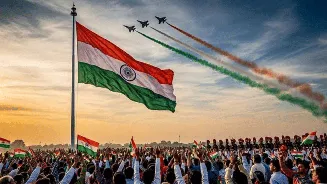









A Symbol Forged in Freedom
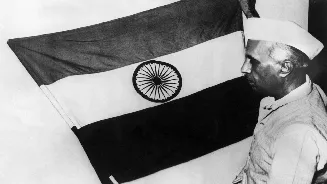
On July 22, 1947, just weeks before India's independence, the Constituent Assembly officially adopted the Tiranga in its present form. It was a momentous occasion, the culmination of a long search for a symbol that could unite a diverse nation and represent
its aspirations. The design was born from the Swaraj flag, which had been carried by freedom fighters for decades. The initial concept, developed by Pingali Venkayya and presented to Mahatma Gandhi in 1921, featured a spinning wheel, or charkha, at its centre. This early version evolved, with the Constituent Assembly ultimately replacing the charkha with the Ashoka Chakra. The decision was a deliberate one, intended to create a flag that was acceptable to all communities and carried no communal undertones, focusing instead on universal principles.
Saffron: The Colour of Courage
The topmost band of the Indian flag is a deep saffron, a colour deeply embedded in Indian tradition. It stands for courage, strength, and the spirit of sacrifice. This was eloquently explained by Dr. Sarvepalli Radhakrishnan, who would later become India's second President. He described saffron as representing renunciation or disinterestedness, urging leaders to dedicate themselves to their work without seeking material gain. It is a call to action, a reminder of the strength and selflessness exhibited by freedom fighters and a principle that calls for citizens to rise above personal interests for the greater good of the nation. This colour sets the tone, asking for effort and purpose in the pursuit of progress.
White: The Path of Peace and Truth
The central white band is the axis of the flag, both visually and philosophically. It represents peace, purity, and truth. Dr. Radhakrishnan defined it as light, illuminating the path of truth that should guide the nation's conduct. In a country of immense diversity, the white stripe acts as a unifying thread, symbolising a commitment to honesty, harmony, and non-violence. It signifies that strength and growth must be achieved through righteous means, with clarity of thought and fairness in action. This band is the calm, steady heart of the flag, holding the dynamic elements of saffron and green in a harmonious balance.
Green: A Foundation of Growth
The bottom band of dark green connects the flag to the very lifeblood of the nation: its land. This colour symbolises faith, fertility, and growth. It represents India's deep relationship with the soil and agriculture, on which all other life depends. The green stripe is a symbol of prosperity and auspiciousness, reflecting a nation that is vibrant, alive, and constantly renewing itself. It reminds citizens of their connection to the environment and the responsibility to nurture the land for a sustainable and flourishing future. It is the foundation of the flag, representing the deep roots from which the nation draws its strength and vitality.
The Wheel of Dharma: A Moral Compass
At the very heart of the flag, in the centre of the white band, is the navy-blue Ashoka Chakra. This 'Wheel of Law' or 'Dharma Chakra' was taken from the Lion Capital of Emperor Ashoka at Sarnath. Its inclusion was a significant philosophical choice. It represents righteousness, progress, and perpetual movement, intending to show that there is life in movement and stagnation in death. The 24 spokes of the wheel symbolise 24 virtues or principles that should guide human conduct, representing a path of disciplined and moral progress. It serves as a moral compass, reminding the nation that true growth is not just economic but also ethical, and that progress must be continuous, righteous, and for the welfare of all.