









The Foundation: Cumin's Earthy Warmth
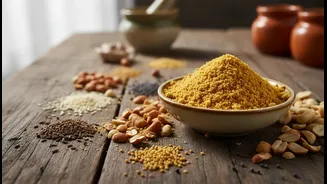
Every great structure needs a solid foundation, and in the world of biryani, that role is often played by cumin. This powerful spice, used both as whole seeds and in ground form, provides a deep, earthy, and warm base note that anchors the entire dish.
When whole cumin seeds are tempered in hot ghee or oil at the beginning of the cooking process, they release their essential oils, infusing the entire dish with a nutty, savoury aroma that is quintessentially Indian. This initial step, known as 'tadka' or tempering, is crucial. It’s not just about adding flavour, but about creating the first layer of complexity upon which all others will be built. Ground cumin, often mixed into the vegetable marinade or masala, offers a more immediate and pervasive warmth, mingling with other spices to create a robust and savoury heart that prevents the biryani from tasting flat or one-dimensional.
The Brightness: Coriander's Citrusy Lift
If cumin provides the earthy depth, coriander brings the brightening contrast. Often used in powdered form, ground coriander seed possesses a unique flavour profile that is both mildly sweet and distinctly citrusy, with floral and lemon-like notes. While cumin is deep and musky, coriander lifts the palate. In a vegetable biryani, it works to cut through the richness of the ghee and the starchiness of the potatoes, adding a necessary layer of brightness. Its flavour is more subtle than that of cumin and is often used in a greater quantity to balance heavier spices. The fresh leaves of the coriander plant, known as cilantro, also play a vital role, often layered with mint directly into the rice and vegetables. This adds a fresh, herbaceous perfume that complements the dried, ground spice, demonstrating how a single plant can contribute multiple layers of character to the final dish.
The Crown Jewel: Saffron's Regal Aroma
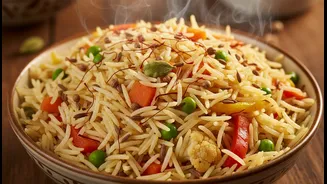
Saffron is undeniably the most luxurious and defining spice in a biryani, responsible for its signature golden-hued streaks and an aroma that is nothing short of regal. As the world's most expensive spice, a little goes a long way. Saffron threads are never added directly to the pot; instead, they are 'bloomed' to unlock their full potential. This is done by steeping a small pinch of threads in warm milk or water. This infusion extracts saffron’s unique flavour—a complex blend of sweet, floral, and earthy notes—and its vibrant colour. This golden liquid is then drizzled over the top layer of rice just before the biryani is sealed for the final cooking stage. It is not mixed in, which allows for the beautiful mosaic of white and yellow grains in the finished dish. The subtle, pervasive aroma it releases is the hallmark of a truly special biryani.
The Symphony: Layering and 'Dum' Cooking
The individual character of these spices is only fully realized through the traditional method of 'dum pukht' cooking. This technique involves layering the partially cooked rice and spiced vegetables in a heavy-bottomed pot, which is then sealed tightly, often with dough. Cooked over a very low flame, the ingredients gently steam in their own juices. This slow cooking process is where the magic happens. The steam, trapped within the pot, becomes a vehicle for flavour, allowing the earthy cumin, bright coriander, and aromatic saffron to meld without losing their distinct identities. The heat coaxes the essential oils from each spice, which then permeate the grains of rice and vegetables. This creates a dish where every spoonful can offer a slightly different experience—a testament to the art of layering flavours rather than simply mixing them together.