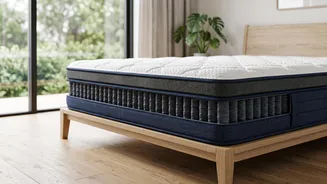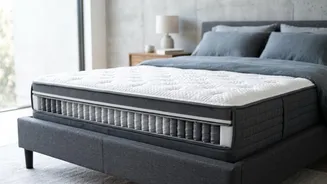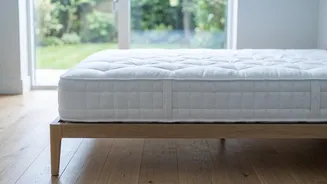







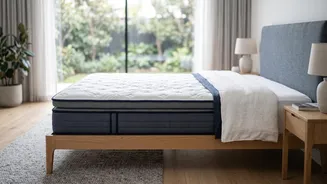
Shopping for a new mattress can feel overwhelming. Despite a flood of new options, the classic spring mattress remains a popular choice for its breathability and support. But not all spring mattresses are created equal. Here’s what to know.
Understanding the Spring System
The core of
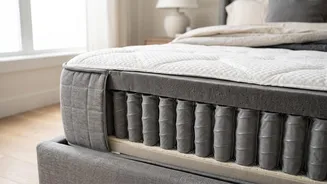
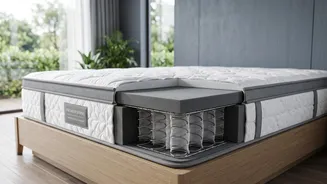
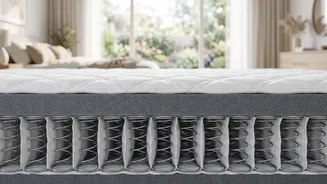
any spring mattress is its coil system, which provides the fundamental support. These metal springs are responsible for the bed's firmness, bounce, and durability. However, there are different types of coils, and they create very different sleep experiences. Bonnell coils are the most traditional, shaped like an hourglass and wired together to form a single unit. This interconnected design provides firm, even support but can also lead to motion transfer, meaning you might feel your partner's movements. In contrast, pocketed coils are each individually wrapped in fabric. This allows each spring to move independently, conforming more closely to your body's shape and significantly reducing motion transfer, making it a popular choice for couples. Some mattresses may also use continuous-wire coils, where a single wire is formed into rows, offering stable but often very firm support.
More Than Just Springs: The Comfort Layers
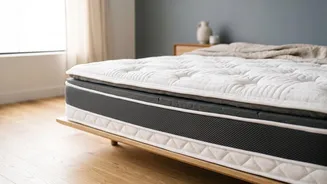
What you feel when you first lie on a mattress isn't the coils themselves, but the comfort layers stacked on top. These layers determine the bed's initial feel, from soft and plush to firm and responsive. They can be made from a variety of materials, including polyurethane foam (polyfoam), memory foam, latex, or natural fibres like cotton and wool. A mattress with thin comfort layers will feel firmer and you'll be more aware of the springs beneath. Thicker, more substantial layers provide more cushioning and pressure relief. For instance, memory foam offers a deep, contouring hug, while latex provides a more buoyant, responsive feel. Some mattresses even use 'microcoils'—smaller, flexible springs—within these upper layers to enhance airflow and responsiveness. When testing a mattress, pay attention to how these layers feel against your body's pressure points, like your shoulders and hips.
The Unsung Hero: Edge Support
Edge support is one of the most important, yet frequently overlooked, features of a quality mattress. It refers to the structural integrity of the mattress perimeter. Strong edge support prevents the sides from collapsing when you sit on them or sleep near the edge. This not only makes getting in and out of bed easier but also increases the usable sleeping surface. For couples, good edge support means both people can sleep comfortably near their side of the bed without feeling like they are about to roll off. It also contributes significantly to the mattress's long-term durability by preventing premature sagging along the sides. Manufacturers achieve this by either using a border of high-density foam (known as foam encasement) or by placing stronger, lower-gauge steel coils around the perimeter.
How to Test in the Real World
Reading specifications is helpful, but nothing replaces an in-person test. When you're in a showroom, don't just briefly lie on your back in the middle of the bed. Spend several minutes in your primary sleeping position. Most importantly, test the edge support directly. Sit on the side of the mattress as you would when putting on your shoes. Does it hold firm, or does it collapse significantly? Then, lie down near the edge. You should feel stable and supported, not as if the surface is sloping away. Roll from the edge toward the centre and back again to feel the transition. A well-designed mattress will have a supportive edge without creating an uncomfortable, hard ridge. Asking a salesperson to explain how the edge is constructed—whether with foam or reinforced coils—can also give you valuable insight into its likely durability.