





The Lessons of Hubble and Webb
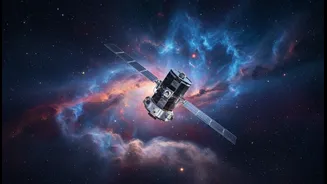
To understand why the Habitable Worlds Observatory (HWO) is a game-changer, we need to look at its predecessors. The Hubble Space Telescope, launched into low-Earth orbit, was famously designed to be serviced by astronauts. This capability dramatically
extended its life; multiple Space Shuttle missions swapped out instruments, replaced failing gyroscopes, and even corrected a flawed mirror, allowing Hubble to produce groundbreaking science for decades longer than its original mission. In contrast, the James Webb Space Telescope (JWST), operating a million miles away at the L2 Lagrange point, was not designed for any repairs. While it performs exceptionally, this design means any wear-and-tear, like damage from micrometeoroid impacts, is permanent. HWO, destined for the same distant L2 point, is taking a different path—one that combines the longevity of Hubble with the advanced location of Webb.
Designing for a Sustainable Future
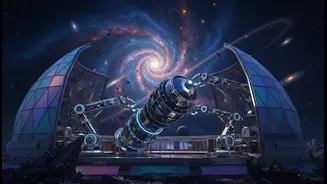
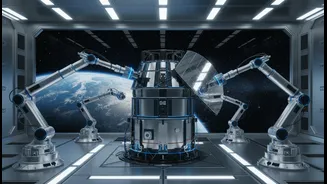
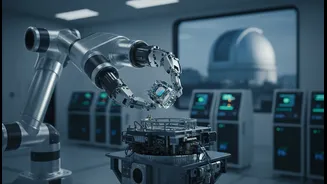
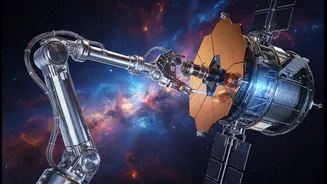
At its core, the decision to make HWO serviceable is a major strategic pivot for NASA, turning a multi-billion dollar instrument into a sustainable, long-term asset rather than a one-shot mission. The plan, slated for a launch in the 2040s, is to engineer the observatory from the ground up for robotic servicing. This means creating a modular design where critical components like computers, sensors, and scientific instruments are configured as standardized, line-replaceable units (LRUs). This 'plug-and-play' architecture ensures that future robotic spacecraft can autonomously or remotely latch onto the observatory, slide out obsolete or degraded parts, and insert next-generation technology. By baking this capability into the initial design, NASA is ensuring the observatory can evolve, adapting to new scientific questions and technological breakthroughs without requiring an entirely new, costly launch.
The Robotic Revolution in Space
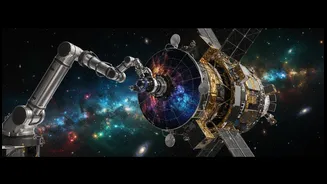
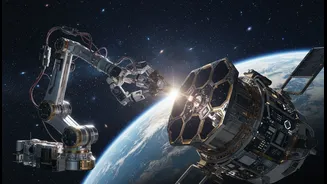
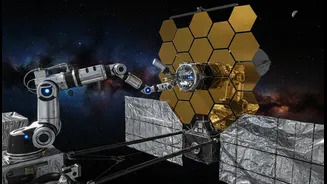
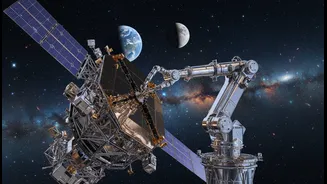
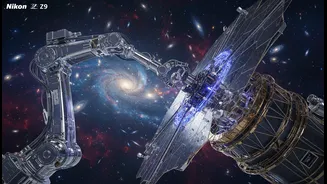
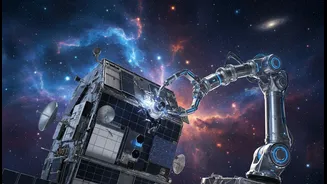
Since HWO will be positioned 1.5 million kilometers from Earth, sending astronauts for a repair job as we did with Hubble is not currently viable. Instead, NASA is mandating a robotically accessible architecture, sparking innovation in the commercial servicing sector. Companies like Astroscale are already being awarded studies to explore how a mature servicing architecture can maximize the observatory's scientific returns. These robotic mechanics might be used for everything from routine maintenance and repairs to swapping out entire instrument packages. They may even be needed for the initial assembly if the final telescope is too large to launch fully assembled on next-generation rockets. This move effectively creates a new market for advanced in-space servicing, pushing the boundaries of what autonomous systems can achieve far from Earth.
The Scientific Payoff of Longevity
The ultimate goal of the Habitable Worlds Observatory is ambitious: to directly image Earth-like planets around sun-like stars and analyze their atmospheres for chemical biosignatures like oxygen and methane. This requires unprecedented stability—the telescope's optics cannot fluctuate by more than a fraction of a picometer, about 1/50th the diameter of a hydrogen atom. Building a serviceable telescope means that if the mission makes a monumental discovery, like a potential sign of life, there's a clear pathway to upgrade the observatory with even more capable instruments to follow up. This prevents the mission from being locked into the technology it launches with. It allows the observatory to answer not only the questions we have today but also the new ones that will inevitably arise from its own discoveries, ensuring it remains at the cutting edge of astrophysics for decades.