





A New Tool in an Old Quest
Pandora is a small satellite, or SmallSat, that began its science mission in August 2026. Part of NASA's Astrophysics Pioneers program, it was designed to do a very specific and important job. When astronomers study distant planets, known as exoplanets,
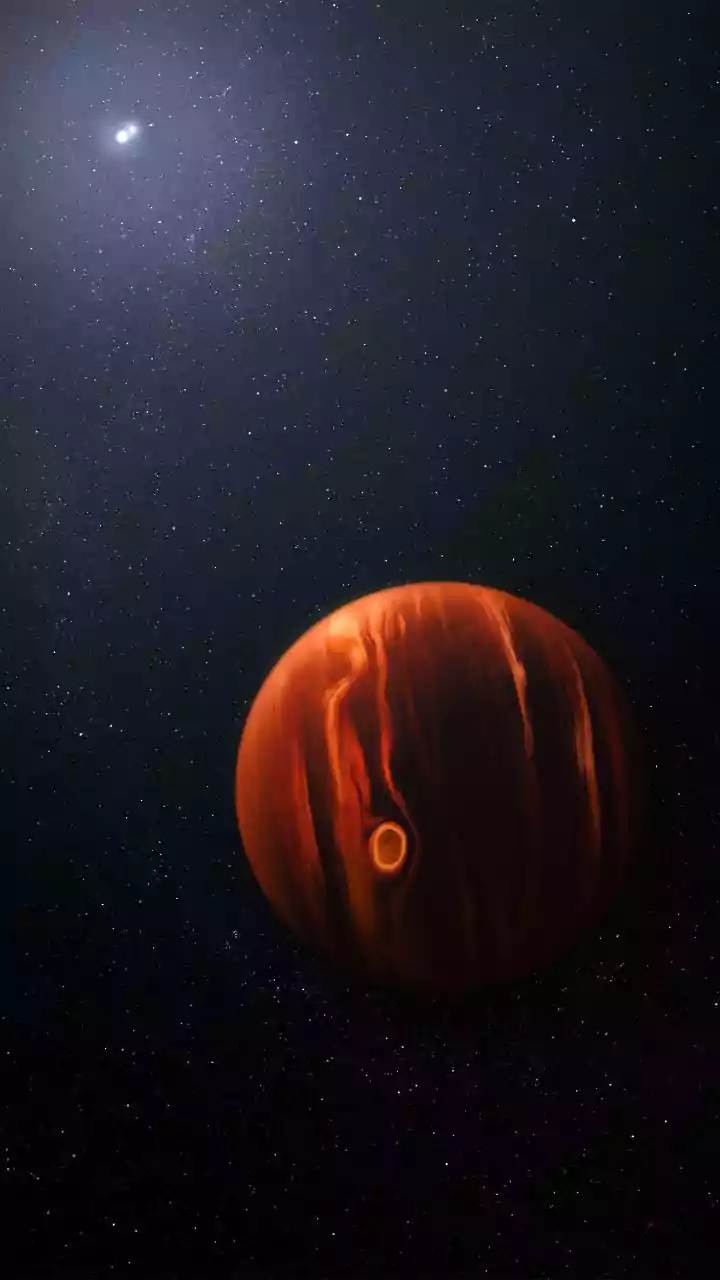
they often use the "transit method." This involves watching a planet as it passes in front of its host star, causing a tiny dip in the starlight we see. As that starlight filters through the planet's atmosphere, it picks up chemical fingerprints that tell us what the atmosphere is made of. Pandora's primary goal is to study at least 20 exoplanets to better understand their atmospheres, looking for signs of water, clouds, and hazes.
The Starlight Contamination Problem
Reading those chemical fingerprints is harder than it sounds. The host stars themselves are not perfect, stable balls of light. They have active regions, much like the sunspots on our own Sun, which can be darker or brighter than the rest of the surface. These stellar features can change over time as the star rotates, creating signals that can mimic or completely hide the true composition of a planet's atmosphere. An astronomer might think they've detected water vapor on a distant world, for example, when they're actually just seeing the effects of a large, cool starspot. This "stellar contamination" is a major hurdle in the search for habitable worlds, and it's the specific problem Pandora was built to solve.
Seeing in Two Colors
Pandora's brilliant solution is to watch the star and the planet simultaneously in two different kinds of light. The satellite is equipped with a telescope that captures both visible light and near-infrared light at the same time. The visible light observations allow scientists to track the star's activity—its spots and bright regions—very precisely. Meanwhile, the infrared observations measure the starlight filtering through the planet's atmosphere during a transit. By comparing these two sets of data, astronomers can effectively subtract the 'noise' from the star, leaving behind a much cleaner signal from the planet's atmosphere alone. This process allows scientists to disentangle the two signals and get a true reading of the exoplanet's air.
A Smart Partner to Webb
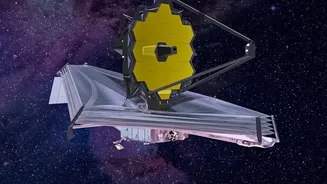
While the James Webb Space Telescope (JWST) is a powerful, all-purpose observatory, its time is in extremely high demand. It cannot afford to spend hundreds of hours staring at a single star just to understand its variability. This is where Pandora shines as a complementary mission. As a smaller, lower-cost satellite, Pandora can perform long-duration stares, observing each of its 20 target systems for extended periods to build a detailed record of the host star's behavior. In fact, one of Pandora's near-infrared detectors is a spare part originally developed for the Webb telescope. The data gathered by Pandora will help astronomers better interpret the findings from Webb, ensuring the larger telescope's time is used as efficiently as possible to study the most promising worlds.
The Search for Stable Worlds
Ultimately, Pandora's work is a critical step toward identifying planets that could potentially harbor life. By providing a clear understanding of host stars, the mission helps astronomers pinpoint which planets orbit stable suns and are therefore more likely to have stable atmospheres. Over its year-long primary mission, Pandora will revisit each of its target planets multiple times, creating a robust dataset that will serve as a foundation for future studies. It's a prime example of how a focused, cost-effective mission can tackle a specific scientific bottleneck and accelerate our broader quest to understand our place in the cosmos. The information it provides will be crucial for prioritizing targets for the next generation of observatories designed to search for habitable worlds.