






A Violent Shake in Southern Japan
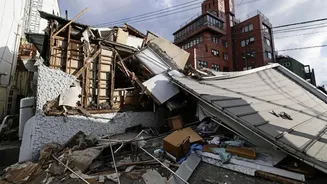
On Tuesday, July 28, 2026, a shallow and powerful earthquake with a magnitude of 7.1 struck Kumamoto Prefecture on the southern island of Kyushu. The shaking was so intense it registered the highest possible level on Japan’s own seismic intensity scale
in some areas. The quake caused significant damage, collapsing buildings, sparking fires, and triggering landslides. Rescue operations were immediately launched, focusing on a partially collapsed shopping mall where people were trapped. A tsunami advisory was issued for nearby seas but was lifted about two hours later after no significant waves materialized. While a major tsunami was avoided, the event served as a stark dress rehearsal and has refocused national attention on the ever-present danger lurking offshore.
Why This Quake Raises a Red Flag
Not all earthquakes are created equal. While this recent quake caused localized devastation, seismologists are concerned about its broader implications. Experts noted that the quake occurred on the Futagawa-Hinagu fault system, the same system responsible for the deadly Kumamoto earthquakes in 2016. The concern is that seismic events like this do not happen in isolation. They can transfer stress to other, more dangerous fault lines. One particular area of concern is the Nankai Trough, a massive undersea fault line that runs south of Japan. Scientists believe this quake could potentially stimulate the trough, which is already under immense strain and considered overdue for a major rupture. This process of stress transfer is a key reason why a single powerful earthquake can elevate the risk for a much wider region.
The Specter of the Nankai Trough
The Nankai Trough is the stuff of nightmares for Japanese disaster planners. This megathrust fault has been the source of devastating earthquakes and tsunamis every 90 to 200 years. The last major series of ruptures happened in 1944 and 1946, meaning the pressure has been building for about 80 years. Government committees have stated there is a very high probability—some estimates range from 70% to 80%—of a magnitude 8.0 to 9.0 earthquake occurring along the trough within the next 30 years. Such an event would be catastrophic, potentially generating enormous tsunamis that could inundate coastal cities along the heavily populated Taiheiyō Belt, which includes hubs like Tokyo, Yokohama, and Osaka. The government has even issued advisories in recent years after smaller quakes, warning that the risk of a Nankai megaquake was temporarily higher than normal.
A Nation on Constant Alert
If any country is prepared for earthquakes, it is Japan. The nation is a world leader in seismic engineering, early warning systems, and public preparedness drills. Following any significant tremor, nuclear plants are immediately checked, and transportation networks like the Shinkansen bullet trains are halted for safety inspections. Prime Minister Sanae Takaichi urged residents in the wake of the latest quake to remain vigilant for aftershocks and confirm their evacuation routes. But the recent event underscores a difficult reality: even for the most prepared nation on Earth, nature remains unpredictable. The 2011 Great East Japan Earthquake, which triggered a calamitous tsunami and the Fukushima nuclear disaster, far exceeded what many scientists had believed was the worst-case scenario. That memory haunts Japan and drives a continuous cycle of reassessment and reinforcement of its coastal defenses and response plans.