





The Gold Standard of Trust: 916 Hallmarking
For decades, gold has been more than just jewellery in India; it's a cornerstone of savings, tradition, and financial security. To protect this trust, the Bureau of Indian Standards (BIS) implemented a mandatory hallmarking system. The most common mark,
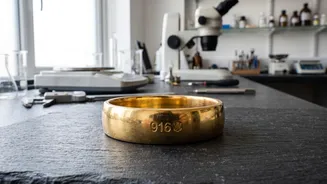
'916', signifies that the gold is 22-carat, meaning it is 91.6% pure gold, with the remainder being alloys for durability. A BIS hallmark is not just a stamp; it's a consumer's guarantee. It consists of three crucial components: the triangular BIS logo, the purity grade (e.g., 22K916), and a six-character alphanumeric Hallmark Unique Identification (HUID) number. This system, mandatory in 392 districts as of late 2026, ensures that every piece of hallmarked jewellery sold by a registered jeweller has been independently tested for purity at a licensed Assaying and Hallmarking Centre (AHC). This process provides a reliable and uniform standard, protecting buyers from the age-old problem of under-karatage and ensuring they get the purity they pay for.
What is This Reported New Experiment?
The conversation has been stirred by reports of a new testing method, potentially involving technologies like portable, AI-powered digital analysis that claim to assess purity without the traditional, sometimes destructive, methods. Some new technologies, like X-Ray Fluorescence (XRF) analysers, are already used by jewellers and AHCs for initial screening because they are fast and non-destructive. However, reports suggest newer concepts aim to go further, possibly analysing the metal's composition more deeply than surface-level XRF scans, which can sometimes be deceived by thick plating. The appeal of such an experiment is clear: a faster, deeper, and potentially more accessible way to verify purity on the spot could further empower consumers and lenders in the gold loan market. However, these reports are about technologies in development or early deployment, not ones that have been officially integrated into the national hallmarking standard for consumer verification.
Why Independent Confirmation is Non-Negotiable
A 'reported experiment' is a world away from a 'certified standard'. Before any new testing method can be trusted by consumers, it must undergo a rigorous, independent validation process by a neutral body like the BIS. This process is essential to confirm its accuracy, repeatability, and resistance to fraudulent manipulation. The current BIS hallmarking process, culminating in the HUID, is the result of years of refinement to create a trustworthy ecosystem. Any new technology would need to prove it is as reliable as, or better than, the existing fire assay and XRF screening methods used in AHCs. Without this independent confirmation, consumers have no way of knowing if the 'experimental' test is accurate or just a piece of theatre. Adopting an unverified method prematurely could undermine the very trust the hallmarking system was built to create, potentially opening the door to new, sophisticated forms of fraud. Until BIS officially vets, approves, and integrates a new method, it remains just an experiment.
Your Best Defence: The BIS CARE App
With uncertainty around new technologies, the best tool for a consumer today is the one already in their pocket. The BIS CARE app, available for free on Android and iOS, is your direct line to the official hallmarking database. Its 'Verify HUID' feature is the single most powerful check you can perform before buying. When you enter the six-character HUID engraved on a piece of jewellery, the app should instantly return key details: the jeweller who had it certified, the AHC that tested it, the type of article, and its verified purity. As of June 2026, the system was upgraded to include photographs and the weight of the article, allowing you to compare the item in your hand with the official record. If a seller is hesitant to let you verify the HUID or if the details on the app don't match the piece, it's a major red flag.
How to Protect Your Gold Purchase Today
While new technologies evolve, your approach to buying gold should remain grounded in the current, robust system. First, always buy from a BIS-registered jeweller. Second, visually inspect the jewellery for the three essential marks: the BIS logo, the purity grade, and the HUID. Third, use the BIS CARE app to verify the HUID at the counter, before you pay. Finally, always insist on a proper, detailed bill that lists the HUID, gold weight, purity, and making charges separately. This bill is your legal proof of purchase. A '916' stamp alone is not enough; it is the full, three-part hallmark linked to a verifiable HUID that provides the government-backed assurance of purity. By following these established steps, you are not just relying on a seller’s word but on a transparent, traceable system designed for your protection.