


A Celestial Lion's Roar
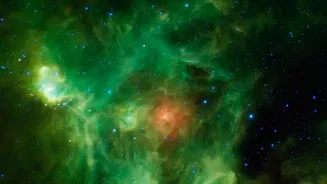
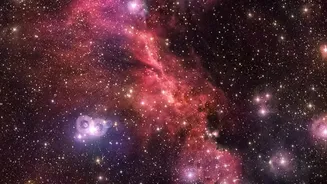
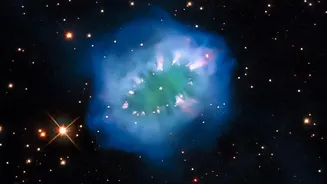
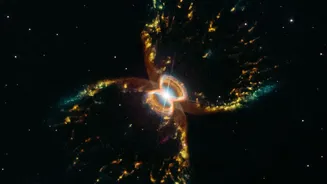
Located thousands of light-years from Earth, the Lion Nebula is a planetary nebula, the beautiful aftermath of a dying star similar to our own Sun. For thousands of years, the star has been shedding its outer layers into space, creating a vast cloud of gas
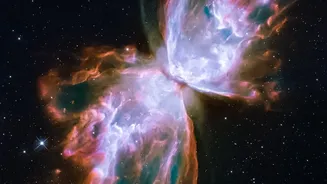
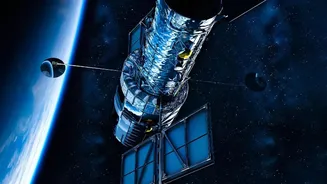
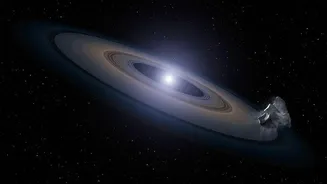
and dust. At the very center sits the star's hot, dense core, known as a white dwarf. This tiny but powerful stellar remnant is fiercely hot, blasting out radiation that sculpts the surrounding material and causes it to glow, creating the shape that gives the nebula its name. While the Hubble Space Telescope gave us a glimpse in visible light back in 2000, Webb’s powerful infrared instruments provide a much sharper, more detailed perspective.
Webb's Unrivaled Infrared Vision
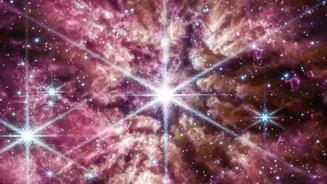
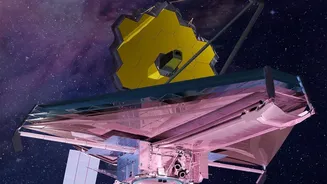
The James Webb Space Telescope is a technological marvel designed to see the universe in infrared light, which is invisible to the human eye. This capability is crucial for studying objects like the Lion Nebula. Infrared vision allows the telescope to peer through the hazy clouds of gas and dust that would otherwise obscure our view. By using both its Near-Infrared Camera (NIRCam) and Mid-Infrared Instrument (MIRI), Webb can distinguish between different materials and temperatures within the nebula. This latest image is a composite view, highlighting the wispy, ionized gas and revealing the hidden structure of the dusty mane in unprecedented detail.
Secrets of the Dusty Mane
The most striking features in Webb's new image are the intricate details within the lion's 'mane'. This mane is actually the inner part of a vast dust shell, illuminated by the central white dwarf. The image clearly shows features that look like tufts of hair or even comet tails. These are not just random patterns; they are dense clumps of dust that have so far survived the intense radiation from the central star. These hardy dust clumps are so dense that they even shield the material located behind them from the star's destructive blast, casting long shadows into the nebula.
Rings of Cosmic Soot
The new Webb image also provides a clearer look at the complex structure of rings and shells within the nebula. These are created as the expanding bubble of hot gas from the star sweeps up surrounding material. The mid-infrared view specifically highlights the presence of polycyclic aromatic hydrocarbons (PAHs), which are essentially molecules of cosmic soot. These carbon-based molecules are found throughout the universe and are fundamental building blocks, but understanding their formation and evolution is an active area of research. In the Lion Nebula, these PAHs form glowing rings and tendrils, giving scientists a snapshot of complex chemistry in action.
A Fleeting Cosmic Moment
While it has taken thousands of years to form, the Lion Nebula represents a fleeting moment in cosmic time. The gas and dust will continue to expand away from the central star, and astronomers estimate that the entire structure will dissipate in about 10,000 years. This makes observations like Webb’s incredibly valuable. They effectively freeze the nebula at one point in its evolution, allowing scientists to study the dynamic processes driven by a dying star. Each new image provides a clearer understanding of the life cycle of stars and the materials they return to the cosmos, which will eventually be used to form new stars and planets.