
An Asymmetric Edge
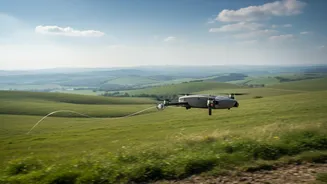
In the early stages of the full-scale invasion, Ukraine masterfully leveraged technology to counter a larger, better-equipped aggressor. Its tech sector and volunteer groups rapidly innovated, weaponizing commercial-style First-Person-View (FPV) drones.
These small, inexpensive quadcopters became precision weapons, capable of targeting individual soldiers and vehicles with devastating accuracy. This decentralized, bottom-up approach allowed Ukraine to field millions of drones, creating a so-called “drone wall” that made large-scale Russian assaults incredibly costly. Beyond the front lines, uncrewed surface vessels wreaked havoc on Russia's Black Sea Fleet, while long-range drones struck strategic targets far inside Russia, demonstrating an asymmetric advantage that surprised the world.
Russia Learns and Adapts
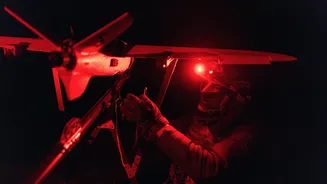
An advantage in modern warfare is often fleeting. Russia, after initial setbacks, began a concerted effort to counter Ukraine's drone supremacy. This response has been two-pronged: matching Ukraine's production and deploying sophisticated countermeasures. Moscow ramped up its own drone manufacturing, producing systems like the Lancet loitering munition. More critically, it has blanketed the front lines with powerful electronic warfare (EW) systems. These systems jam the control signals of Ukrainian drones, rendering them useless and creating vast no-fly zones for conventional radio-controlled models. Russia also began adopting low-tech solutions like anti-drone nets and vehicle armor cages, alongside high-tech innovations like fiber-optic guided drones which are immune to jamming.
The New Reality: A War of Attrition
The era of Ukraine’s clear-cut drone superiority has evolved into a brutal technological arms race. The battlefield is now a congested, contested space where drones from both sides swarm the skies and EW systems constantly battle for dominance. Success is no longer just about clever tactics; it’s about industrial scale, resilience, and the ability to innovate faster than the enemy can adapt. The conflict has become a grinding war of attrition fought at machine speed. Both sides are now developing drones with AI-assisted targeting and greater autonomy to operate in environments where electronic interference is intense. The lifespan of a single drone is now measured in a handful of flights, with losses estimated in the thousands per month on each side.
The Ever-Shifting Battlefield
Despite Russia's gains, Ukraine's innovation has not stopped. Ukrainian forces continue to develop new tactics and technologies. This includes creating integrated drone networks where different types of drones—for reconnaissance, strike, and relaying signals—work together as a cohesive system. Developers are extending the range of FPVs, with some now able to strike targets over 60 miles away, and creating faster interceptor drones to hunt Russian UAVs. However, Ukrainian military leaders acknowledge that their advantage is temporary. Recent reports from June 2026 suggest Ukraine may still hold a production advantage in FPV drones, but the broader technological contest is a constant back-and-forth where breakthroughs on one side are quickly met with countermeasures from the other.