




NASA's Lucy spacecraft is now cruising through a previously unexplored region of our solar system. This major milestone comes after a remarkable long-distance repair, proving the mission is ready for its unprecedented tour of ancient asteroids.
A Mission to a New Frontier
Launched
in October 2021, the Lucy mission is the first of its kind, tasked with a grand tour of Jupiter’s Trojan asteroids. These are not asteroids in the main belt between Mars and Jupiter, but two mysterious swarms that lead and follow the gas giant in its orbit around the sun. Scientists believe these Trojans are 'fossils' of planetary formation, pristine remnants from over 4.5 billion years ago that hold clues to how our solar system's giant planets formed and settled into their current locations. On October 28, 2026, after a five-year journey spanning more than 2.2 billion miles, NASA confirmed that Lucy had officially entered the first of these Trojan swarms, a region known as the L4 Lagrange point. This makes Lucy the first-ever spacecraft to visit this scientifically vital area.
An Ingenious Long-Distance Repair
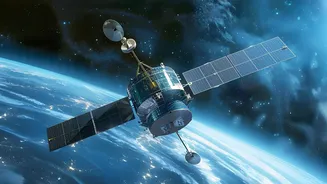
The phrase 'operating as expected' is a massive understatement given the challenges Lucy overcame. Just hours after its launch, mission engineers discovered a critical problem: one of Lucy's two massive, circular solar arrays had failed to fully unfurl and latch into place. While the array was generating about 90 percent of its expected power, there were fears that the unlatched panel could be damaged during future engine burns. Over several months, a dedicated anomaly response team at NASA worked tirelessly to diagnose the problem from millions of miles away. They determined a lanyard had likely snagged. Through extensive simulations, they devised a daring plan: use both the primary and backup deployment motors simultaneously to generate more torque and pull the array taut. It was a high-risk maneuver never intended in the spacecraft's design, but the gambles paid off. While the array never fully latched, it is now more than 99% deployed and under enough tension to be considered stable for the rest of its long mission.
What 'Operating as Expected' Means Now
With the solar array secured, Lucy is performing flawlessly in the cold, dim environment more than five times farther from the Sun than Earth. Its current location is roughly 574 million miles from Earth, with radio signals taking over 51 minutes to travel one way. The spacecraft has already proven its scientific and navigational capabilities during flybys of two main-belt asteroids: Dinkinesh in November 2023, where it discovered a surprise satellite, and Donaldjohanson in April 2025. These encounters served as crucial dress rehearsals for the main event. Now, in the L4 Trojan swarm, the science team is finalizing plans for Lucy's first close-up study of a Trojan, ensuring the spacecraft, its instruments, and the team are prepared to maximize the science return from the brief but valuable encounter windows.
A Grand Tour of Ancient Worlds
Lucy's arrival in the Trojan swarm is just the beginning of its primary mission. The spacecraft is now on a carefully planned trajectory to visit a record-breaking number of asteroids. The first Trojan flyby is scheduled for August 11, 2027, when it will study Eurybates and its small moon, Queta. This will be followed by encounters with Polymele in September 2027, Leucus in April 2028, and Orus in November 2028. After this initial tour, Lucy’s journey is far from over. It will loop back toward Earth for a final gravity assist in 2030. This maneuver will slingshot the spacecraft toward Jupiter's second, trailing swarm of Trojans at the L5 point, where it will visit the binary asteroid pair Patroclus and Menoetius in March 2033, completing its historic 12rd tour.