
A Critical Mission for Indian Navigation
The Indian Space Research Organisation (ISRO) is preparing for the vital launch of NVS-03, the next satellite in its second-generation constellation for Navigation with Indian Constellation (NavIC). This mission is more than just another launch; it's
a critical step to ensure the health and functionality of India's sovereign navigation system. NavIC is India's homegrown answer to foreign systems like the American GPS. The NVS-03 is designed to augment and serve as a replacement for the earlier generation of satellites, some of which are nearing the end of their operational lives. The successful deployment of NVS-03 is essential, as a minimum of four operational satellites are required for the system to provide standalone positioning services. The mission's success will restore full operational capability, which is vital for both civilian and strategic users.
The Satellite: NVS-03 Explained
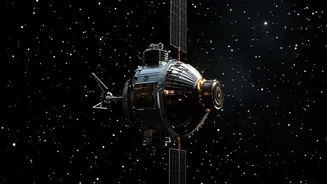
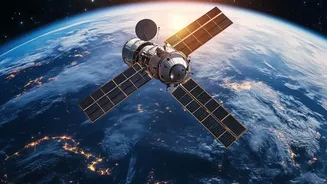
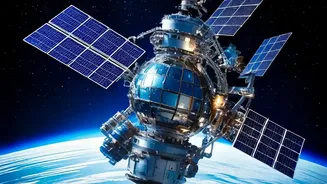
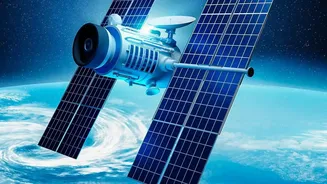
The NVS-03 is part of a new series of advanced navigation satellites. These second-generation birds are designed with enhanced features to ensure the continuity and improvement of NavIC services. One of the most significant upgrades is the inclusion of the L1 frequency band, which is one of the most widely used frequencies for navigation worldwide. This makes NavIC signals more interoperable with other global systems and compatible with a wider range of consumer devices, from smartphones to wearables. Another key feature is an indigenously developed rubidium atomic clock. These ultra-precise clocks are the heart of any satellite navigation system, providing the exact timing needed to calculate a user's position accurately. The development of a domestic atomic clock reduces India's reliance on foreign components and is a major technological achievement. The NVS satellites also boast a longer mission life of over 12 years, compared to the 10-year lifespan of their predecessors.
The Launcher: GSLV-F18 Takes Flight
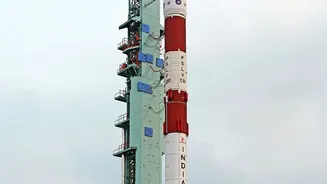
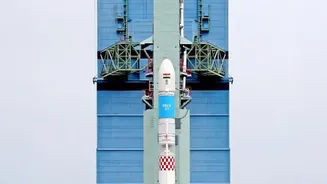
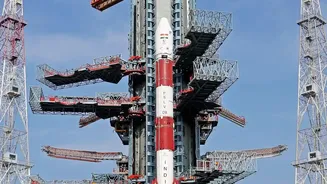
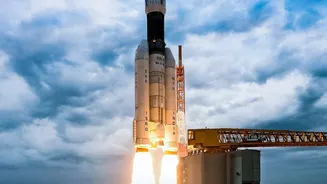
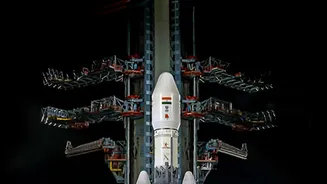
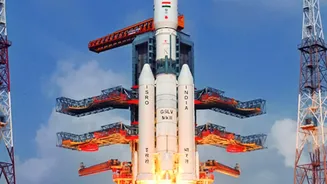
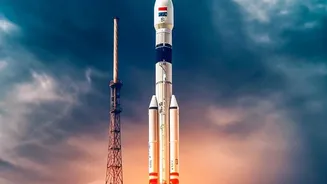
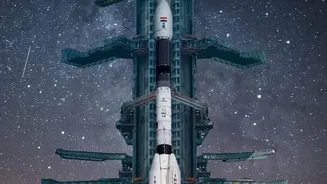
Lifting the 2,232 kg NVS-03 satellite into a precise Geosynchronous Transfer Orbit (GTO) is the task of ISRO's powerful Geosynchronous Satellite Launch Vehicle (GSLV), specifically the GSLV-F18. The GSLV is a three-stage rocket known for its ability to launch heavier satellites. Its first stage features a solid-fuel core motor assisted by four liquid-fueled strap-on boosters. The second stage also uses liquid propellants. The rocket's crowning glory is its third stage: the indigenously developed Cryogenic Upper Stage (CUS). This stage uses super-cooled liquid hydrogen and liquid oxygen as propellants, providing the high-energy final push needed to place the satellite into its intended orbit. Mastering cryogenic technology was a major milestone for ISRO, placing India in an elite club of nations with this capability. The GSLV has become a reliable workhorse for launching India's communication and navigation satellites.
Why NavIC is a Strategic Asset
Having an independent navigation system is a matter of strategic autonomy. India's reliance on the US-owned GPS became a security concern during the 1999 Kargil conflict when access to GPS data was not guaranteed. This experience was a major catalyst for the development of NavIC. An indigenous system ensures that India's defense forces have guaranteed access to reliable positioning, navigation, and timing (PNT) services for critical operations, including missile guidance, troop movement, and aircraft navigation, without fear of denial or disruption by a foreign power. NavIC provides two levels of service: the Standard Positioning Service (SPS) for all users and a highly accurate, encrypted Restricted Service (RS) for strategic and military applications. The system is designed to provide position accuracy of better than 10 meters over the Indian mainland and a region extending 1,500 kilometers around it.
Beyond Military: Civilian Benefits
While its strategic importance is paramount, NavIC also offers a growing array of benefits for Indian citizens and the economy. The system is crucial for disaster management, enabling more precise tracking of weather patterns and providing early warnings for cyclones and tsunamis. In transportation, it enhances vehicle tracking and fleet management, improving logistics and public safety. Its signals are particularly effective in urban canyons and dense forests where GPS signals can struggle. As NavIC-enabled chipsets become more common in consumer electronics, its use will expand into everyday applications, from ride-sharing apps to location-based services, fostering innovation within India's tech ecosystem. The continued enhancement of the NavIC constellation with satellites like NVS-03 is key to unlocking this potential and solidifying India's position as a self-reliant technological power.