





The High Stakes of Deep Space
Venturing to the Moon is fundamentally different from operating in low-Earth orbit (LEO), where the International Space Station (ISS) resides. In LEO, astronauts are only a few hundred kilometres away, with the possibility of returning to Earth in a matter
of hours if an emergency arises. The Moon, however, is a three-day trip away, and any rescue mission would be a complex, long-term undertaking. This distance introduces significant communication delays and eliminates the safety net of a quick return. Every procedure, from docking a spacecraft to performing a spacewalk, must work flawlessly the first time. The environment is unforgiving, and the margin for error is virtually zero. This is why NASA’s approach to the Artemis program is built on a foundation of meticulous preparation and risk reduction.
Earth's Orbit as a Proving Ground
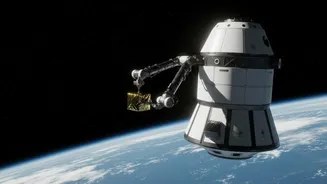
The solution is to use LEO as a high-fidelity simulator for lunar operations. Before sending astronauts back to the Moon, NASA is turning Earth's orbit into a dress rehearsal stage. The Artemis III mission, for example, has been restructured into a comprehensive LEO demonstration targeted for 2027. Instead of going directly for a lunar landing, the mission will now focus on testing the critical rendezvous, docking, and crew transfer procedures between the Orion spacecraft and the new Human Landing Systems (HLS) being developed by commercial partners like SpaceX and Blue Origin. By performing these complex manoeuvres in the relative safety of LEO, engineers and flight controllers can validate hardware, software, and operational protocols. It’s a chance for the crew to practice the intricate 'space dance' they will later perform hundreds of thousands of kilometres from home.
Validating the Lunar Orbit Itself
It's not just the hardware that needs testing, but the path to get there. Future lunar missions will rely on a unique, highly elliptical orbit known as a Near-Rectilinear Halo Orbit (NRHO). This orbit provides a stable, energy-efficient staging point for missions to the lunar surface. But before committing a crewed mission to this untested trajectory, NASA needed to verify its characteristics. This was the job of the CAPSTONE mission, a small, microwave-oven-sized satellite launched in 2022. CAPSTONE successfully became the first spacecraft to enter and operate in an NRHO, demonstrating its stability and testing autonomous navigation technologies that will reduce reliance on Earth-based tracking. After successfully completing all its objectives, NASA concluded its activities with the mission in June 2026, having proven the viability of the orbit for the Artemis program.
A Choreographed Dance of Rockets
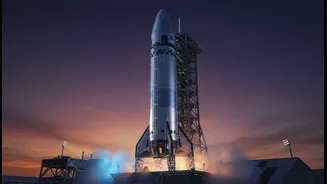
The Artemis III orbital test is an incredibly complex logistical challenge, requiring the coordination of multiple launches. The sequence will involve NASA's own powerful Space Launch System (SLS) rocket carrying the Orion and its crew, along with separate commercial launches for the lander test vehicles from SpaceX and Blue Origin. During the mission, the Orion capsule will rendezvous and dock with each lander, allowing astronauts to test the connections, perform systems checks, and validate the procedures for transferring between vehicles. For instance, astronauts will evaluate the environment inside the Blue Moon lander's cabin, while Starship's systems will be tested for their ability to control the combined spacecraft stack. This step-by-step validation ensures that all the separate components, built by different companies, can work together seamlessly as one integrated system.
Building Confidence for the Giant Leap
For astronauts, this orbital practice is invaluable. It builds muscle memory and provides a deep understanding of the spacecraft's systems in a real-world environment, which no ground simulation can fully replicate. The Artemis II crew, which performed a lunar flyby in early 2026, helped refine procedures for operating the Orion capsule in deep space. Similarly, the Artemis III crew's work in LEO will directly inform the first crewed lunar landing attempt, now planned for the Artemis IV mission in 2028. This methodical, iterative approach may seem slow, but in the high-stakes world of human spaceflight, it is the surest path to success. Each orbital test is a crucial layer in the foundation being built to support a sustained human presence on the Moon and, eventually, the journey to Mars.