
The Alpine Allure and Its Risks
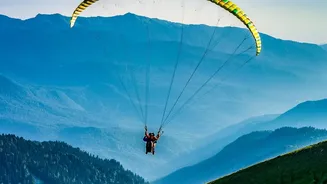
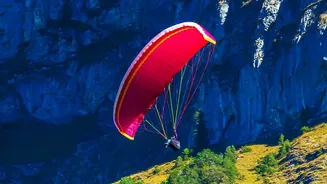
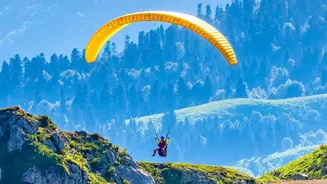
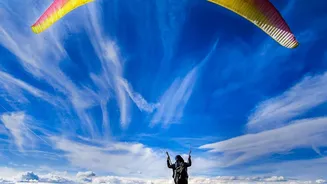
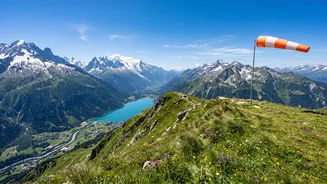
The French Alps offer some of the most spectacular and reliable flying conditions in the world, with famous sites like Chamonix and Annecy attracting pilots globally. The dramatic topography that creates breathtaking views also generates complex weather
systems. Unlike coastal soaring, mountain flying involves powerful thermal updrafts, unpredictable valley winds, and rapid weather changes. A sunny morning can quickly give way to stormy conditions. The Foehn, a strong, warm down-slope wind, can be particularly dangerous. Understanding this environment is the first step in any pilot's safety assessment; it’s a place where altitude and beauty are matched by the need for vigilance.
Your Pre-Launch Assessment
A thorough preflight check is non-negotiable. Experienced pilots follow a strict routine that covers themselves, their equipment, and the environment. This starts before even leaving for the launch site, with a detailed check of the day’s weather forecast, looking at wind speed and direction at various altitudes, thermal strength, and cloud development. On site, pilots assess the immediate conditions, talk to local flyers about site-specific hazards, and check for any local regulations, often managed by the Fédération Française de Vol Libre (FFVL). The personal check is just as critical: a pilot must honestly assess their health, fatigue level, and mental state. If there is any doubt about the conditions or one’s fitness to fly, the only correct decision is to stay on the ground.
Gearing Up for Alpine Flying
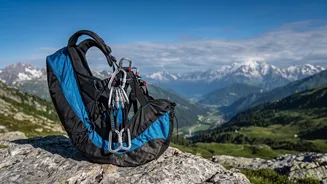
Standard paragliding equipment is essential, but the alpine environment requires specific considerations. Your gear is your lifeline. A certified paraglider wing (sail) appropriate for your skill level is the starting point. Your harness should be comfortable and feature back protection. A certified helmet and a reserve parachute are mandatory safety items. Due to the strong thermals, a variometer (or 'vario'), an instrument that indicates your rate of climb or descent, is crucial for managing altitude. Communication is also key, so a radio is highly recommended for staying in touch with other pilots. Finally, mountain weather is cold, even in summer. Layered, windproof clothing, sturdy boots, and good gloves are essential for comfort and to prevent exposure, which can impair judgement.
The Five-Point Equipment Check
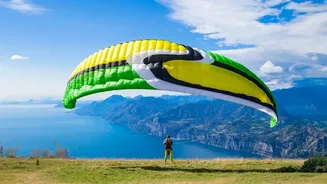
Before connecting to the wing, every pilot performs a hands-on check. A common method is a five-point pre-flight check. First, lay the wing out in an arc and untangle all lines. Second, put on your harness and helmet, ensuring all buckles are securely fastened—especially the leg straps, as forgetting them is a life-threatening error. Check that your reserve parachute pin is secure and the handle is correctly in place. Third, connect the wing's risers to your harness carabiners and check that they are locked. Fourth, take the controls (brakes) in your hands and ensure they are free and clear. Finally, just before launching, perform a final scan of the airspace to ensure it is clear of other pilots. This methodical ritual helps prevent mistakes made in the excitement of the moment.
Navigating the Skies Legally and Safely
While France does not legally require a specific license for solo paragliding, it is governed by civil aviation authorities and the FFVL provides a structured certification system. More importantly, third-party liability insurance is mandatory to fly from any official site. Visiting pilots with foreign licenses, like a BHPA Club Pilot or USHPA P2 rating, can fly but must carry proof of valid insurance. It is also vital to understand the 'rules of the air'. When two pilots are approaching head-on, both must turn to their right. When soaring along a ridge, the pilot with the ridge on their right has priority. In a thermal, the first pilot to enter establishes the direction of turn for all others who join. Knowing these rules prevents mid-air collisions, which are a growing risk at crowded sites.