


More Than a Water Source
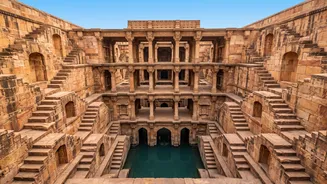
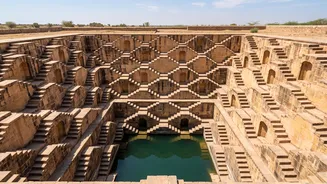
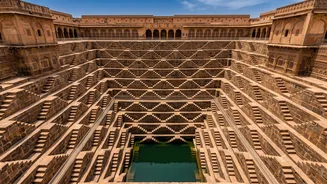
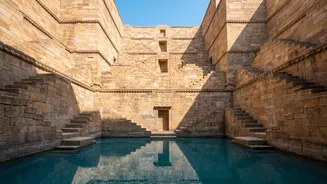
In the hot, dry landscapes of western and northern India, stepwells, or 'baolis', were fundamental to life. But their role extended far beyond quenching thirst. These subterranean structures, with their steps descending deep into the earth, were cool
sanctuaries from the searing heat. They became vibrant social hubs, especially for women, who gathered daily to collect water. This daily ritual transformed the stepwells into lively communal spaces where news was exchanged, stories were shared, and strong social bonds were forged. They also served as vital rest stops for travellers and caravans, functioning as civic centres, refuges, and places for social gatherings and religious ceremonies.
A System of Shared Responsibility
The longevity of stepwells wasn't accidental; it was the result of a robust, community-driven management system. Construction was often commissioned by royalty, wealthy merchants, or powerful patrons as an act of philanthropy, a tradition that was considered highly meritorious. Once built, the responsibility for upkeep was decentralized and rested with the local community. This created a system of collective accountability where villagers, rather than a distant government, were in charge of their local water asset. This sense of shared ownership ensured the wells were properly used and maintained. In recent years, the revival of some stepwells has seen the re-emergence of this model, with local youth groups and water committees, often involving women, taking charge of maintenance.
The Sacred and the Practical
In Indian culture, water is revered not just as a resource but as a sacred, life-giving force. This spiritual significance played a crucial role in the preservation of stepwells. Many were constructed near temples or designed as subterranean temples themselves, replete with intricate carvings of deities. This sacred status provided a powerful incentive for their protection. Communities saw the water as a blessing, and rituals, prayers, and offerings were common. Women, in particular, would pray to the 'Goddess of the Well'. This fusion of the sacred and the mundane ensured the water was kept pure and the structure was treated with respect, safeguarding it from pollution and neglect in a way that purely utilitarian rules might not have.
Engineered for Community and Climate
The genius of stepwell architecture lay not only in its beauty but in its practicality. These structures were meticulously engineered to cope with seasonal fluctuations in water availability, a common issue in monsoon-dependent regions. By digging deep into the ground to reach the water table, they ensured a year-round water supply. The design, featuring a long corridor of steps, made it easier for many people to access the water at once, especially during peak times. Built with simple, local materials like stone and brick, they were sturdy enough to withstand earthquakes and could be maintained with available community resources. This architectural ingenuity was purpose-built for community management and long-term resilience.
Decline and a Legacy of Lessons
The use of stepwells declined significantly during the British Raj, when many were deemed unhygienic and were subsequently abandoned or destroyed. The arrival of modern piped water systems made them seem redundant, and many fell into disrepair, becoming dumping grounds for garbage. However, as modern India faces growing water scarcity, there is a renewed interest in these ancient systems. Community-led efforts, often in partnership with NGOs and government agencies, are now working to restore these structures. These initiatives are not just about preserving heritage; they are about reviving a proven, sustainable model of water management. The restoration of wells in states like Gujarat, Rajasthan, and Telangana shows how traditional wisdom can offer solutions to contemporary challenges.