




The Final Hurdle for Astronaut Safety
Before Indian astronauts, or 'Vyomanauts', can journey to low-Earth orbit, the capsule they travel in must be proven to be impeccably safe. This is where qualification testing comes in. ISRO has recently completed a trio of major tests designed to validate
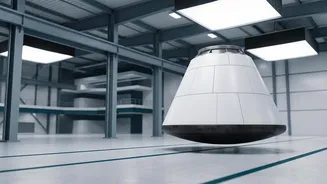
key systems of the Gaganyaan Crew Module (CM). These aren't just routine checks; they simulate high-stress moments of the mission that are critical for crew survival. The tests focus on events where the crew has no direct control, such as ensuring the capsule stays upright after splashing down in the ocean, that it separates cleanly from its service module before re-entry, and that its structure can withstand the violent forces of parachute deployment. Successfully passing this gauntlet is a non-negotiable step before the first uncrewed, and then crewed, missions can proceed.
Simulating a Perfect Landing
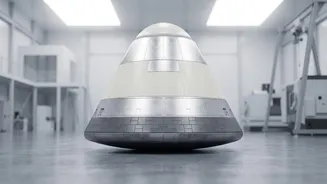
A significant part of the qualification push involves Integrated Air Drop Tests (IADT). In these meticulously planned exercises, a full-scale replica of the crew module, matching its weight and dimensions, is lifted by an Indian Air Force helicopter to a specific altitude and dropped over the sea. The goal is to test the entire parachute deployment sequence in a real-world scenario. This complex sequence involves a total of 10 parachutes of four different types. First, smaller drogue parachutes deploy to stabilize the capsule and begin slowing it down from high speed. These are followed by pilot chutes that pull out the three massive main parachutes, which ultimately reduce the module's speed to a gentle pace for a safe splashdown. These tests qualify the parachute system's design and structural integrity, providing confidence that the real module will land without incident.
Planning for Every Contingency
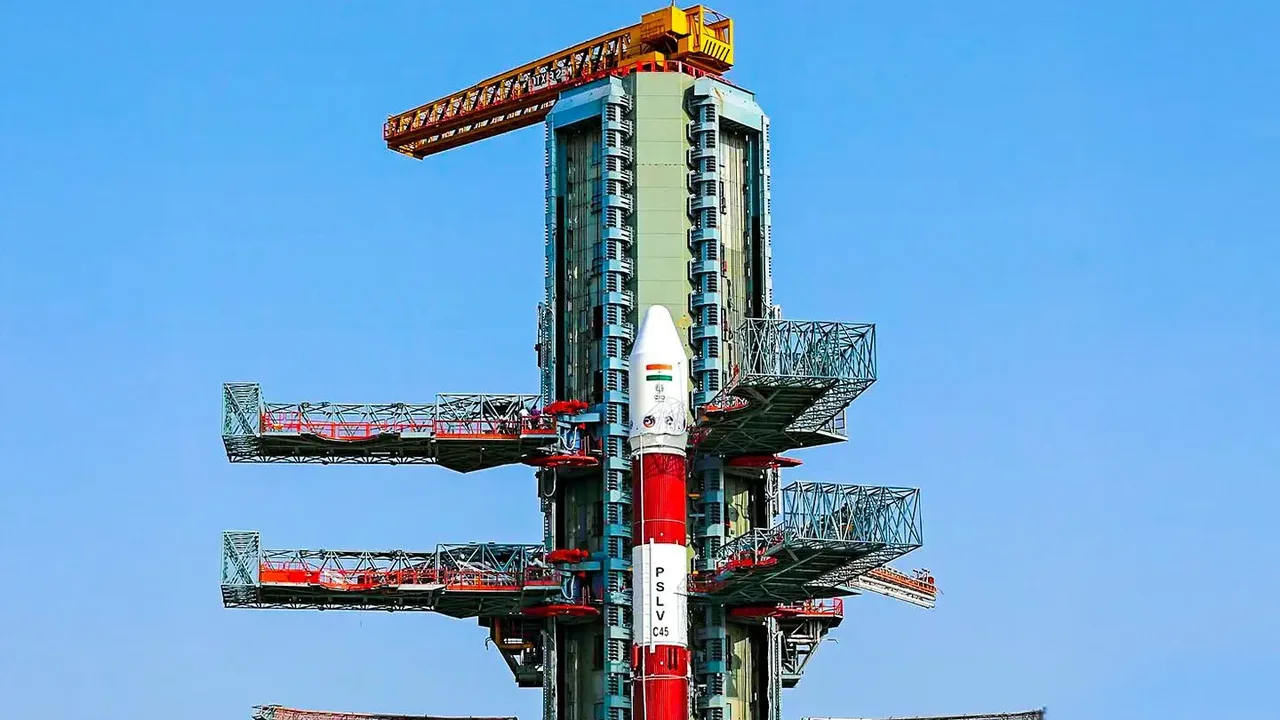
While a smooth landing is the goal, ISRO must also prepare for emergencies. The qualification process includes rigorous abort tests to validate the Crew Escape System (CES). This system is essentially a powerful rocket motor designed to pull the crew module away from the main launch vehicle in case of a catastrophic failure on the launchpad or during ascent. A Pad Abort Test, conducted in 2018, demonstrated the system's ability to work from a standstill. More recent in-flight abort tests, like the TV-D1 mission, test the system under the most stressful aerodynamic conditions, such as when the rocket is breaking the sound barrier. These trials ensure that no matter what happens during launch, the astronauts can be safely jettisoned away from danger.
The Intricate Dance of Sea Recovery
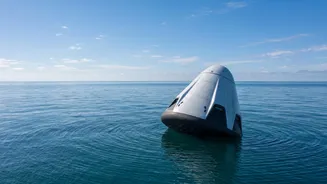
Successfully splashing down is only half the battle; getting the crew out of the ocean is the final, critical step. The recent tests have provided valuable insights into the joint recovery operations led by the Indian Navy. After splashdown in the Arabian Sea, the recovery plan involves a carefully choreographed sequence. First, a special flotation system inflates to ensure the capsule remains upright, a crucial requirement for crew safety. Naval divers will then attach a recovery buoy and tow lines to the module. In the preferred recovery method, the entire capsule will be gently towed into the well deck of a large naval ship—a floodable bay at the ship's stern. Once inside and the water is drained, the crew can exit the module in a stable, controlled environment with the minimum possible discomfort. The extensive harbour and open-sea trials using mock-up capsules are helping to finalize the Standard Operating Procedures (SOPs) for the recovery teams, which include divers, medical specialists, and technicians.