



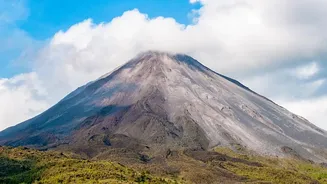
The 'Child of Krakatau' Awakens
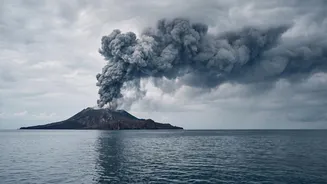
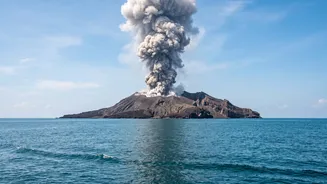
In early September 2026, Mount Anak Krakatau, a volcanic island in Indonesia’s Sunda Strait, erupted spectacularly after showing increased activity for several weeks. The event sent towering columns of ash tens of thousands of feet into the atmosphere,
with some plumes reaching as high as 50,000 feet. This prompted Indonesian authorities to close at least eight airports, including the major international hub of Soekarno-Hatta in Jakarta. The move led to the cancellation or delay of over 1,500 flights, affecting an estimated 170,000 passengers and disrupting travel across the region. While no evacuations were ordered for residents, who live miles away, the event brought the critical relationship between volcanic activity and aviation safety into sharp focus.
More Than Just Dust
To understand why flights are cancelled, it's crucial to know what volcanic ash actually is. Far from being a soft powder, it consists of tiny, jagged particles of rock, minerals, and volcanic glass. These particles are incredibly hard and abrasive. Unlike smoke from a fire, volcanic ash does not dissolve in water and is surprisingly heavy. When a volcano erupts explosively, it can inject this material high into the stratosphere, where commercial jets cruise. Because the particles are so fine, they can travel hundreds or even thousands of kilometers on wind currents, creating a hazard far from the eruption site itself. Critically, these ash clouds are often invisible to the naked eye and cannot be detected by standard onboard weather radar, making them an invisible threat to any aircraft that might fly through them.
A Jet Engine's Worst Nightmare
The danger of volcanic ash to an airplane is multifaceted and severe. First, the abrasive particles act like sandpaper, scouring cockpit windows and impairing pilot visibility. They can also erode critical flight surfaces and clog the pitot-static systems that provide essential airspeed and altitude data. The most catastrophic threat, however, is to the engines. Modern jet engines operate at extremely high temperatures, well above the melting point of volcanic ash. When ash particles are sucked into a jet engine, they melt and then fuse onto cooler components like turbine blades and fuel nozzles, forming a glassy coating. This buildup disrupts airflow, causing the engine to lose power and potentially flame out completely.
A Lesson Learned the Hard Way
The aviation industry’s strict protocols are a direct result of harrowing past encounters. One of the most famous incidents occurred in 1982, when British Airways Flight 9 flew into an unforecasted ash cloud from Mount Galunggung in Indonesia. The crew and passengers first noticed an eerie glowing phenomenon known as St. Elmo's fire on the windscreen and wings. Soon after, all four of the Boeing 747's engines failed, turning the massive jet into a 300-ton glider. The aircraft descended for 16 terrifying minutes before the crew, having cleared the ash cloud, was miraculously able to restart the engines and make an emergency landing in Jakarta. This and other similar incidents led to the understanding that avoiding ash clouds entirely is the only safe option.
The Global Watchdogs of the Sky
To prevent incidents like Flight 9 from happening again, the International Civil Aviation Organization (ICAO) established a global network of nine Volcanic Ash Advisory Centers (VAACs). These centers, located in places like Darwin, Tokyo, and Washington, operate 24/7. Each VAAC is responsible for a specific geographic region, using satellite imagery, pilot reports, and sophisticated dispersion models to detect, track, and forecast the movement of ash clouds. When an eruption occurs, the relevant VAAC issues Volcanic Ash Advisories (VAAs) to aviation authorities and airlines. These advisories provide crucial data on the location, altitude, and forecast movement of the ash, allowing flight planners to reroute aircraft safely.
What It Means for Travelers
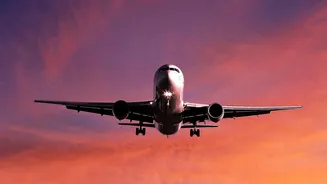
The recent cancellations in Indonesia are a direct result of this safety system in action. While the immediate impact is on flights in and out of the affected region, the ripple effects can be global. Airlines must reroute long-haul flights, which can lead to longer flight times and increased fuel costs. The displacement of aircraft and crews can cause cascading delays and cancellations throughout an airline's network. For passengers, this means that even if your travel plans don't take you anywhere near Indonesia, you could still experience disruptions. The grounding of aircraft at a major hub like Jakarta impacts fleet availability worldwide, a clear demonstration of how interconnected modern aviation is.