









From Ambitious Startup to Orbital Success
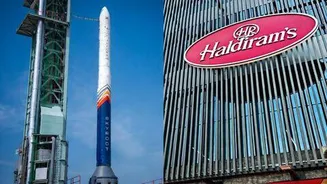
Founded in 2018 by former scientists from the Indian Space Research Organisation (ISRO), Skyroot Aerospace has moved at a rapid pace. The Hyderabad-based company first made headlines in November 2022 with the successful launch of Vikram-S, India's first privately
developed suborbital rocket. This set the stage for a much bigger goal: orbital launch. That milestone was achieved on July 18, 2026, when its Vikram-1 rocket successfully reached orbit, deploying multiple customer satellites. This achievement didn't just validate their technology; it made India only the third country, after the US and China, to have a private company with orbital launch capability. This success has transformed Skyroot from a promising startup into a proven launch provider.
The Global Satellite Traffic Jam
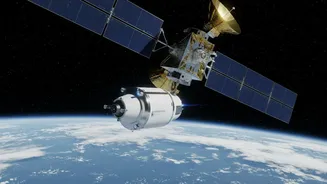
The demand for launching small satellites has exploded in recent years, driven by the growth of satellite constellations for internet, Earth observation, and IoT services. However, launch capacity has struggled to keep up, creating a bottleneck. Many small satellite operators are forced to 'rideshare,' booking space on large rockets heading to pre-determined orbits, much like taking a bus on a fixed route. This often means long waits and compromises on their ideal orbital destination and deployment schedule. For satellite companies, whose business models depend on getting their assets into space quickly, this lack of flexibility is a major hurdle. This global demand for more frequent and dedicated launch options is the exact market gap Skyroot aims to fill.
An Assembly Line for Rockets
Achieving a monthly launch cadence is a manufacturing challenge, not just a rocketry one. Skyroot's strategy hinges on advanced manufacturing and modular design. The company has invested heavily in technologies like 3D printing, which it uses to produce entire engines like its Raman series. According to company leadership, 3D printing slashes the production time for complex components from months to mere days and significantly reduces weight. The Vikram-1 rocket also uses a lightweight all-carbon-fibre body and modular systems that can be produced and integrated quickly at its state-of-the-art facility in Hyderabad. This approach moves rocket building away from a bespoke, one-off process towards a scalable, assembly-line-like model, which is the key to enabling the company's claim of having the capacity to produce one rocket per month.
Why Predictability Is the Ultimate Payload
For a satellite operator, predictability is paramount. A regular, monthly launch schedule from Skyroot would mean they can plan their business with far greater certainty. Instead of waiting indefinitely for a rideshare opportunity, they could book a dedicated 'cab to space' on a Vikram rocket with a clear timeline. This allows them to secure financing, meet customer deadlines, and get their services online faster. A higher launch frequency also fosters reliability and drives down costs over time through operational experience. By offering this dependable cadence, Skyroot isn't just selling a launch; it's selling predictability, a commodity that is just as valuable to its customers as the rocket fuel itself.
Fueling India's Private Space Ambitions
Skyroot's ambition is a cornerstone of India's broader strategy to expand its share of the global space economy, which is projected to grow to over $40 billion by the early 2030s. The Indian government's policy reforms, particularly the Indian Space Policy 2023, were designed to encourage exactly this kind of private innovation. A vibrant private launch sector allows the national agency, ISRO, to focus its resources on pioneering deep-space exploration and national security missions. A reliable and frequent launch service from Indian soil also strengthens the domestic space ecosystem, creating opportunities for hundreds of other startups working on satellites and related applications. In essence, Skyroot's success helps build a sovereign capability while also positioning India as a competitive hub in the international launch market.