





The Latest: Summit in New Delhi
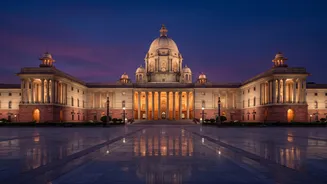
The most significant recent update is the 18th BRICS Summit being held in New Delhi on September 12-13, 2026. This is the first major gathering since the bloc underwent significant expansion and it takes place under India's fourth-time presidency. The theme
set by India, “Building for Resilience, Innovation, Cooperation and Sustainability,” signals a push towards practical outcomes over political posturing. Key world leaders, including Russia's Vladimir Putin and China's Xi Jinping, are in attendance, making it a focal point for global diplomacy amid ongoing geopolitical tensions.
A Quick Refresher: What is BRICS?
Originally an acronym (BRIC) coined by an economist, the bloc was formalized in 2009 by Brazil, Russia, India, and China to increase their collective voice in a Western-dominated global order. South Africa joined in 2011, making it BRICS. After more than a decade, a major expansion phase began. In 2024, Egypt, Ethiopia, Iran, and the United Arab Emirates became full members. This was followed by Indonesia in 2025. Today, the 11-member group represents nearly half the world's population and a significant portion of global GDP.
The Core of the Debate: To Grow or To Consolidate?
The central debate is about the bloc's future direction. On one side, countries like China have strongly advocated for rapid expansion to create a more formidable counterweight to Western influence. On the other side, India has championed a more cautious, criteria-based approach. New Delhi's view is that any new members should have friendly relations with all existing ones and that the group's primary focus should remain on economic cooperation and development for the Global South, rather than becoming an explicitly anti-Western alliance. This tension between rapid growth and maintaining institutional cohesion is the biggest challenge for the expanded group.
An Expanding Universe: Full Members and New Partners
The interest in joining BRICS is high, with over 30 countries having expressed a desire to become members or partners. To manage this influx without diluting the core group, a new 'Partner Country' category was created. In 2025, ten nations joined under this framework, including Belarus, Bolivia, Cuba, Kazakhstan, Malaysia, Nigeria, and Vietnam, allowing them to engage with BRICS initiatives without full membership. Meanwhile, Pakistan's bid for full membership highlights the geopolitical complexities, with China's support clashing with India's reservations.
India's Strategic Balancing Act
For India, chairing the 2026 summit is a crucial test of its diplomacy. New Delhi's primary goal is to steer the bloc towards tangible cooperation in areas like digital public infrastructure, resilient supply chains, health, and energy security. By doing so, it aims to reinforce BRICS as a constructive forum that serves the interests of developing nations. India must also navigate the internal divisions. The growing bloc includes rivals like Iran and the UAE, and the strategic competition between India and China remains a persistent undercurrent. India's leadership seeks to prove that BRICS can deliver practical benefits and act as a bridge, even if its members don't agree on every geopolitical issue.
What This Update Really Tells Us
The New Delhi summit signals a shift from asking if BRICS should expand to how it should function now that it's bigger. India's presidency is an attempt to answer that question by focusing on a concrete, development-oriented agenda. The creation of the 'Partner Country' status is a clear compromise—a way to accommodate widespread interest without sacrificing the manageability of the core group. The success of this summit, to be measured by the consensus reached in the final leaders' declaration, will reveal whether this larger, more diverse BRICS can evolve into an effective institution or if its internal rivalries will limit its global impact.