



Our Sun, The Giant Telescope
Imagine using our own sun as a magnifying glass to see planets in other star systems. This is the core idea behind the Solar Gravitational Lens (SGL). First predicted by Albert Einstein's theory of general relativity, the concept relies on the sun's immense
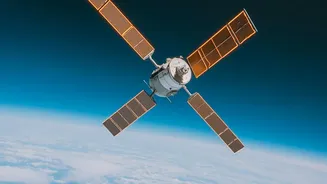
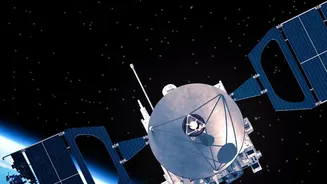
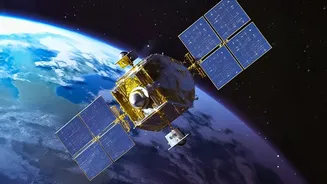
gravity to bend and focus light from a distant object. Much like a conventional lens focuses light to a single point, the sun’s gravity would focus light from a far-off star or planet to a focal line beginning at a staggering distance: around 550 astronomical units (AU) from the sun. An AU is the distance from the Earth to the sun, so we’re talking about a location more than ten times farther out than Pluto. By placing a spacecraft with a modest telescope at this focal line, scientists believe they could capture images of exoplanets with enough detail to see surface features, potentially revealing signs of habitability.
Redefining the Edge of Space
The headline mentions two frontiers: the 'Solar Frontier' and the 'Solar Gravitational Frontier'. Traditionally, the edge of our solar system is considered the heliopause—the boundary where the sun's solar wind is stopped by the interstellar medium. However, a recent theory proposed in 2026 by former NASA scientist Jim Green and mathematician Ed Belbruno suggests a new boundary: the 'Solar Gravitational Frontier'. They argue this frontier is where the sun's gravitational pull is balanced by the gravitational forces of the Milky Way galaxy itself, extending out to nearly 3.8 light-years. This new definition places the true 'edge' of our system much farther out than previously thought. The Solar Gravitational Lens frontier, where the SGL effect becomes usable for a telescope, starts much closer, at that 550 AU mark, creating a new destination for exploration within our solar system's broader gravitational influence.
An Expressway for Interstellar Visitors
So where do interstellar objects (ISOs) like the famous 'Oumuamua and Comet Borisov fit in? These celestial travellers, originating from other star systems, follow paths determined by gravity. The new theory of the Solar Gravitational Frontier suggests that certain stable gravitational points, known as Lagrange points, could act as 'portals'. These portals might funnel slow-moving interstellar objects into our solar system, making their appearances less random than we thought. By understanding these pathways, we could better predict where and when to look for future visitors. It opens up the tantalizing possibility of not just observing these objects as they fly by, but perhaps even sending missions to study them up close, or placing spacecraft in a 'storage orbit' ready to intercept them.
A New Map for Cosmic Exploration
Connecting these ideas creates a revolutionary roadmap for space exploration. Missions could be designed to travel to the Solar Gravitational Lens focal line to image a distant exoplanet. The paths taken by interstellar objects, influenced by the larger Solar Gravitational Frontier, could provide natural 'highways' through the outer solar system. A spacecraft travelling to 550 AU could potentially use a gravity assist from a passing ISO to adjust its trajectory or gain speed. Furthermore, studying these ISOs offers a direct sample of material from another star system without having to travel light-years to get there. The recent visitor 3I/ATLAS, for instance, provided clues about its origin in an ancient planetary system just by being observed from afar. The SGL could give us an even closer look at the next one.
The Immense Challenge and Incredible Payoff
Sending a probe to 550 AU is a monumental undertaking. The Voyager probes, our most distant spacecraft, have taken nearly 50 years to travel just over 160 AU. New propulsion technologies, like advanced solar sails that use light to push a spacecraft, would be needed to make the journey in a reasonable timeframe, with some proposals aiming for a 17 to 20-year trip. The spacecraft would need to be incredibly precise, positioning itself within a narrow, 1.3-kilometer-wide cylinder of focused light to capture the image of an exoplanet. Despite the challenges, the potential payoff is immense. This isn't just about seeing another dot in the sky; it's about creating a megapixel image of a world light-years away, a feat that could change our understanding of our place in the universe forever.