

The Burnout of Constant Counting
For many people, the journey toward healthier eating begins with an app. We diligently log every meal, snack, and drink, reducing our food to a game of numbers. While tracking calories can provide a valuable initial education on the energy content of foods,
it often becomes a source of stress and obsession. This meticulous tracking can be time-consuming, mentally draining, and ultimately unsustainable. It can also foster an unhealthy relationship with food, stripping away the joy and cultural significance of eating and replacing it with guilt over numbers. The goal isn't to be a human calculator; it's to build a healthier, more intuitive relationship with what's on your plate.
The Shift to Visual, Intuitive Tools
The alternative to constant counting is not a free-for-all. It's about shifting from mathematical precision to mindful awareness. Instead of asking, "How many calories is this?" you start asking, "Is this a balanced meal?" and "Is this the amount my body needs right now?" This approach relies on simple, visual tools that help you gauge portion sizes without needing a scale or measuring cups. Two of the most effective and widely recommended methods are the Plate Method and the Hand Method.
Mastering the Plate Method
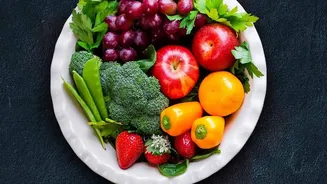
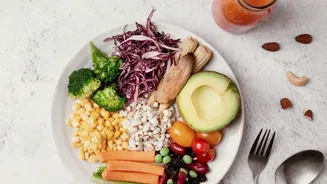
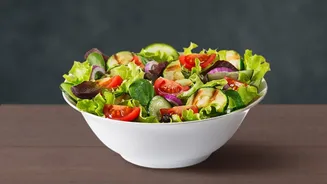
The Plate Method is a simple, visual way to build a balanced meal. The only tool you need is your plate, ideally one that is about 9 inches in diameter. The guidelines are straightforward: fill half of your plate with non-starchy vegetables like leafy greens, broccoli, bell peppers, and tomatoes. These foods are high in fibre and nutrients but low in calories, helping you feel full. The remaining half of your plate is then divided equally. One-quarter gets filled with a lean protein source, such as grilled chicken, fish, paneer, or dal. The final quarter is for complex carbohydrates, like brown rice, whole-wheat roti, or quinoa. This method naturally controls portion sizes and ensures a balanced intake of macronutrients at every meal, which helps stabilise blood sugar and reduce cravings.
Using Your Hand as a Guide
Your own hand is a surprisingly accurate and incredibly convenient portioning tool that is always with you. Because your hand size is proportional to your body size, it provides a personalised measuring guide. General guidelines suggest using your palm to measure a serving of protein (about 3-4 ounces), which is perfect for a piece of chicken or fish. A clenched fist is roughly equivalent to one cup, making it a great measure for a serving of vegetables or cooked grains like rice. A cupped handful can represent a serving of carbohydrates. Lastly, the size of your thumb can be used to estimate a serving of fat, like oils, butter, or nut butters. This method takes the guesswork out of portioning, whether you're at home or eating out.
Embracing Mindful Eating
These visual tools work best when paired with the principles of mindful eating. This practice involves paying full attention to your meal, free from distractions like your phone or the television. By eating slowly, savouring each bite, and checking in with your body's hunger and fullness signals, you can better recognise when you are satisfied. Thirst is often mistaken for hunger, so staying hydrated is also key. Mindful eating isn't about restriction; it's about listening to and respecting your body's needs, which naturally leads to better portion control over time. Research has shown that individuals who eat mindfully are less likely to overeat and feel more satisfied with their meals.