

A Panoramic View of the Cosmos
Imagine trying to take a picture of a sprawling city skyline, but your camera can only capture a single window at a time. That, in essence, is the challenge previous space telescopes have faced. The Hubble Space Telescope, for all its iconic and detailed
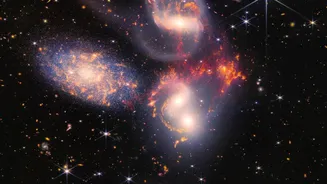
images, has a relatively narrow field of view. The Nancy Grace Roman Space Telescope, which launched in late August 2026, changes the game entirely. While its primary mirror is the same size as Hubble's at 2.4 meters, its Wide Field Instrument is a 300-megapixel camera that can capture an area of the sky 100 times larger than Hubble can in a single shot. This means that in just a few months, Roman can map more of the sky than Hubble has in over 30 years of operation. It is not a replacement for Hubble or the James Webb Space Telescope but a powerful complement, designed to provide the wide-angle context to their deep, detailed stares.
The Hunt for Dark Energy
One of Roman's primary missions is to investigate dark energy, the mysterious force causing the expansion of the universe to accelerate. Scientists know this is happening, but they don't know why. Roman will tackle this question using three distinct methods. First, it will conduct a massive survey of galaxies to create a 3D map of the cosmos, observing how galaxies are clustered and distributed. Second, it will look for Type Ia supernovae, a specific kind of stellar explosion that has a known, uniform brightness. By measuring how faint these 'standard candles' appear from Earth, astronomers can precisely calculate their distance and, in turn, the universe's expansion rate at different points in its history. Finally, Roman will study a phenomenon called weak gravitational lensing, where the light from distant galaxies is subtly distorted by the gravity of matter it passes on its way to us. By mapping these tiny distortions across millions of galaxies, scientists can chart the influence of both dark matter and dark energy on the structure of the universe.
A Census of Alien Worlds
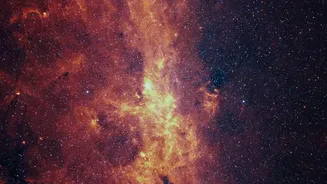
Beyond the grand scale of cosmic expansion, Roman will also turn its powerful gaze toward our own Milky Way galaxy to conduct a massive search for exoplanets. Instead of looking for the dip in starlight as a planet passes in front of its star (the transit method), Roman will primarily use a technique called gravitational microlensing. This occurs when a star or planet passes in front of a more distant background star, and its gravity acts like a lens, briefly magnifying the background star's light. These events are rare and require monitoring hundreds of millions of stars to catch them. Roman's wide field of view is perfectly suited for this task, allowing it to survey the dense, central region of our galaxy. This method is sensitive enough to find planets of all sizes, from gas giants to small, rocky worlds, including those that are far from their host star or even rogue planets that wander the galaxy alone. Scientists expect Roman to discover thousands of new exoplanets, creating a statistical census that will help us understand how common planets like Earth really are.
Technology and the Road Ahead
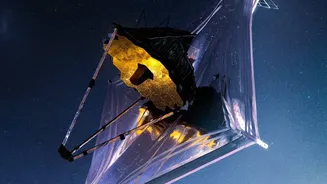
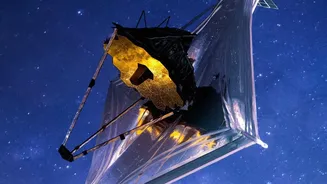
The Roman Space Telescope, named for pioneering NASA astronomer Nancy Grace Roman, launched on a SpaceX Falcon Heavy rocket on August 30, 2026. After its successful launch, it began a roughly three-month journey to its operational orbit at the second Sun-Earth Lagrange point (L2), about 1.5 million kilometers from Earth. In addition to its powerful Wide Field Instrument, Roman also carries a technology-demonstrating Coronagraph Instrument. This tool is designed to block the overwhelming glare from a star, which will allow Roman to, for the first time, directly image large, gaseous exoplanets orbiting other stars and analyze their atmospheres. While a demonstrator, the coronagraph's performance will pave the way for future missions designed specifically to find and characterize Earth-like worlds. Following its commissioning phase, NASA expects to release Roman's first science images to the public in early 2027.